“[So] They Won’t Be Scared”: Why the Kickapoo Childcare Center Chose a Monolithic Dome
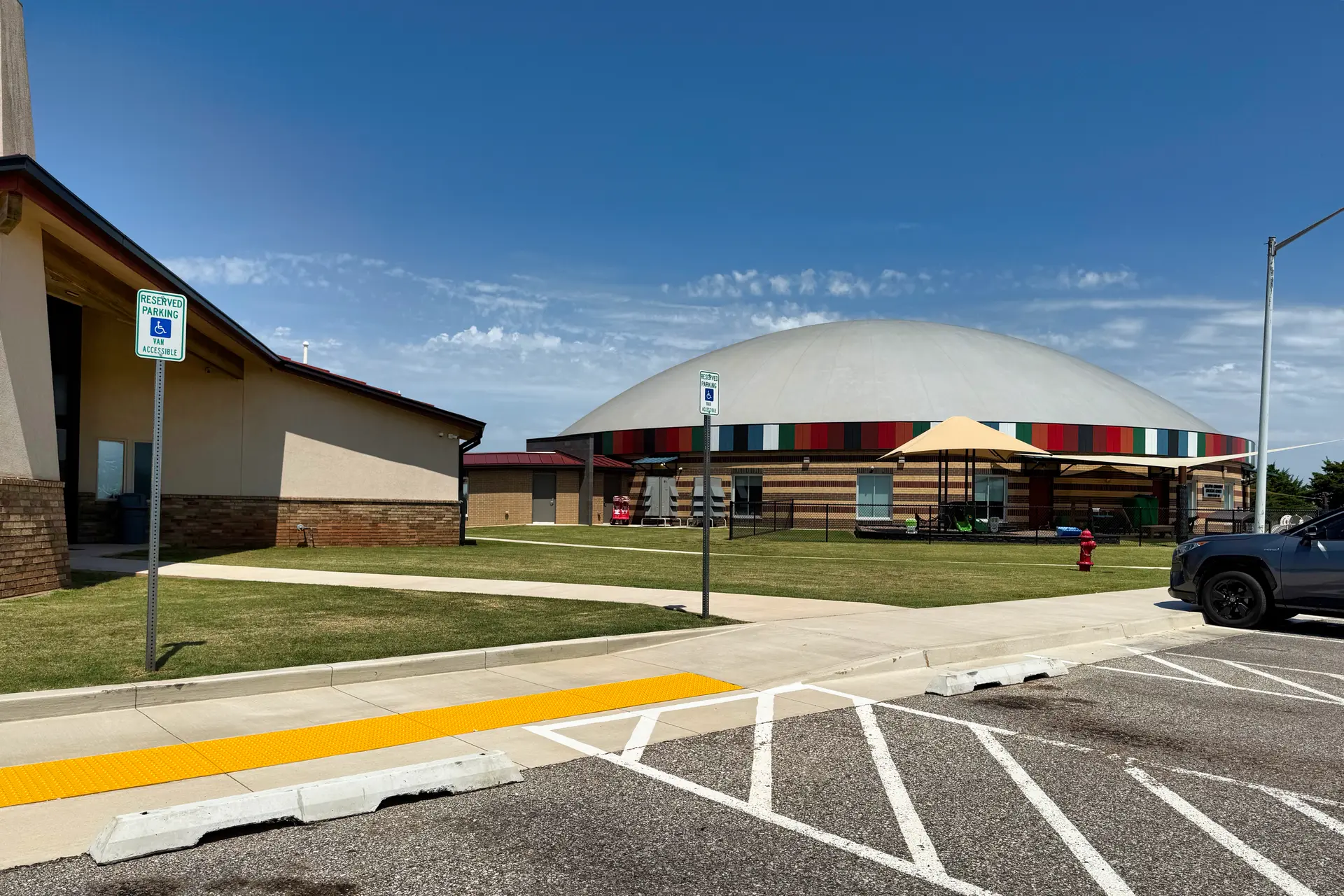
In McLoud, Oklahoma, the women in charge of the Kickapoo Child Care Center were motivated to build a safer place for children. They found the solution in a Monolithic Dome, rallied community support, and secured grants to make it happen.
Safety for the Children
Tornadoes sweep through Oklahoma and Kansas every year, particularly in the spring, and people take cover as best they can in storm shelters and basements. At the Kickapoo Community Childcare Center in Mcloud, Oklahoma, the staff saw the fear on the little faces of their students every time tornado warning sirens sounded, and they wanted to find a way to keep children safe and secure in all weather. They wanted to shield them not only from the dangers of catastrophic climate conditions, but also from the fear that happens when everyone’s rushing to the shelters.
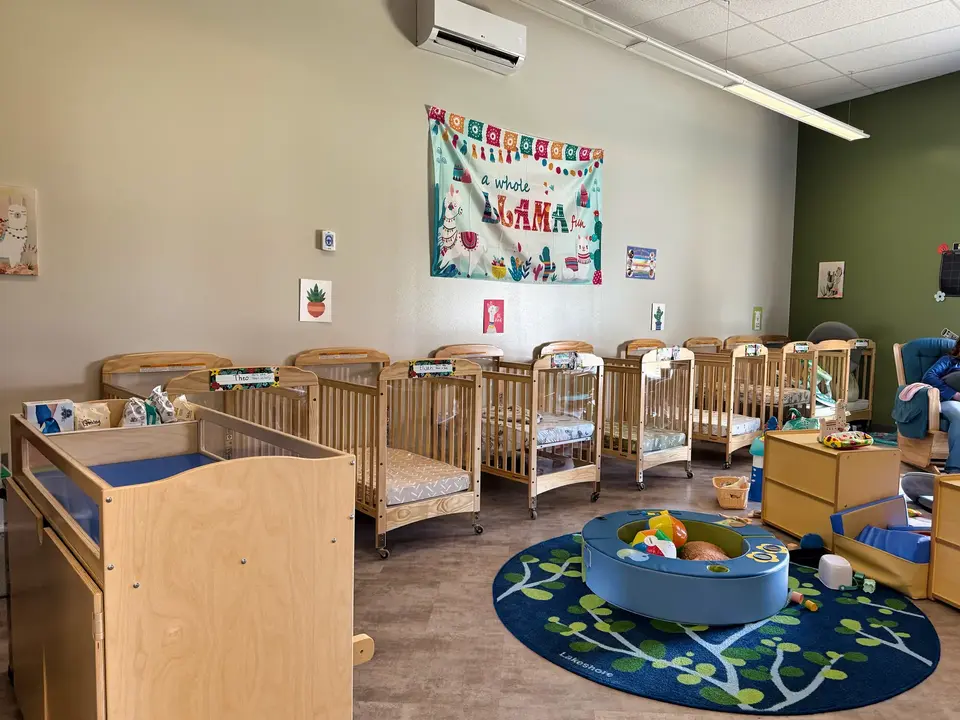
A row of cribs in one of two infant care rooms. In the old facility, babies sometimes had to be rushed outside to the tornado shelter in their cribs or car seats.
“We live in a tornado-prone area, and whenever there is a tornado warning, the children are scooped up out of their classrooms and taken to a storm shelter,” said Mary Walker, Child Care and Development Fund Program Coordinator. “What got to me was watching the infants going. They put the infants into mobile cribs, with no time to fasten them down as they are in car seats and strollers, pushed along and it doesn’t seem safe, but it’s going [to be] the fastest way possible to get them to the storm shelter.”
Walker and her team researched all kinds of construction possibilities, and talked to the 41 staff members at the day care, which serves 103 children from ages four months to 12 years. The group chose a Monolithic Dome, and Kickapoo Community Childcare Center (KCCC) became the first day care in Oklahoma to be housed in a Monolithic Dome, which doubles as a storm shelter.
“Now the children won’t have to run and hide,” Walker said. “They won’t be scared. That’s the main thing. We can carry on with our lessons.”
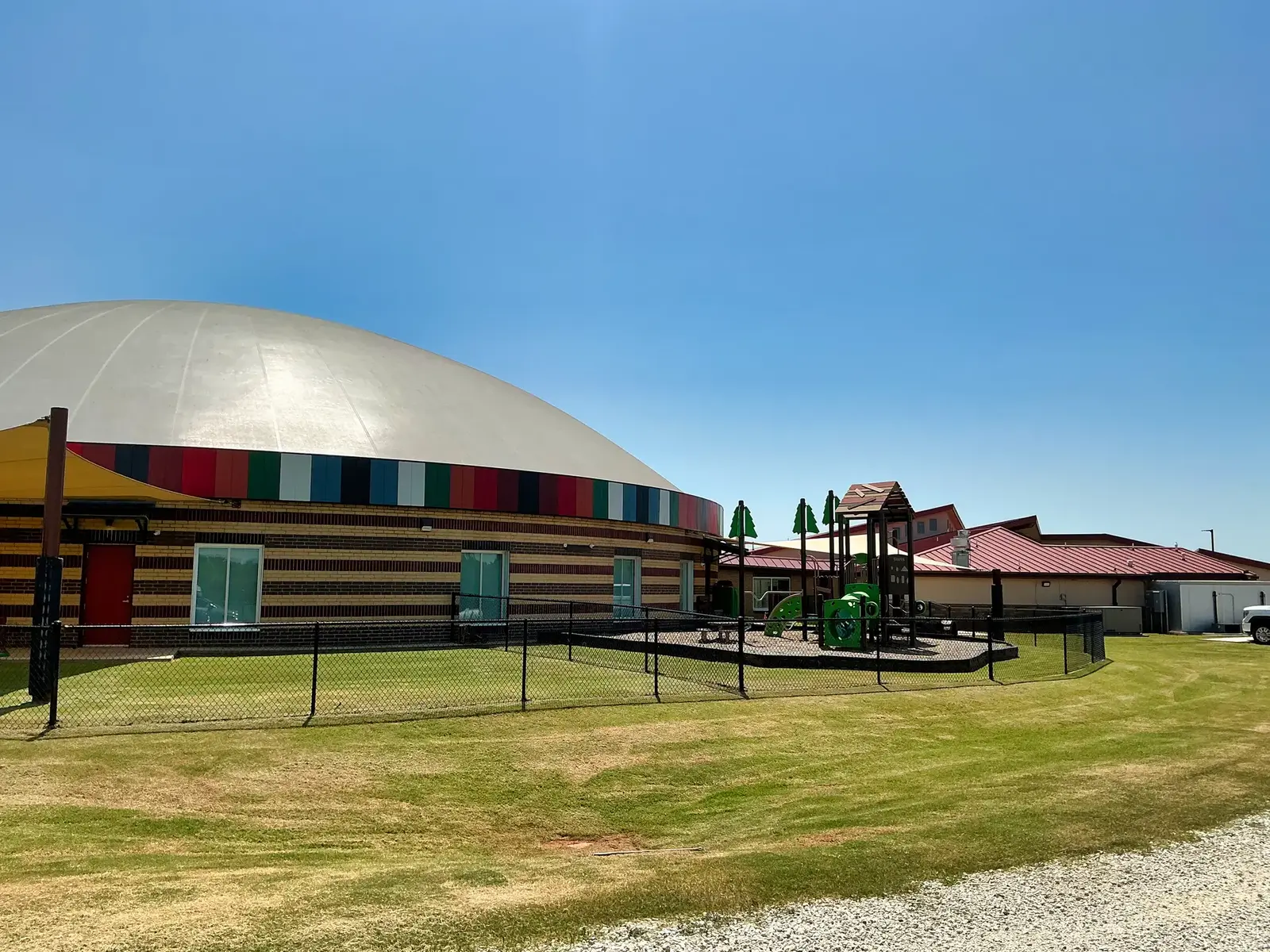
Blue skies, green grass and playgrounds surround the Kickapoo Community Childcare Center.
Tornadoes and Oklahoma
The largest tornado to hit the McLoud area was an F5 in 1999. Weather Underground published a retrospective on that storm, reporting: “This single tornado was responsible for 36 deaths and approximately $1 billion in damage, the state’s single costliest tornado at the time. That included 1,800 homes destroyed and another 2,500 homes damaged.”
Not every tornado in the region is as catastrophic, but they are consistently frightening and often dangerous. According to a report published in April 2025 by The Oklahoman, “Last year, Oklahoma saw 91 tornadoes. Over the past decade, the annual number of tornadoes in Oklahoma has varied from 148 in 2019 to just 38 the following year.”
Tornado warnings are common. Weather.gov—an official site of the National Oceanic and Atmospheric Administration (NOAA)—continues to publish reliable tornado data despite recent political and funding challenges. The tornado report for Oklahoma shows that from 2015-2025, the windswept state averaged 90 tornadoes per year.
Tornado sirens are simply part of life, especially between March and June. Put another way, Oklahoma sees about one tornado every 1.33 days during peak season. “Those tornados occur around us, and it could happen at any year that one would come right toward us,” Walker said. “Now we will be ready.”
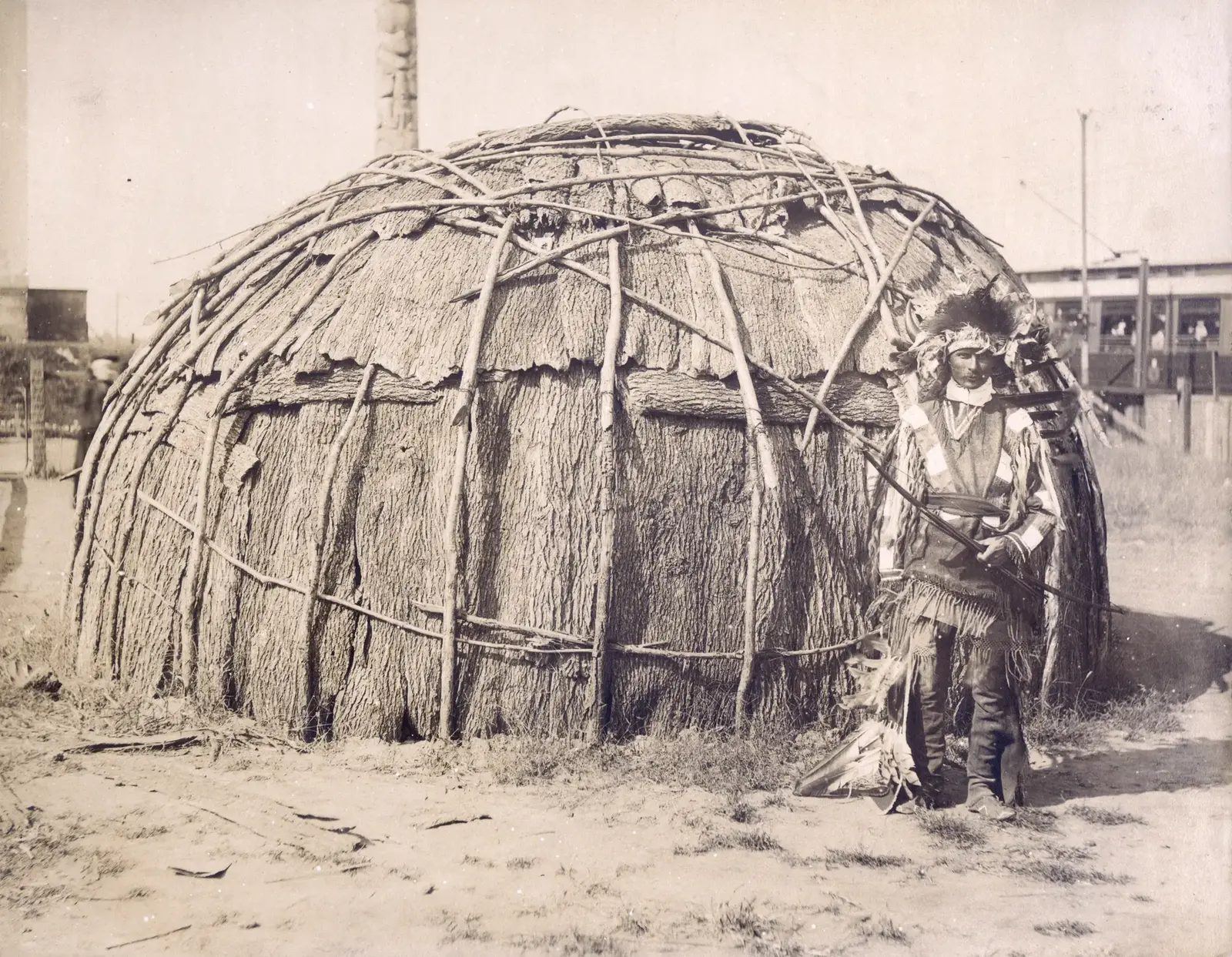
The Kickapoo constructed domes for their winter homes using wooden framework and bark.
Tradition and Culture
“We had to have a cultural aspect for our center, and traditionally, we have both summer and winter homes,” Walker said. "A traditional winter Kickapoo home is a dome shape.” This made it easy for the community to adopt the Monolithic Dome for their new childcare center.
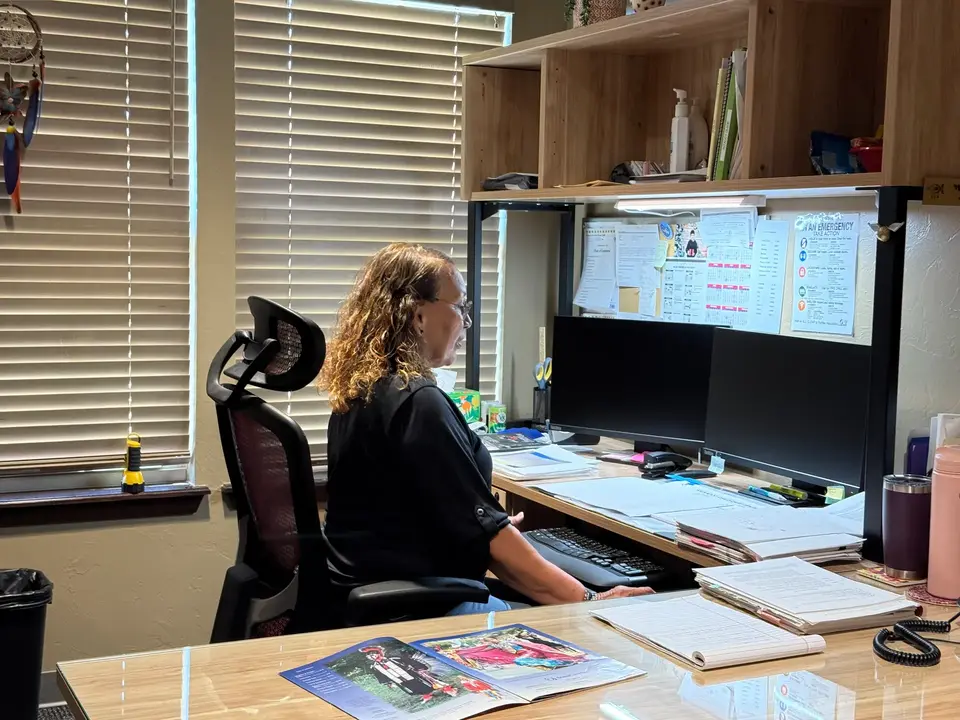
Mary Walker waits for her computer to start up in her office at the KCCC administration building.
Walker said that the reputation that Monolithic Domes have for efficiency contributed to the attraction of a dome for the group, and the energy costs are supposed to go down from what they were in the old building. “Every time I walk into the new dome, it’s always a comfortable temperature,” Walker said. “It feels safe there. It feels strong. Maybe it’s all that concrete.”
The new community center is almost 13,000-square-feet and has room for everything from infant day care to after-school programs. Kids are bussed from the local public school to KCCC where they can participate in a variety of enrichment programs.
Walker said the staff has been pleased with the dome, and she got to watch its construction from her office. She saw the Airform inflate and saw the concrete trucks lined up and ready. “I never saw anything like it before, and it was remarkable,” she said.
“It went up pretty fast. I think it’s even better than we thought it would be. I’m glad that we got approval to build it and I’m just glad for the children because they’re going to be safe now.”
Photo Tour of the Kickapoo Community Childcare Center
Fun on the Outside
Around the exterior of the dome are fenced playgrounds with shade sails. The dome roof is highlighted by a multicolored band representing the traditional beadwork of the Kickapoo.
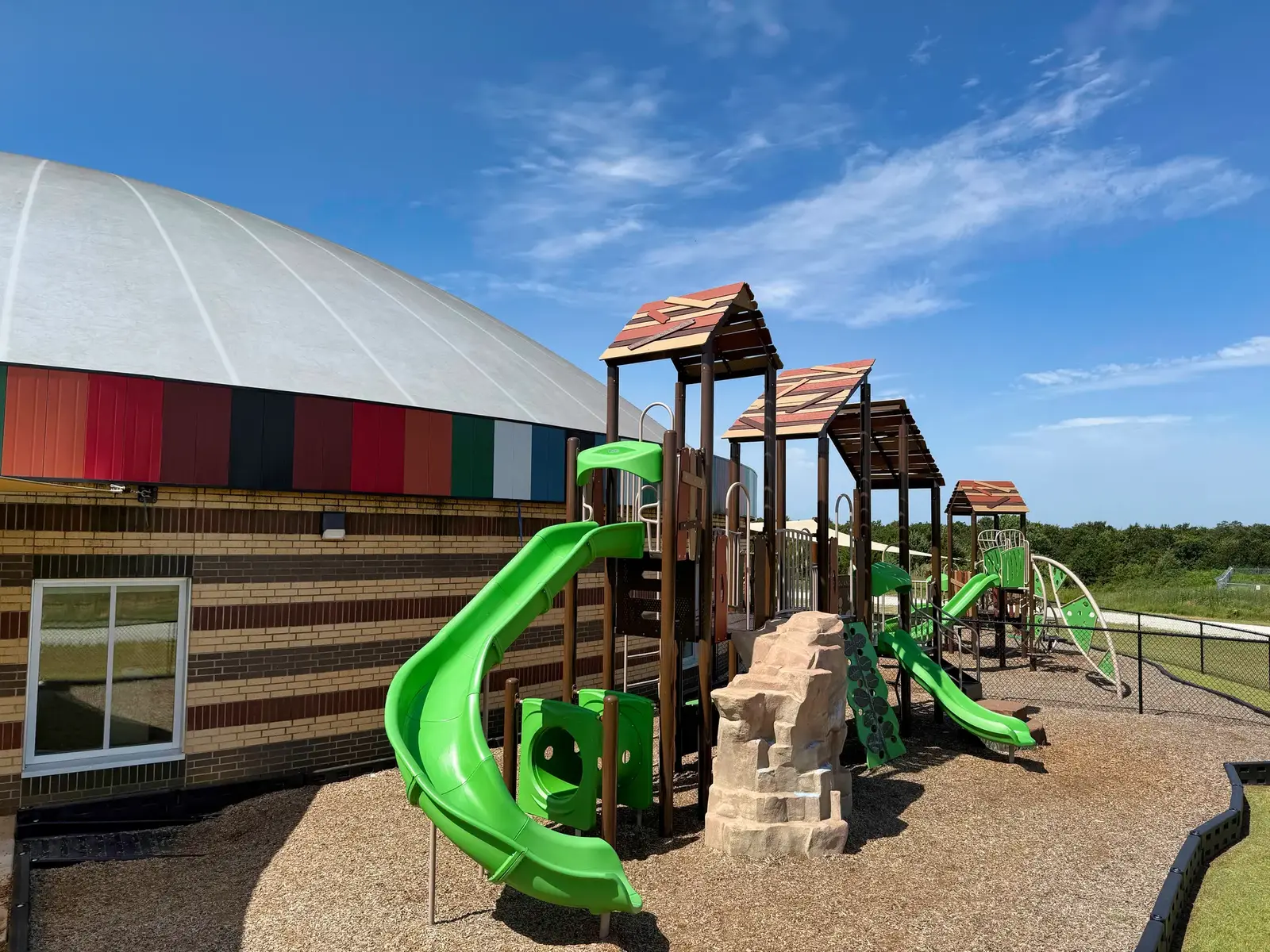
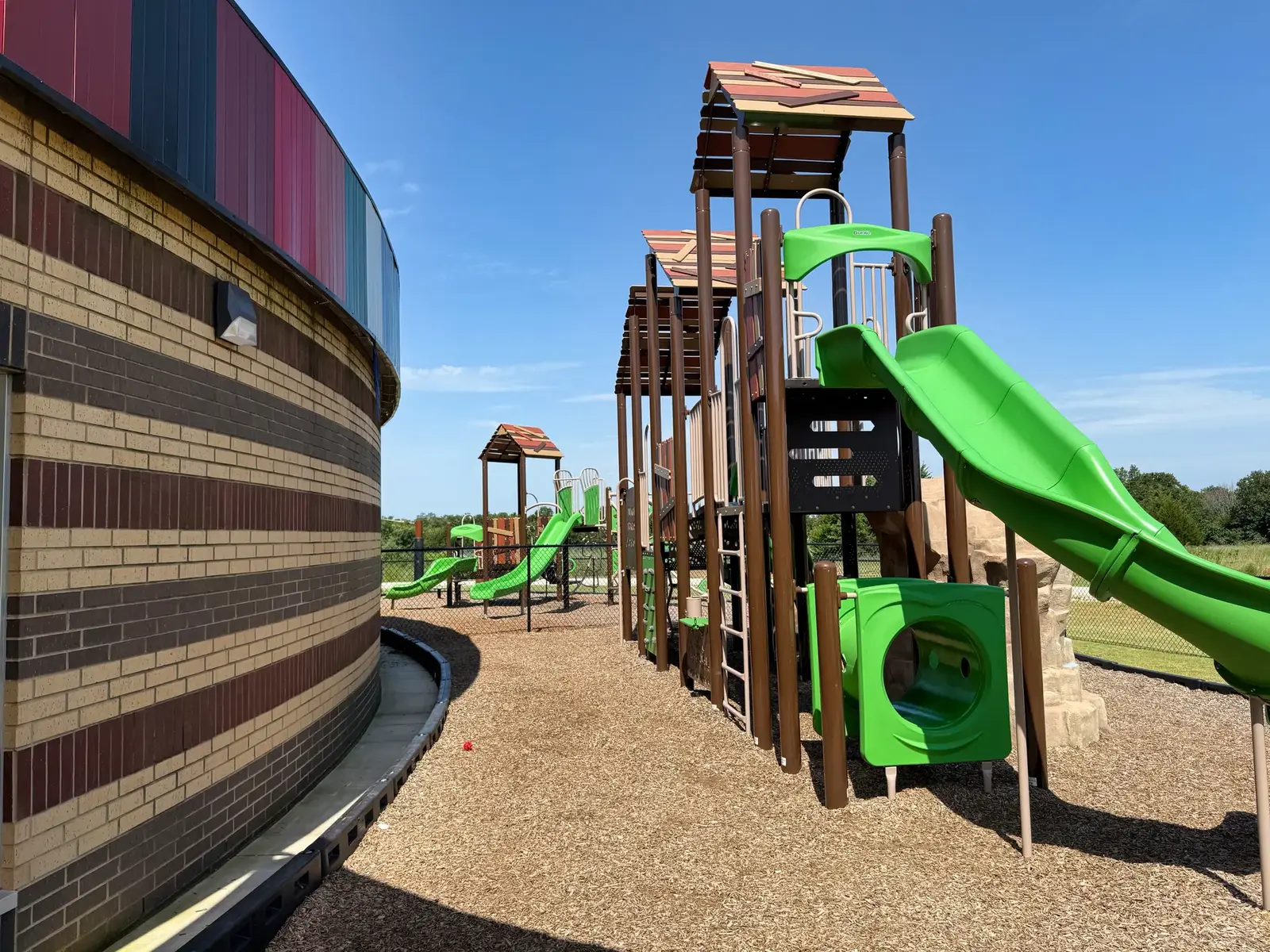
[Left] The colors of traditional Kickapoo beadwork stand out around the perimeter of playgrounds. [Right] Multiple fenced playgrounds ring the perimeter of the 135-foot diameter dome childcare center.
Tribal Clans of the Kickapoo
A five-sided central reception area displays five paintings representing Kickapoo tribal clans. Each distinct clan has a leader who conducts clan ceremonies, which include the naming of young children and babies. Gilberto Salazar, who created the beautiful artwork, signs his paintings with his traditional Kickapoo name, KIANNA. Salazar and his wife, Sara, and their son, are an active part of the Kickapoo Tribe of Oklahoma. The artist was raised within the tribal culture and speaks the Kickapoo language fluently.
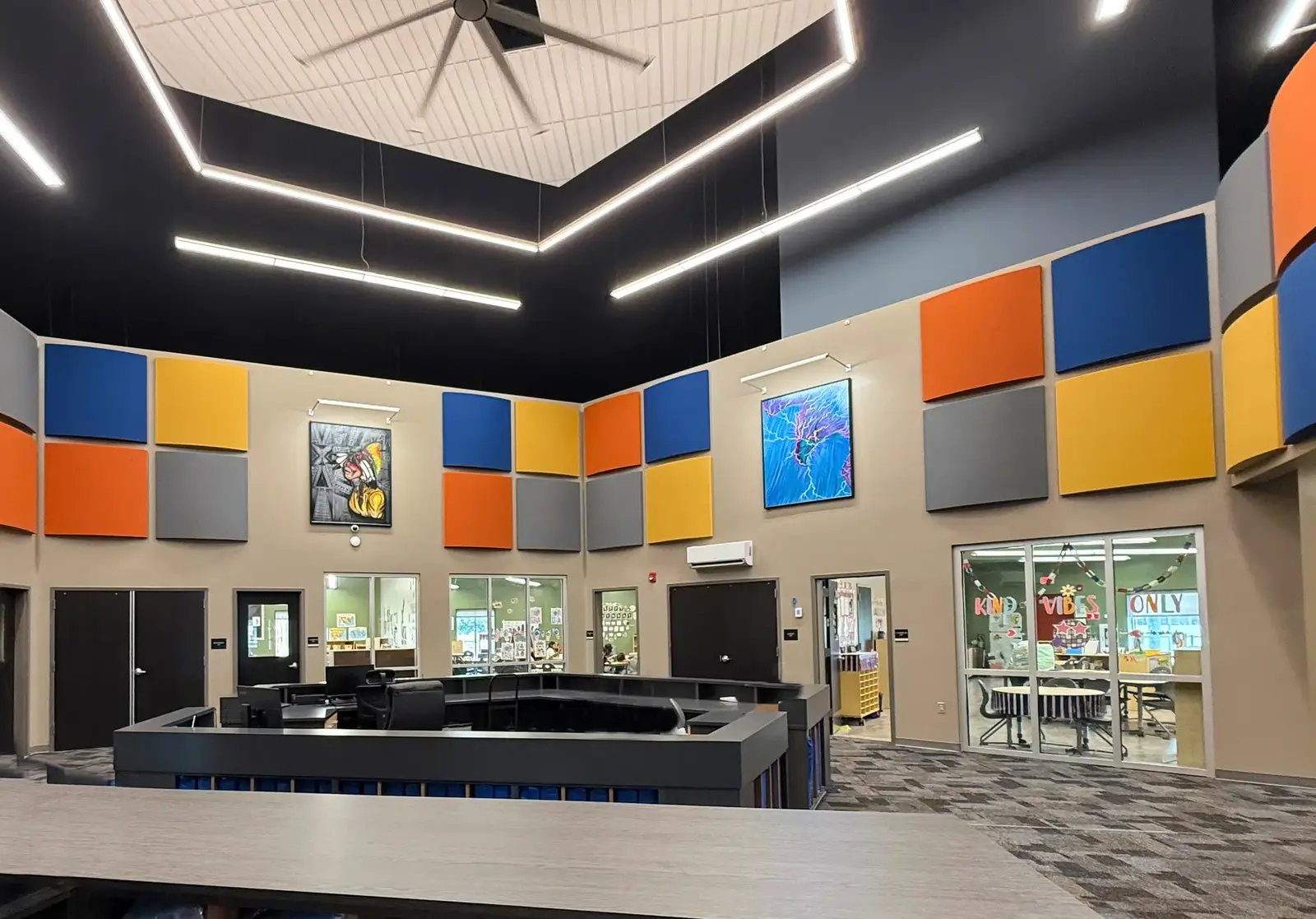
The central core of the childcare facility is a dynamic nexus featuring illustrations depicting tribal clans of the Kickapoo.
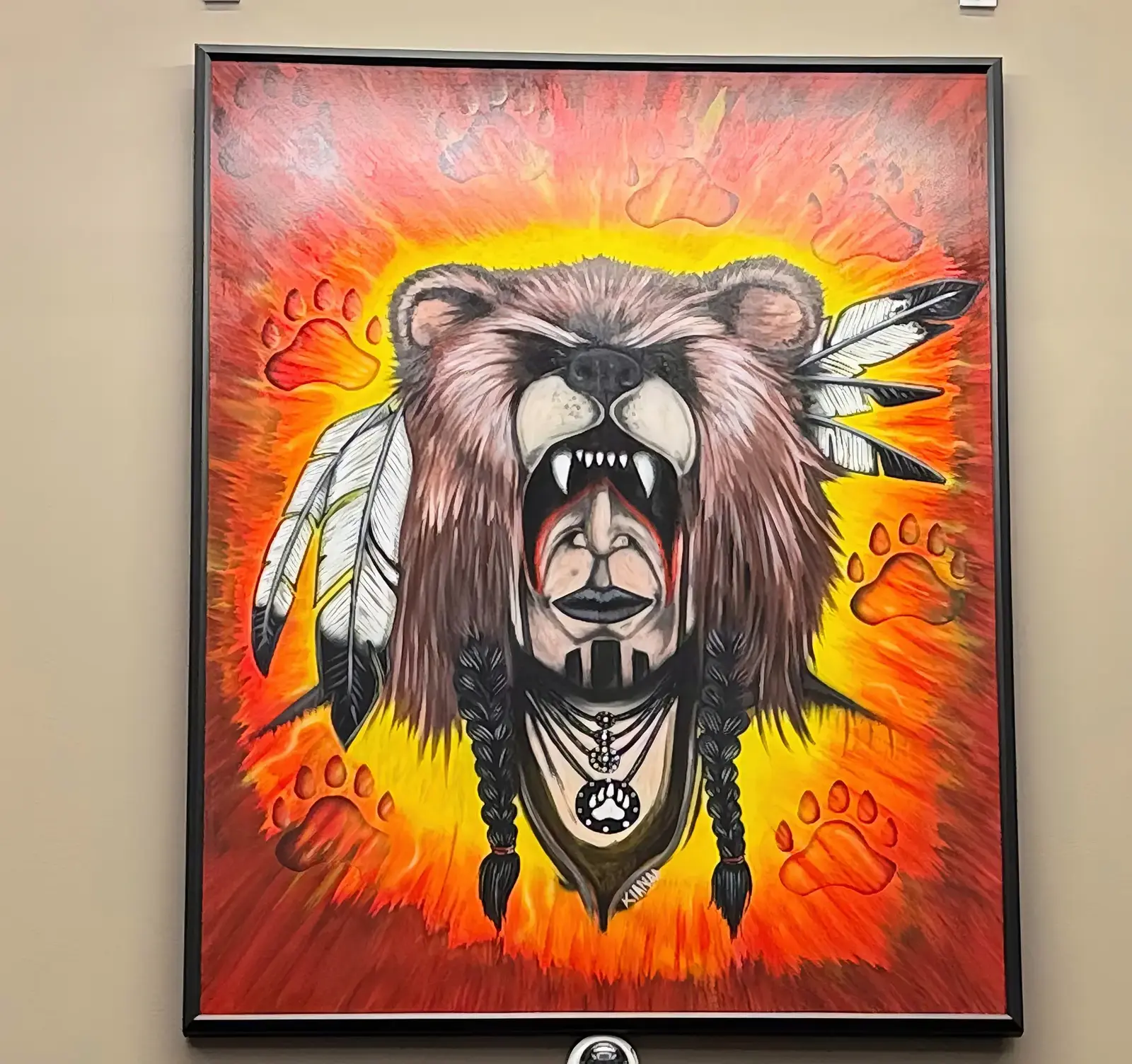
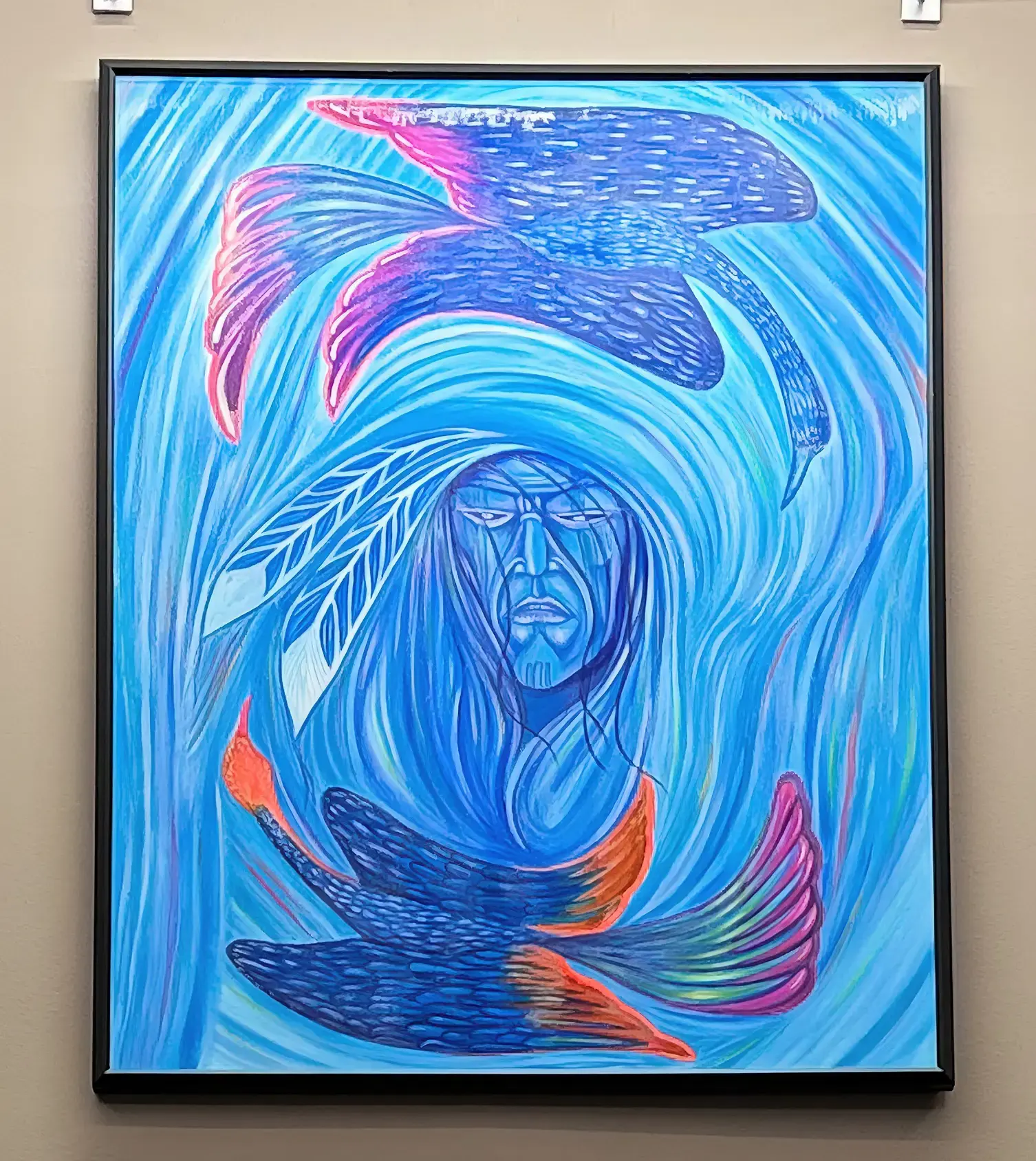
[Left] Tribal Illustration by KIANNA/Gilberto Salazar [Right] Tribal Illustration by KIANNA/Gilberto Salazar
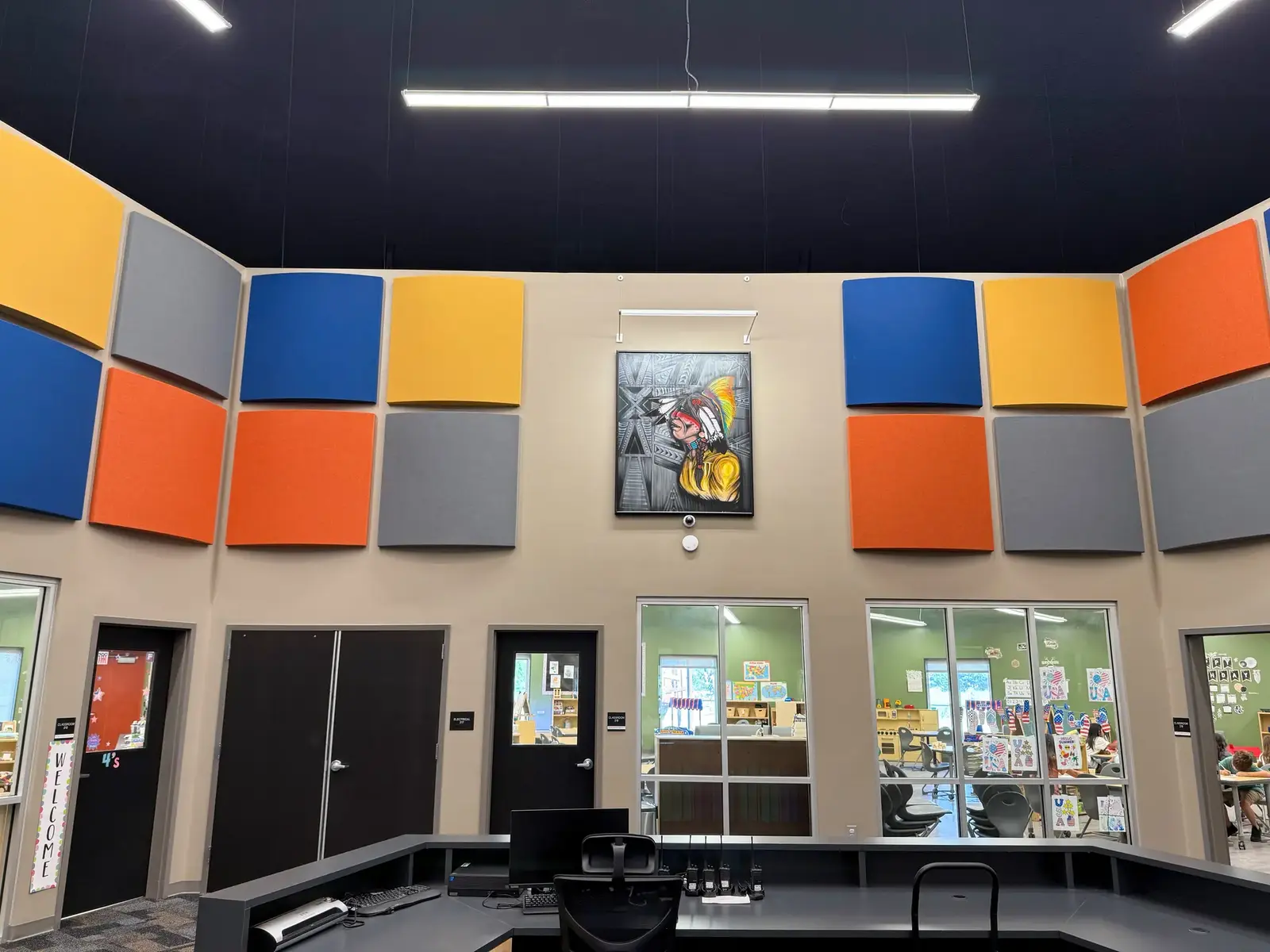
The reception area is a hub where staff can easily watch over every classroom and student.
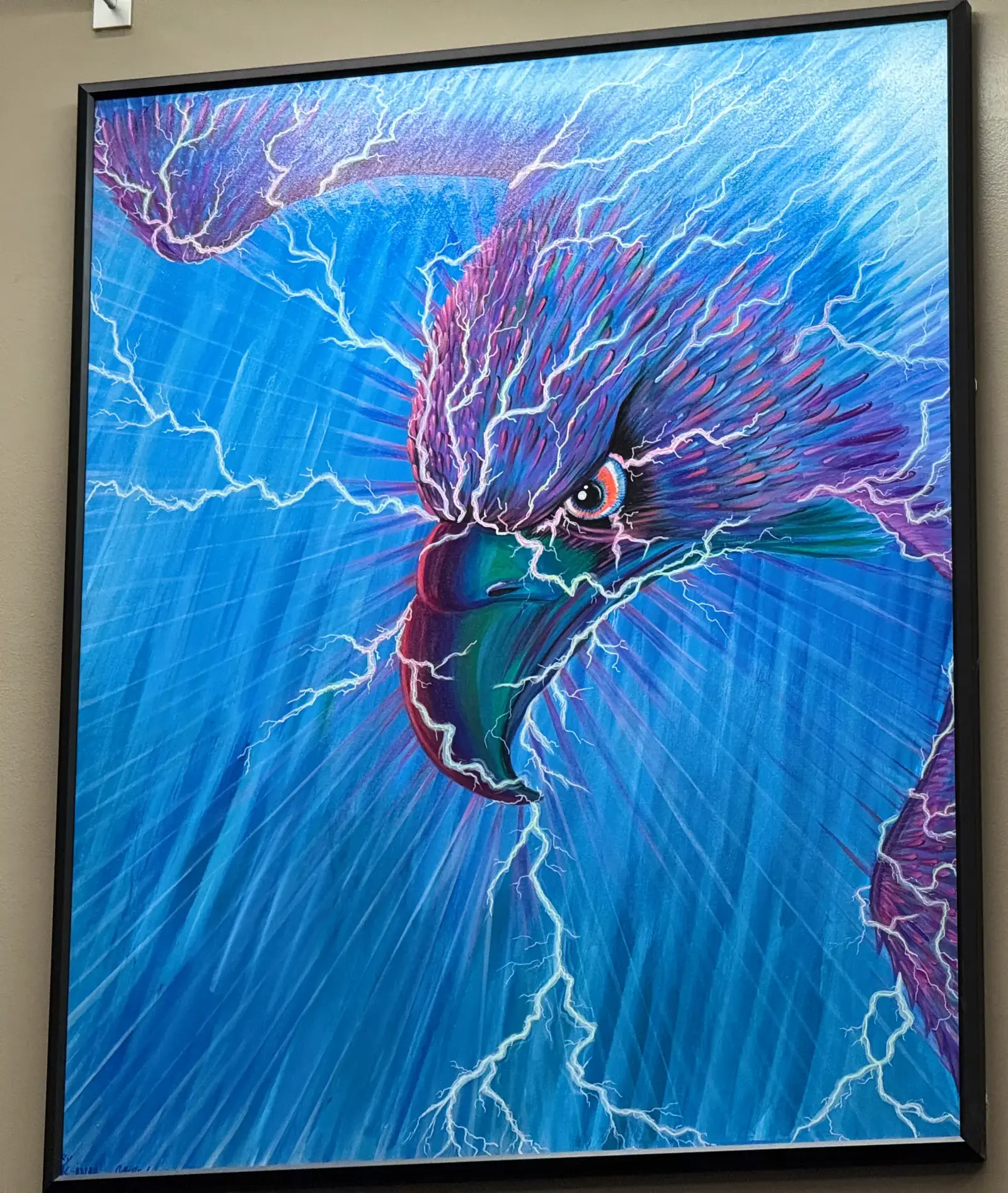
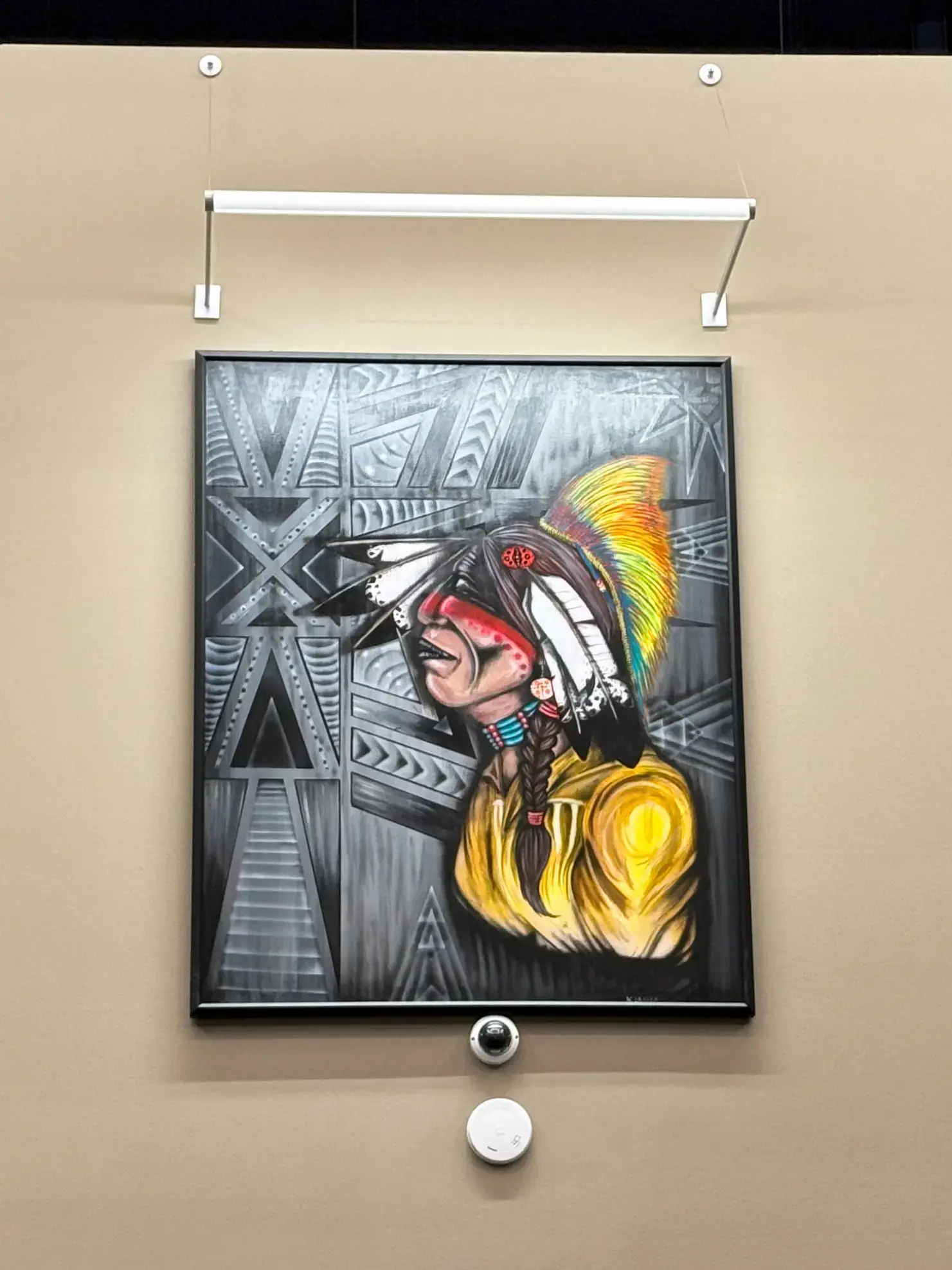

[Left] Tribal Illustration by KIANNA/Gilberto Salazar [Center] Tribal Illustration by KIANNA/Gilberto Salazar [Right] Tribal Illustration by KIANNA/Gilberto Salazar
Edification on the Inside
Nine classrooms surround the reception area. Each classroom has private access to the playgrounds ringing the dome. The classrooms feature comfy sitting areas for group talks, tables clustered together with easy access to art supplies, and many different stations for unique learning opportunities. Storage is well thought out and plentiful, and every classroom has a kitchenette.
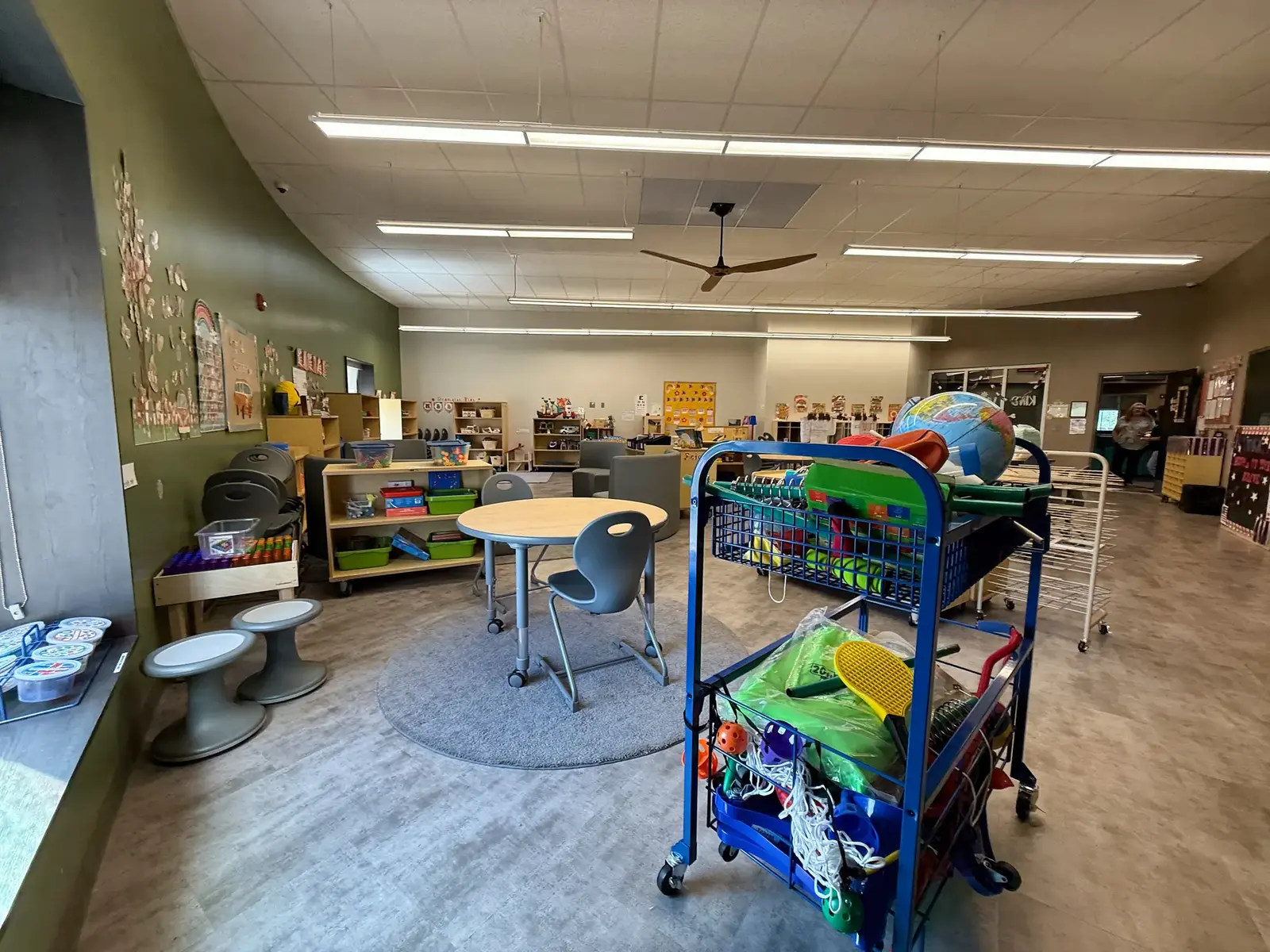
The classrooms at the KCCC have a variety of tables, storage and seating.
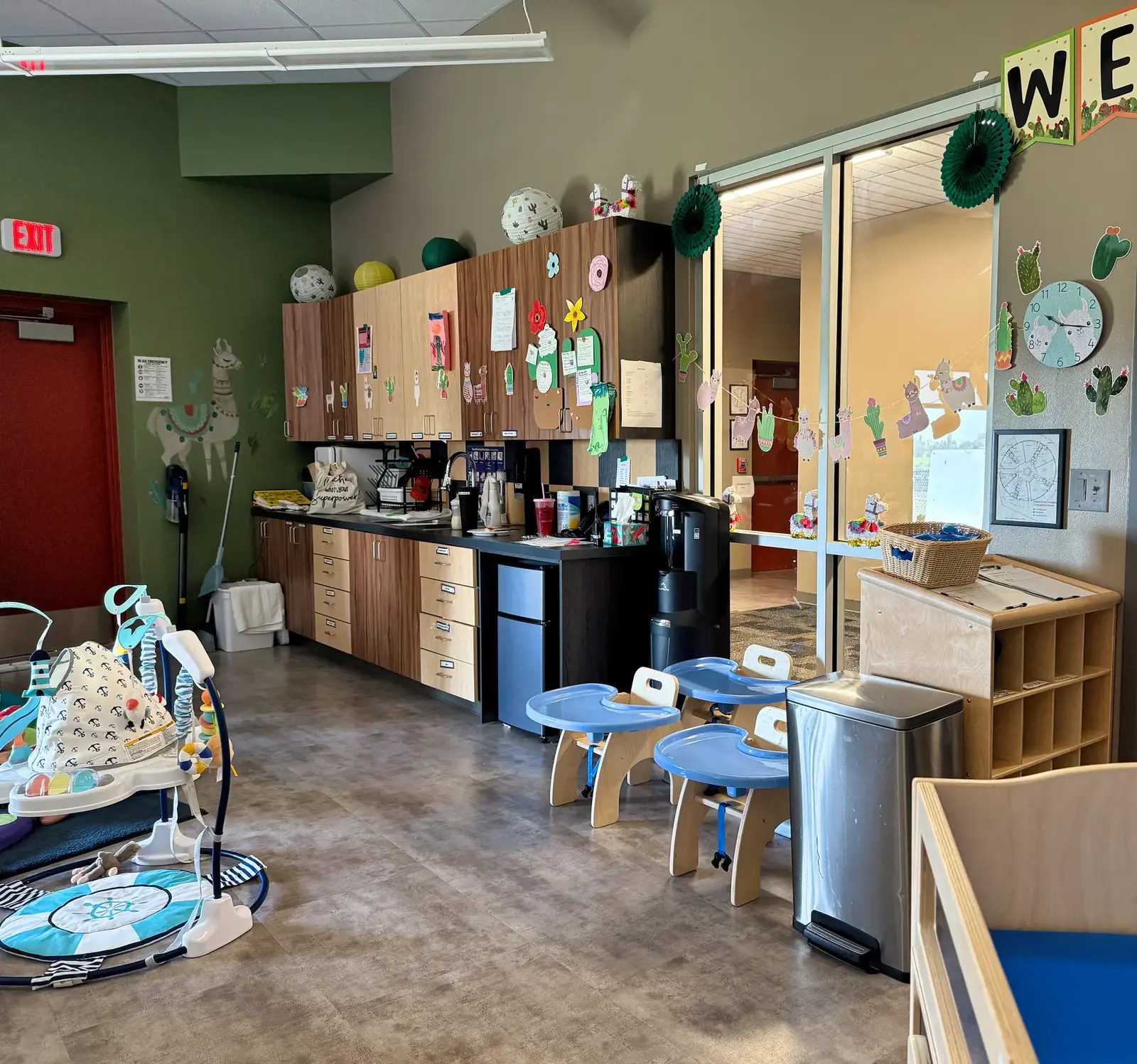
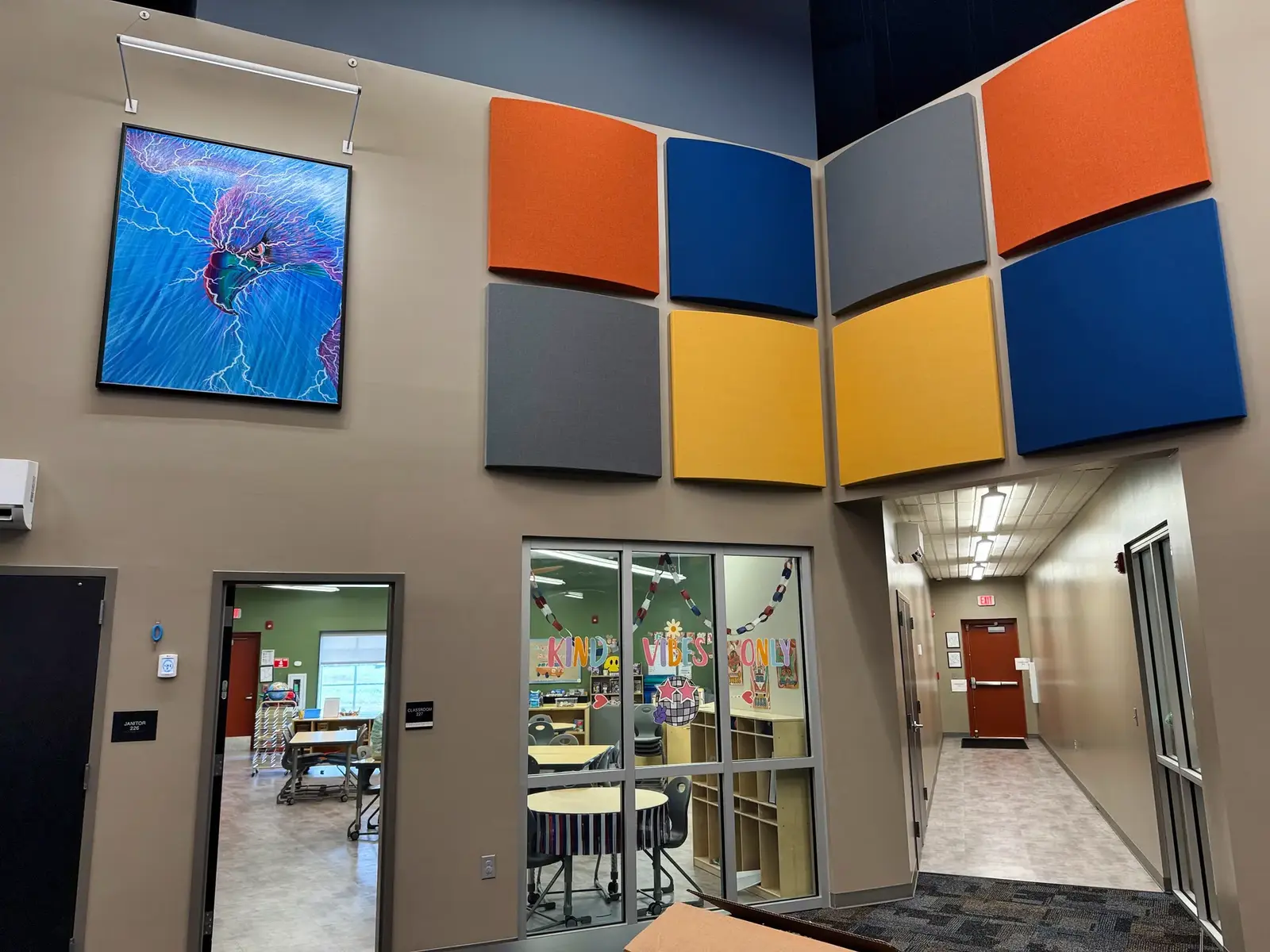
[Left] A bright, cheerful room for toddlers and babies to learn and grow. [Right] The secure entrance remains locked except during closely monitored pick-up and drop-off times. The entrance hallway is next to a classroom with added fire protection.
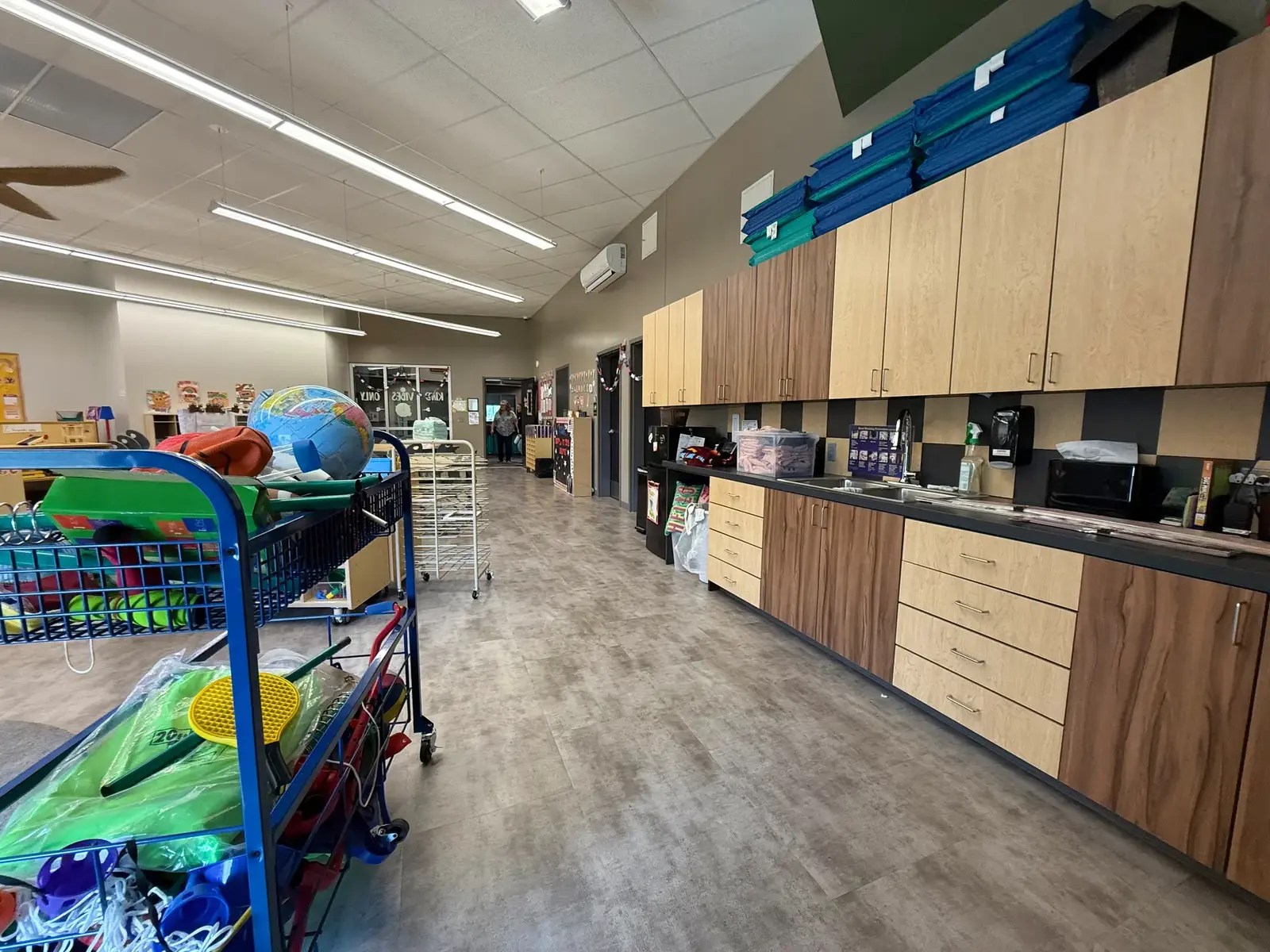
Every classroom has a functioning kitchenette and loads of storage.
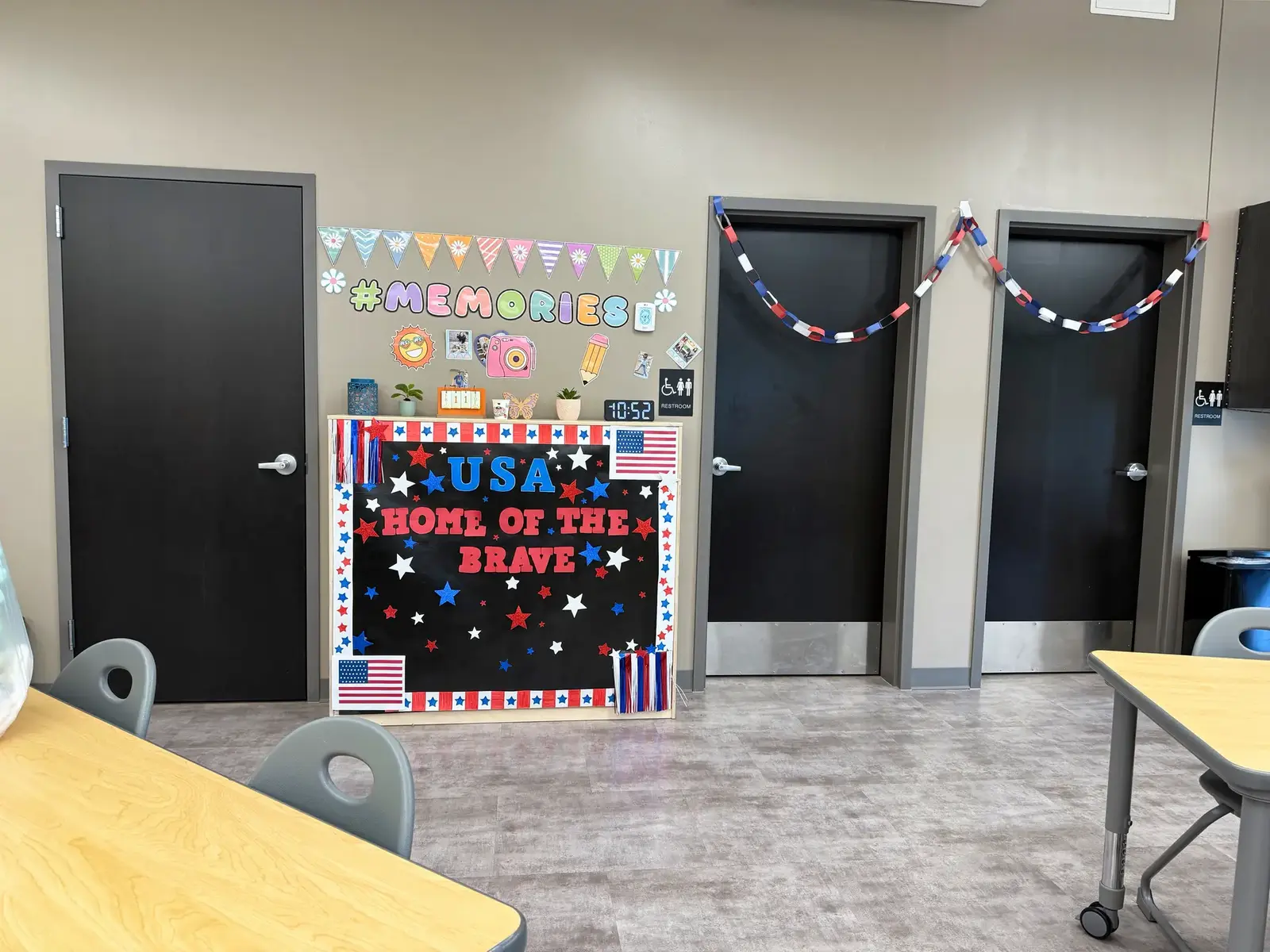
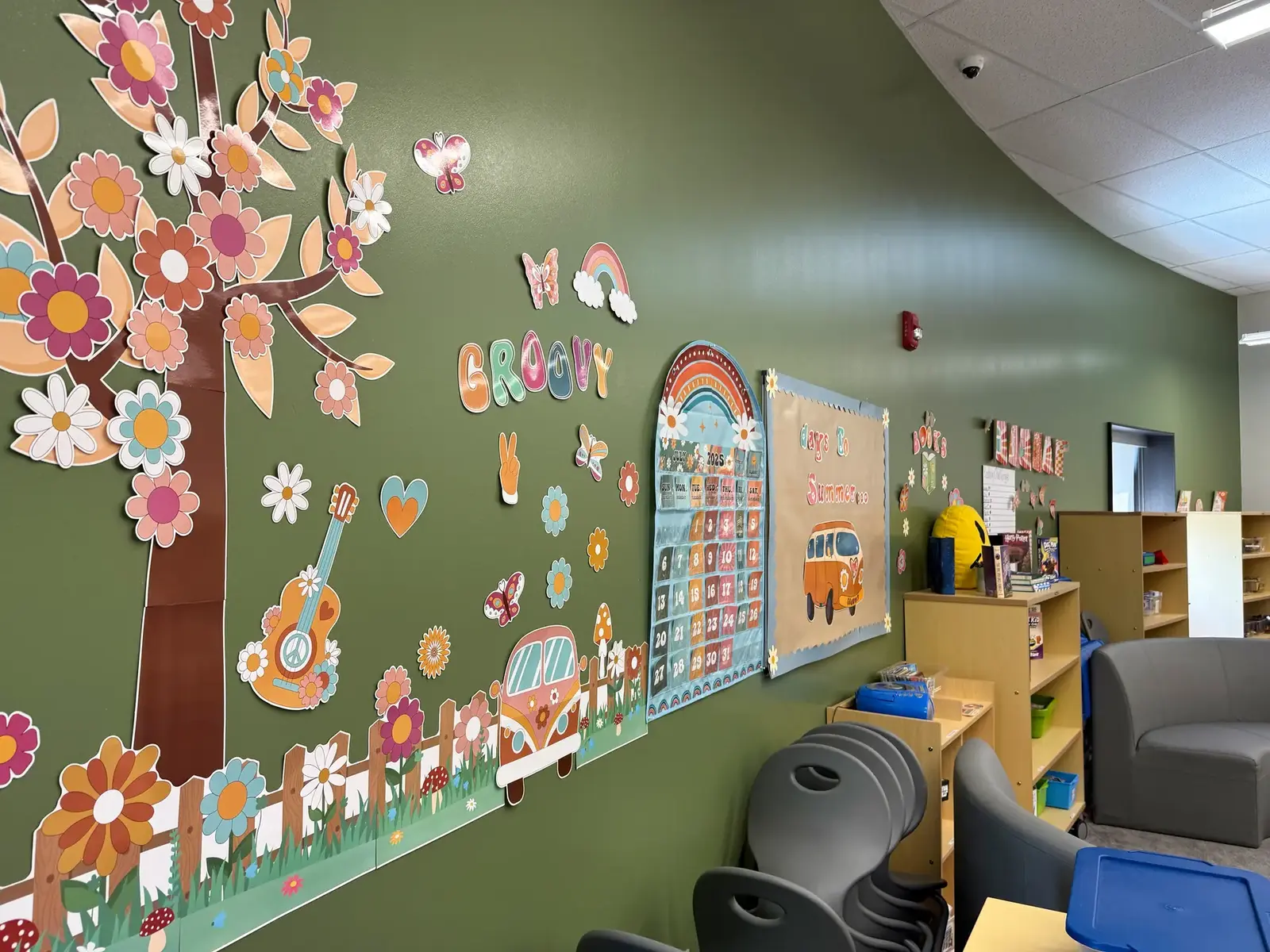
[Left] This classroom features extra fire protection with interior concrete walls, a set of bathrooms and a large storage closet. [Right] The interior of the vertical stemwall of the Monolithic Dome provides lots of smooth surface area for classroom artwork and seasonal displays.
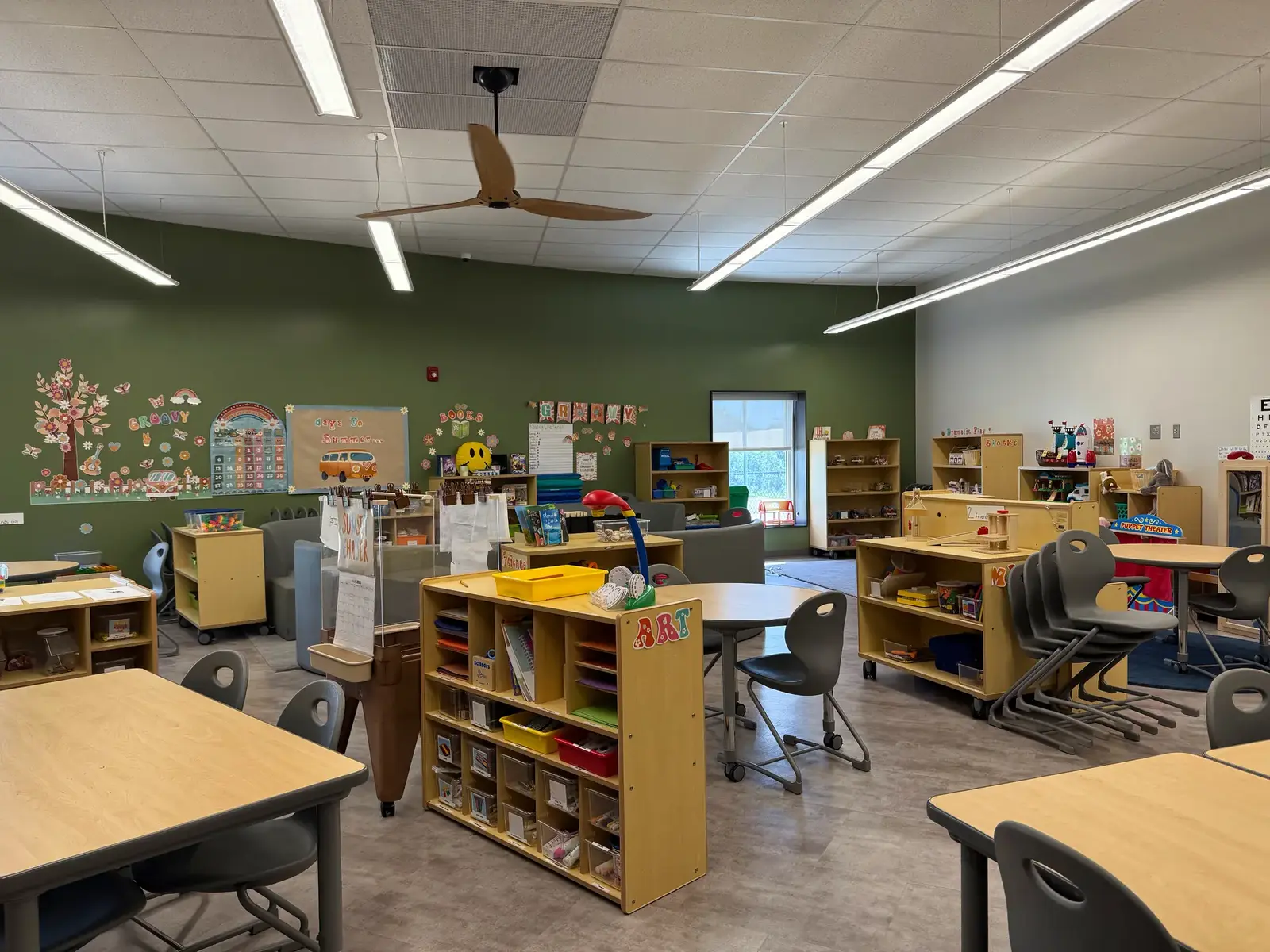
Tables for group art projects, lounge seating for story time, and bookshelves on casters make for endless enrichment activities.
Doubling Down on Safety
A tornado-proof door has been installed in the hallway between the school’s traditional administrative office building and the dome. The massive steel door is lowered when the dome is occupied during a tornado.
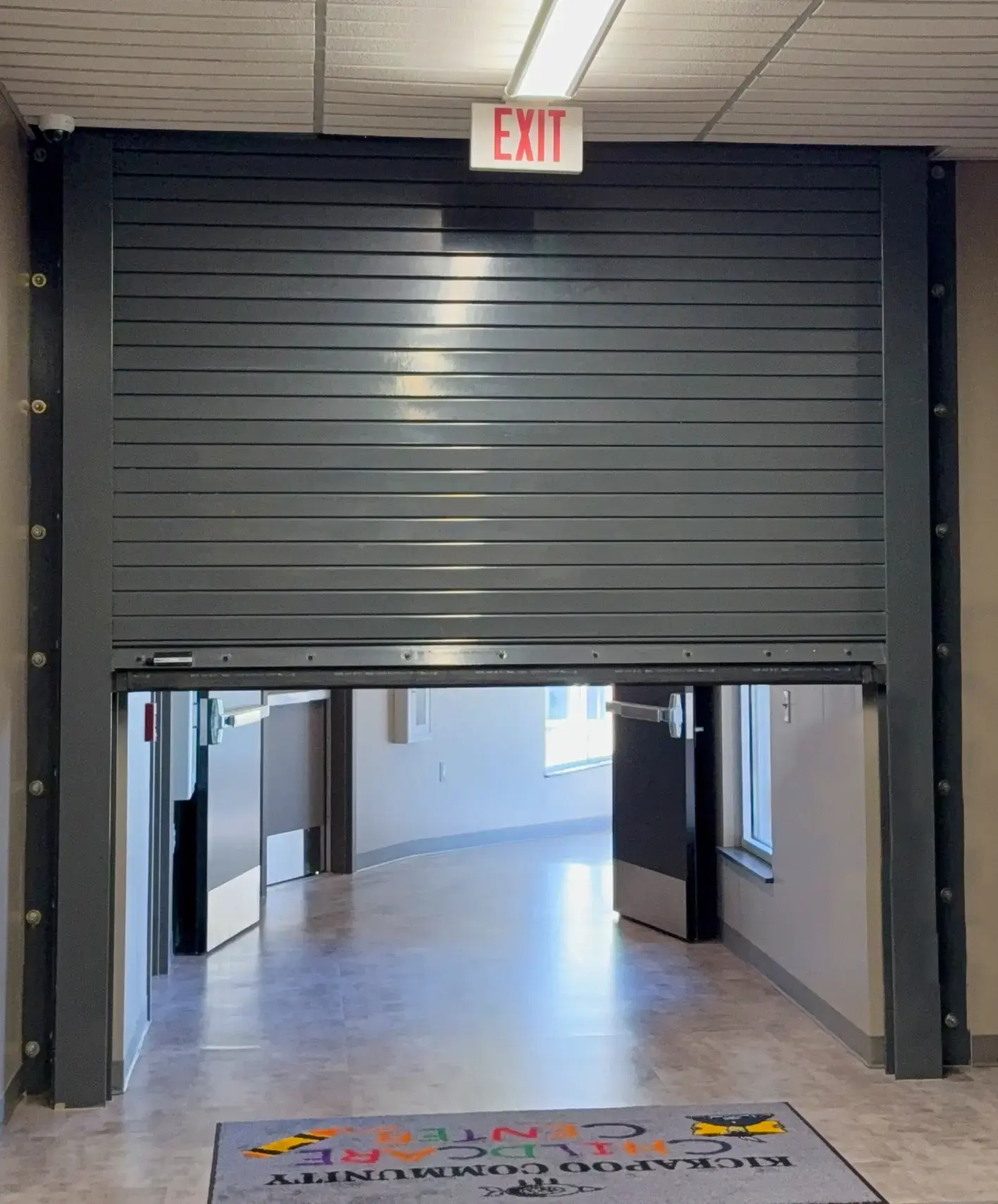
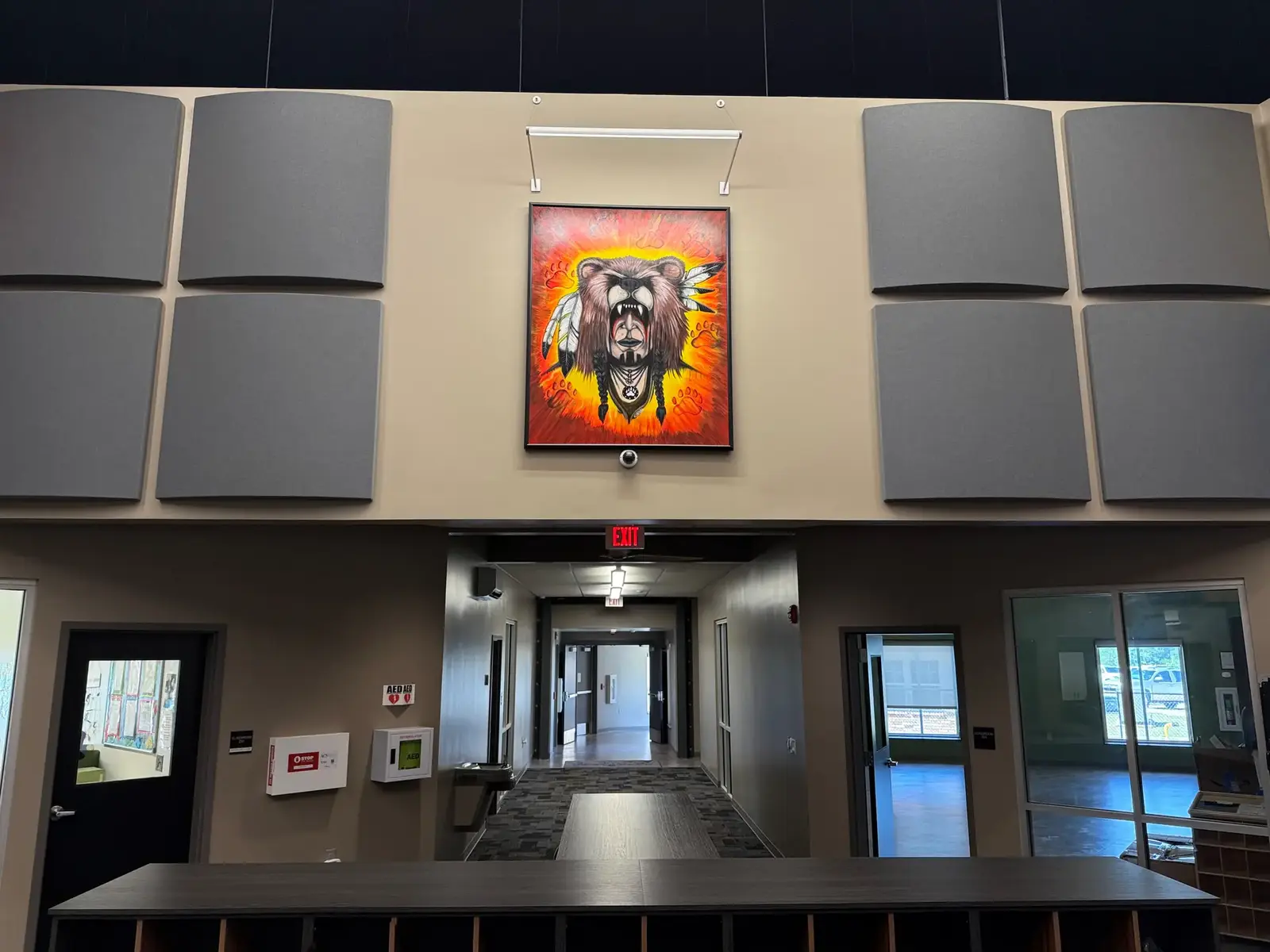
[Left] Between the admin building and the dome childcare center, the 3-hour fire rated McKeon vertical coiling door automatically closes in case of emergency, ensuring the integrity of the dome and safety of the children. [Right] A tribal clan illustration presides over the hallway between the administration building and the dome.
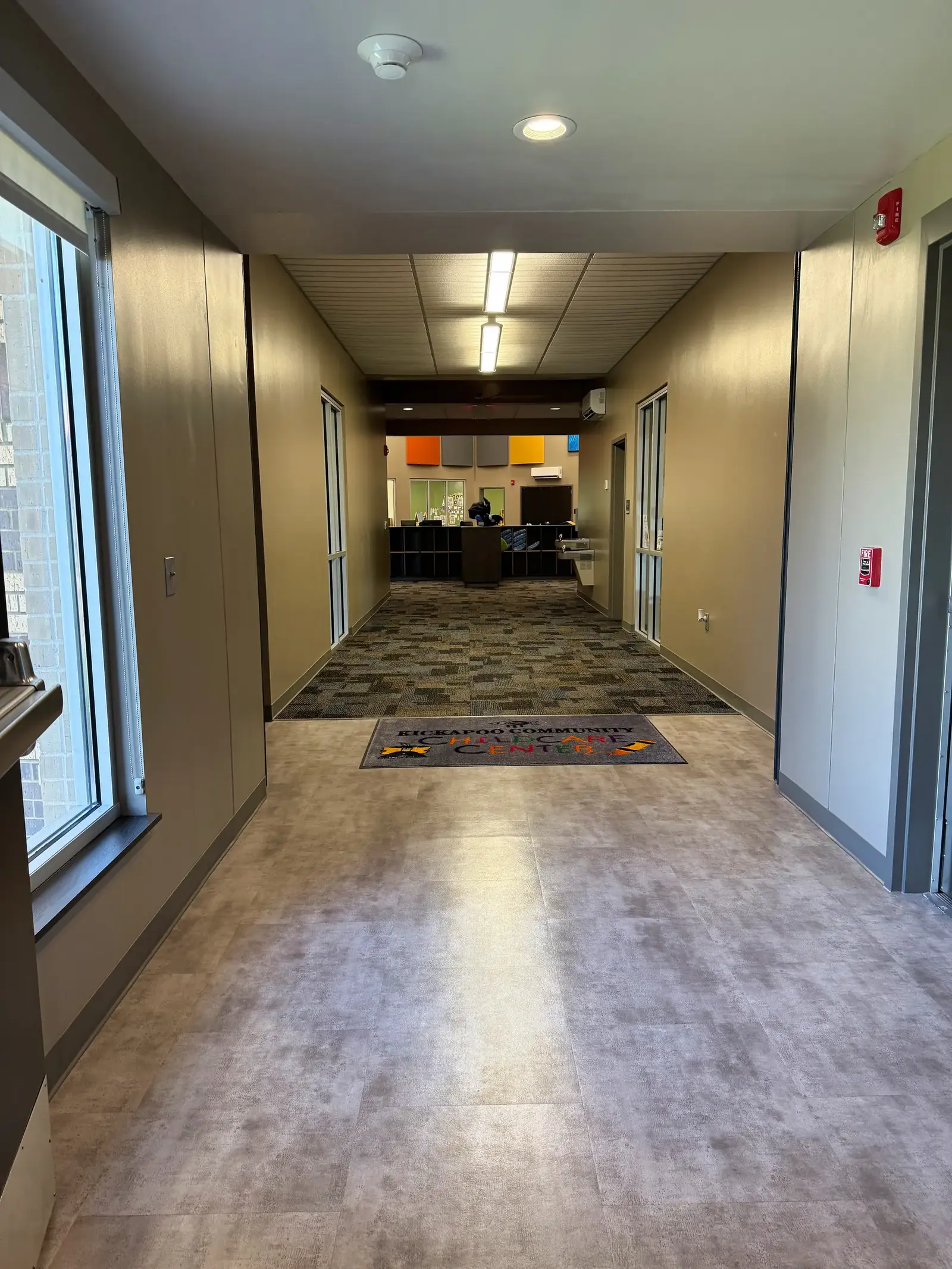
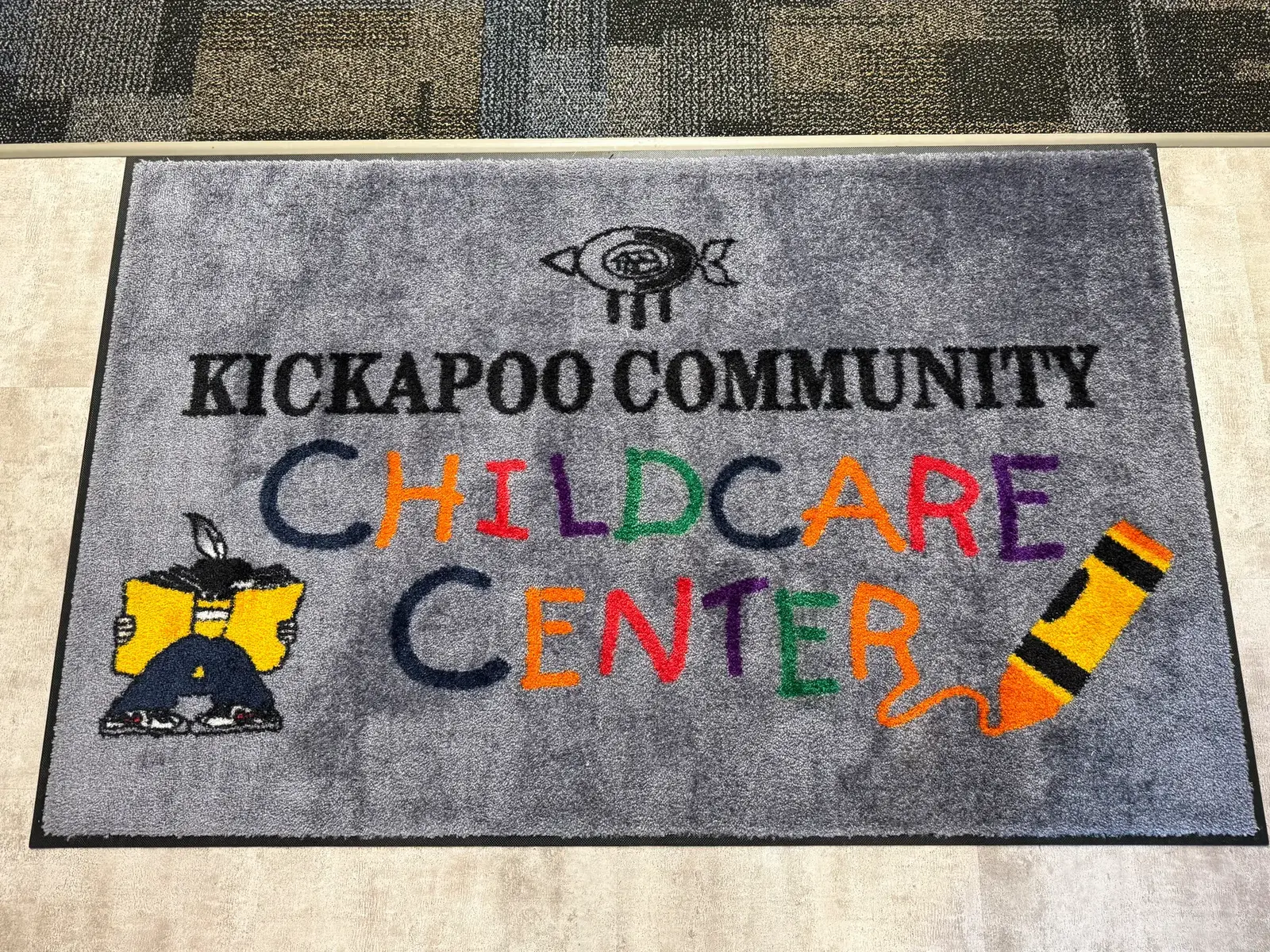
[Left] Looking into the dome from the administration building, a car seat is perched on a pony wall outfitted with tons of customizable storage. [Right] The original logo for the KCCC is featured on the mat welcoming staff walking into the dome from the administrative offices.
Even More to Love
The KCCC is loaded with amenities like offices, an industrial kitchen, room to grow and a staff lounge.
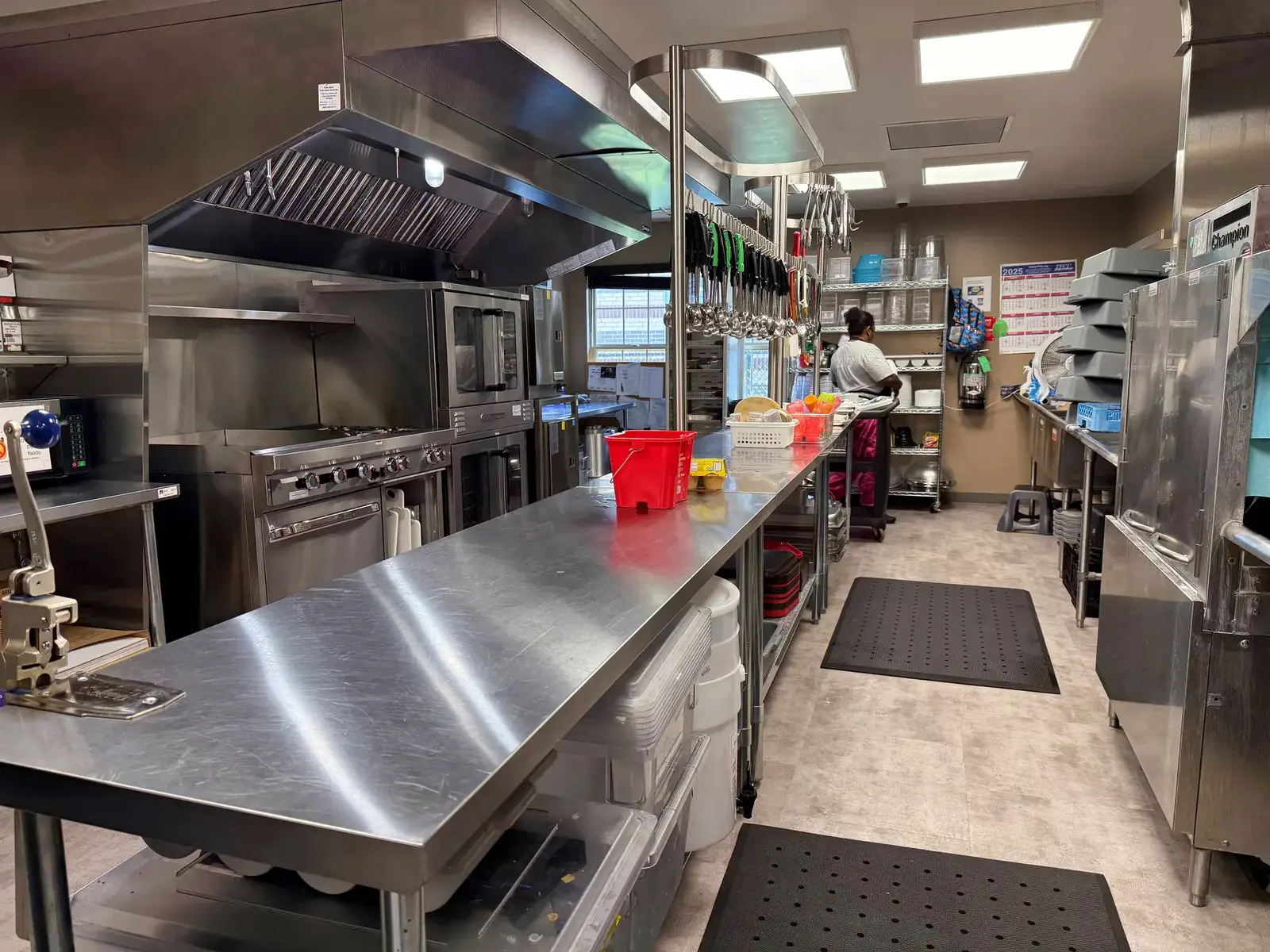
The commercial kitchen at the KCCC features easy-to-clean stainless steel prep and cooking areas along with top-tier appliances.
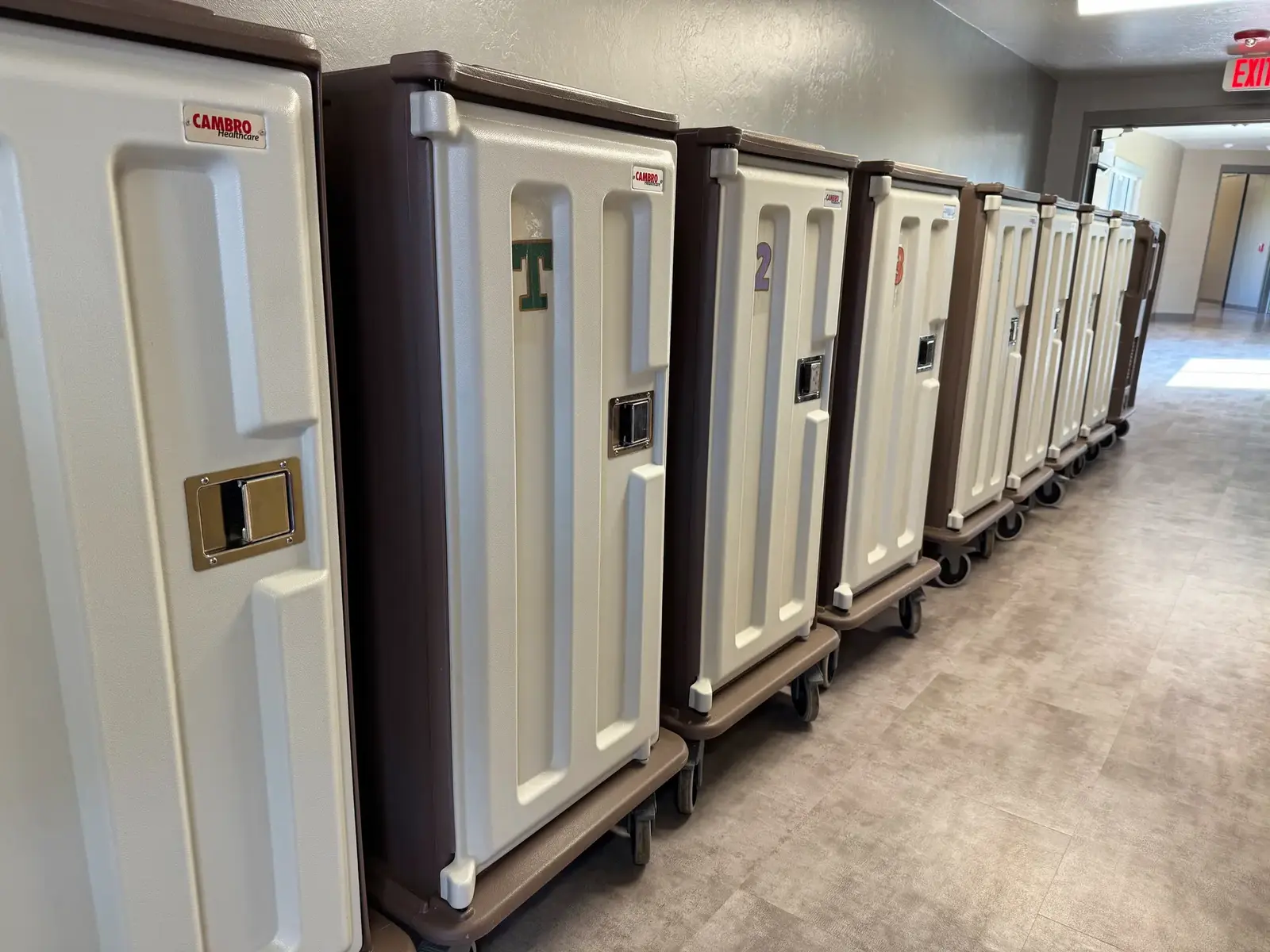
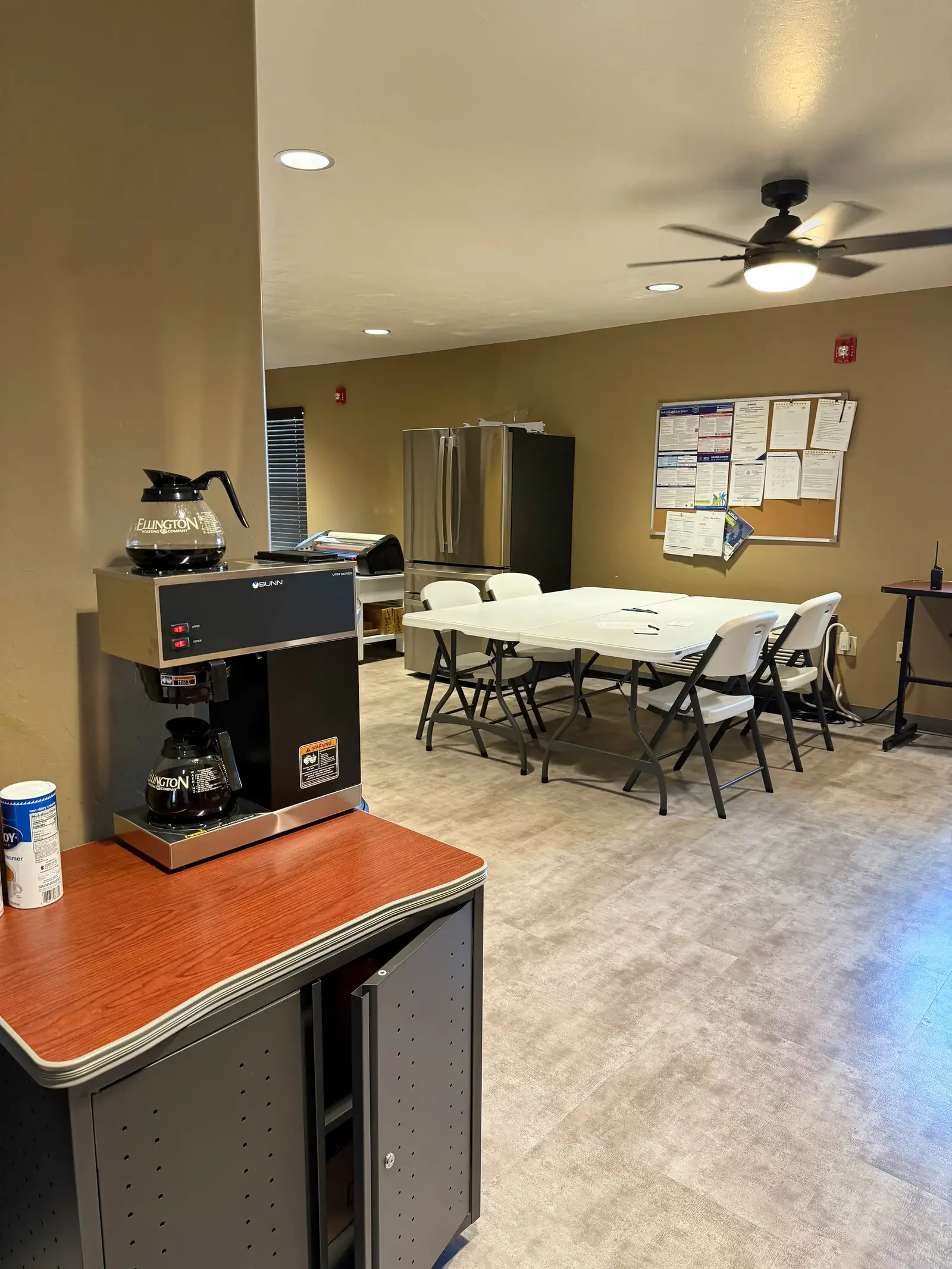
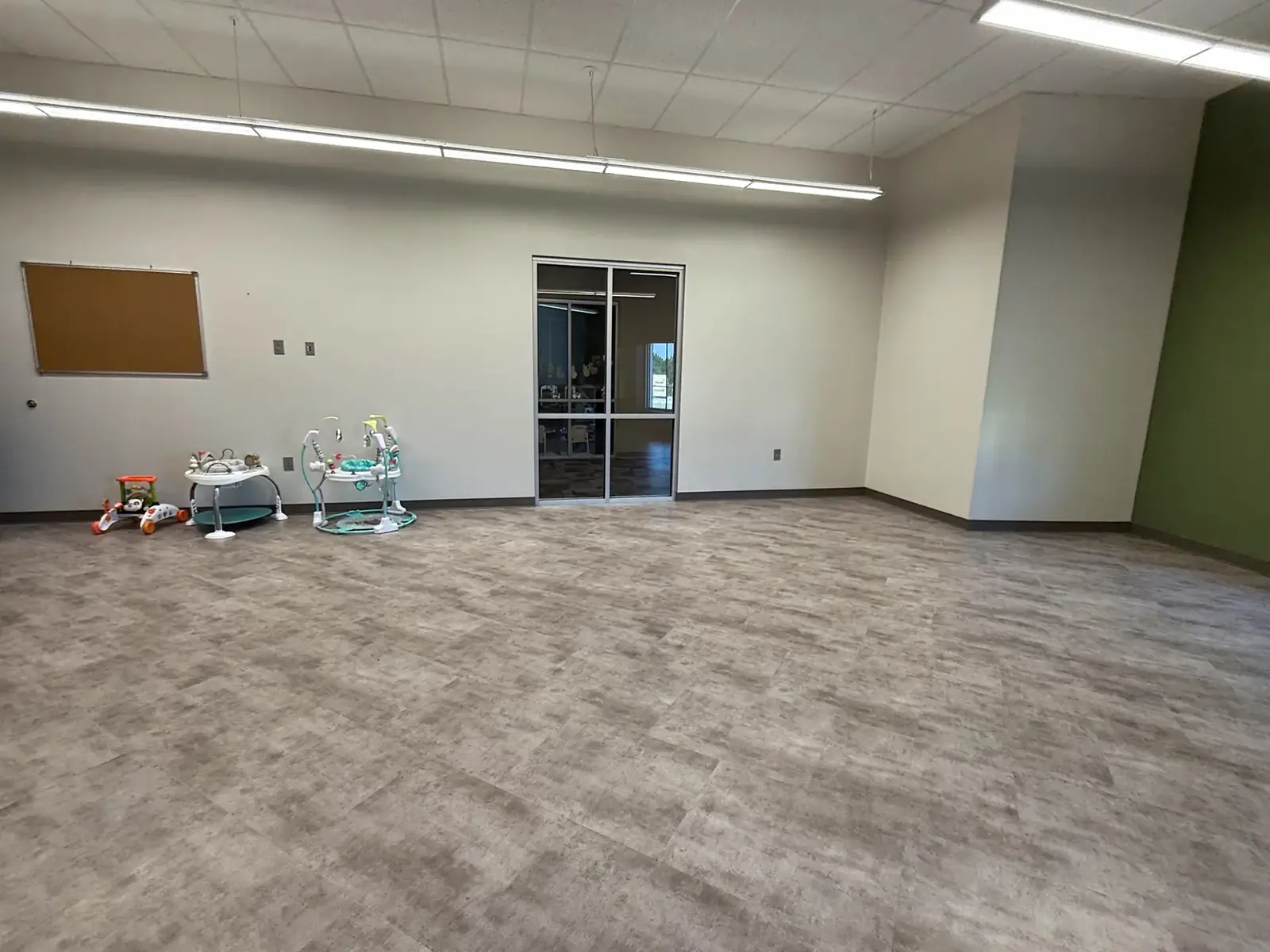
[Left] These insulated trolleys convey food from the industrial kitchen in the admin building to the dome childcare center, ensuring food stays piping hot and fresh. [Center] A little peek into the teacher’s lounge. [Right] There’s room to grow here. This space will soon be outfitted to house a second classroom for infants and toddlers.
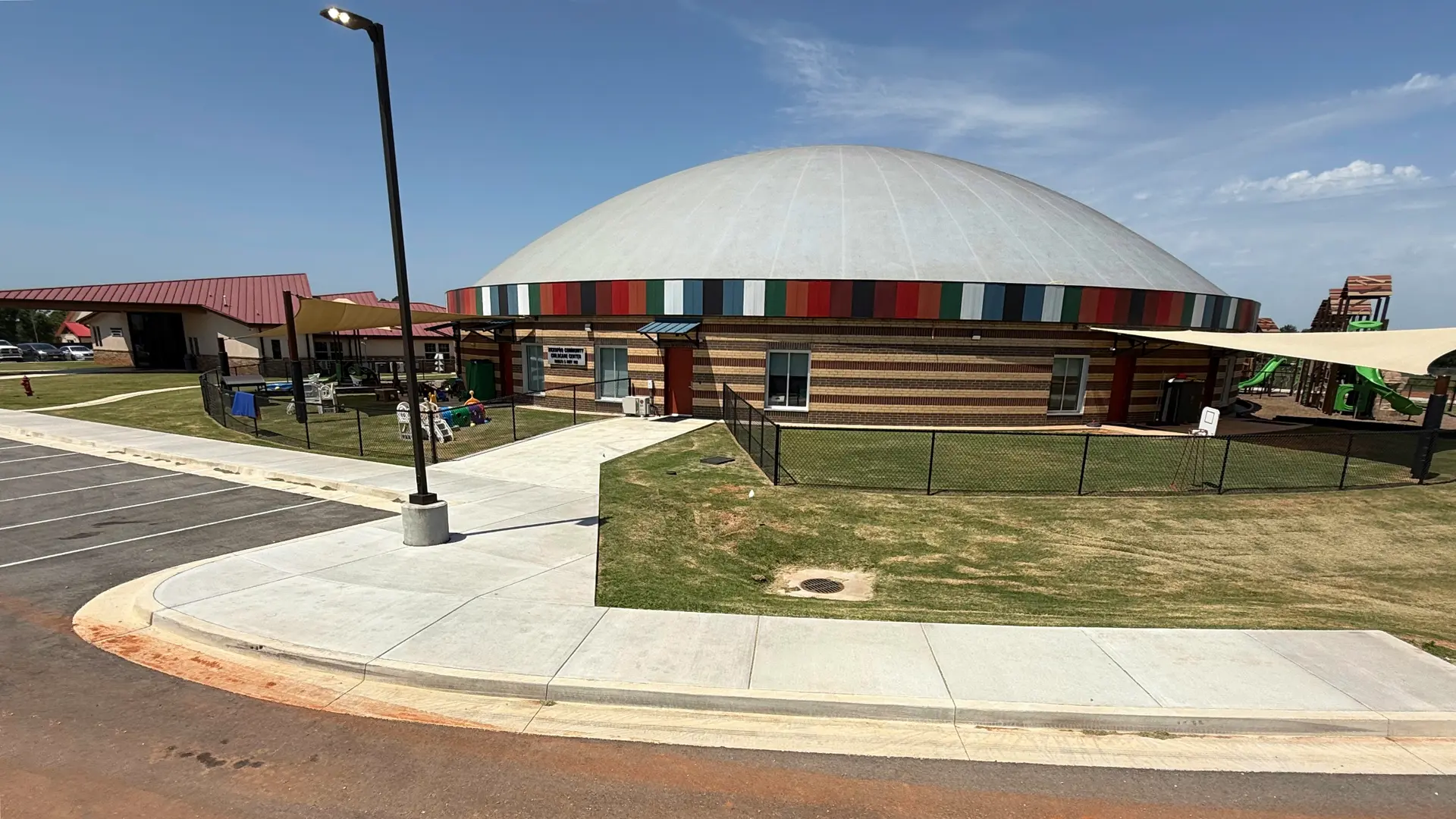
A beautiful building and a safe, serene and bright future for the kids of the Kickapoo Childcare Center in Oklahoma.