Stronger Than Fire: Monolithic Dome Withstands a Devastating House Fire
James Crisp stands beside the charred remains of his former home. In the Fall of 2025, he and his family experienced the kind of catastrophe every homeowner fears. A fire broke out in their home of 14 years, destroying everything inside. What it did not destroy was the Monolithic Dome James had recently built next to it.
When we arrived and walked the property with James, the loss was still fresh. Yet so was his clarity. He knew he had made the right long-term choice when he decided to build a dome.
James first discovered Monolithic years ago through our early website. He studied the designs, read the book, and eventually decided to build a dome for his family. With a long career in construction management for Crown Castle, he understood durability, load paths, and long-term performance. The dome made sense to him immediately. When he retired and began planning a multi-generational home with his daughter, he committed fully. The dome was engineered, formed, and built exactly the way he wanted: strong, practical, and ready to last for generations.
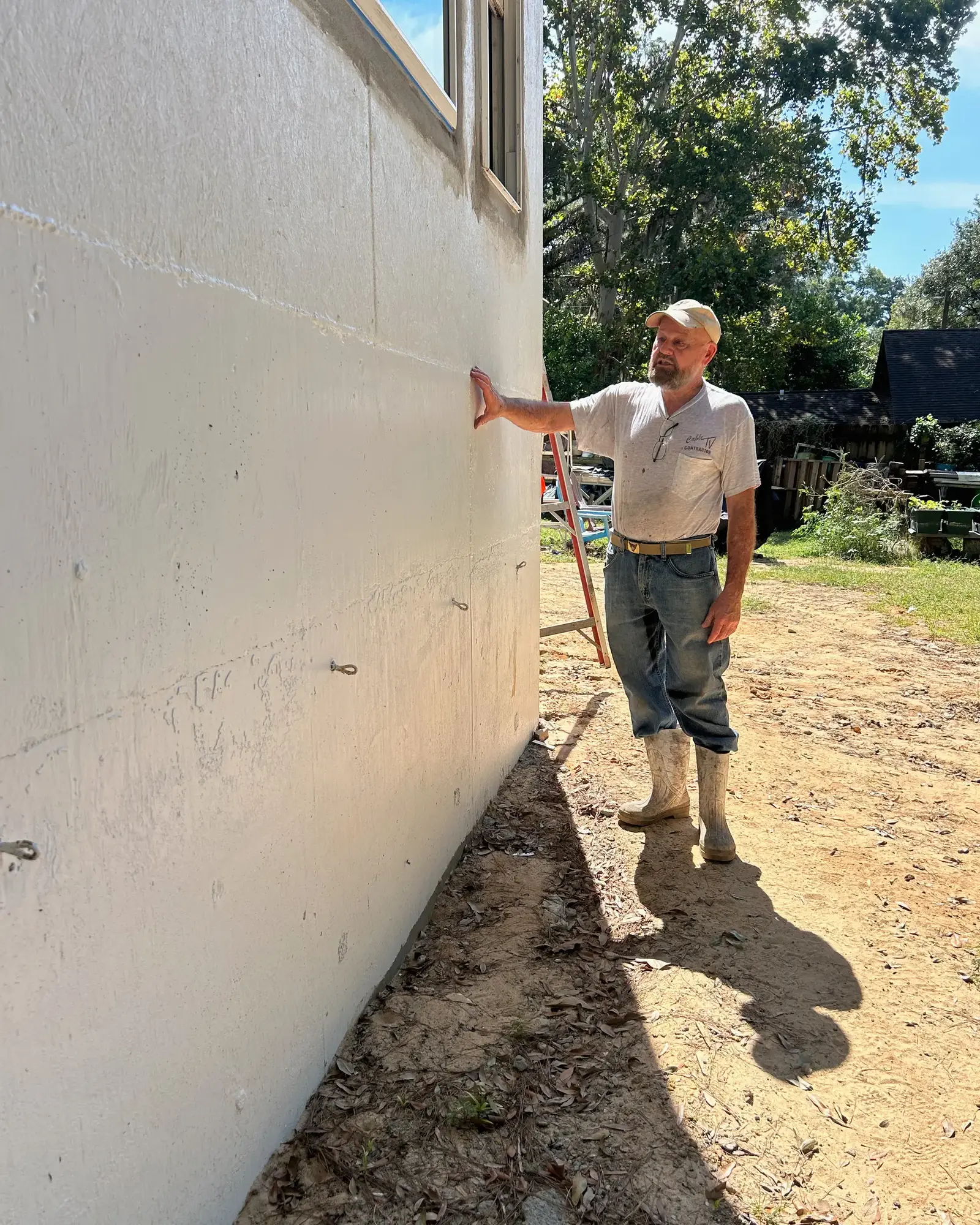
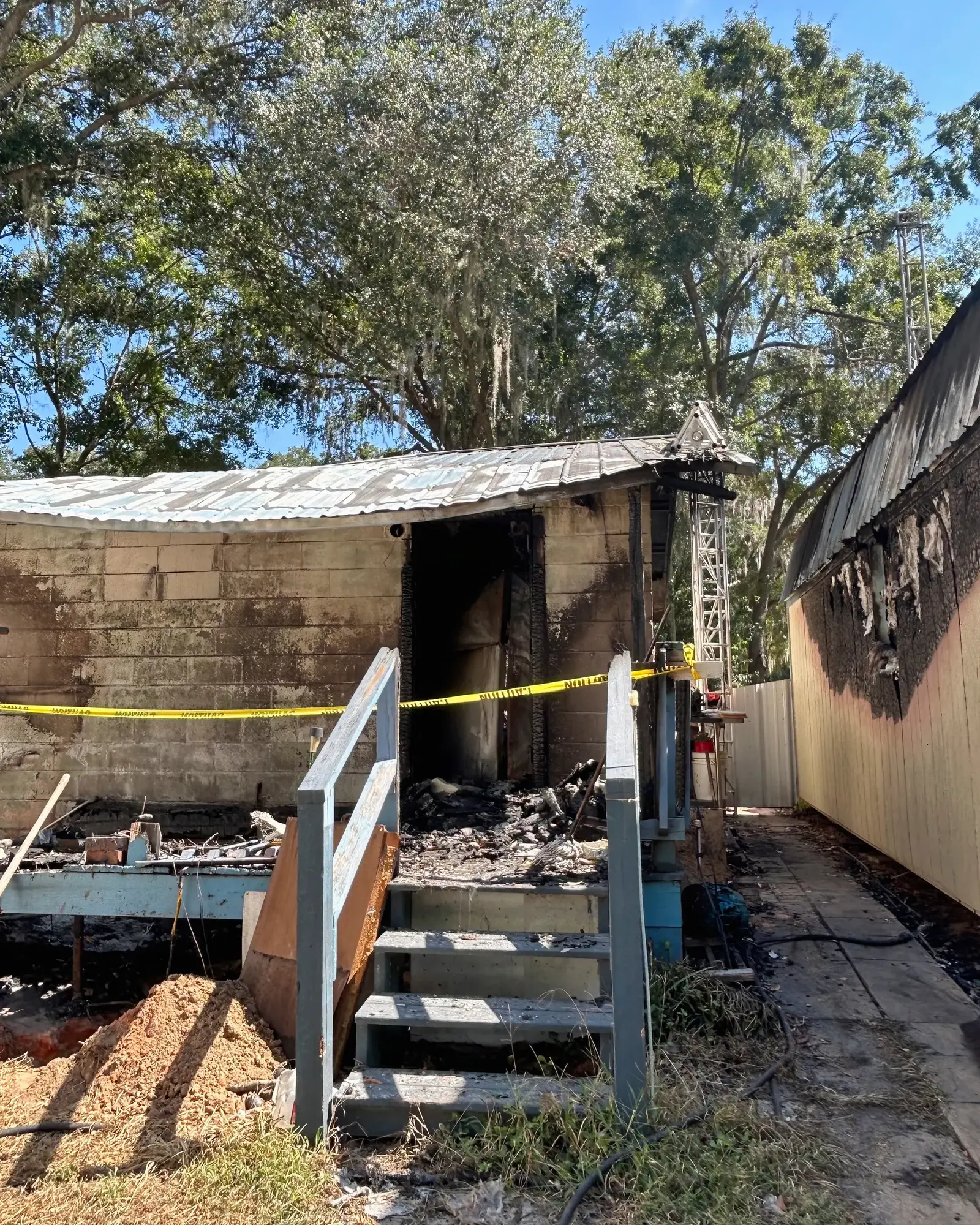
[Left] James examines the stemwall of his Monolithic Dome. [Right] The original cinderblock house was destroyed by a fire that started while James was away. Thankfully, no pets or people were injured in the fire.
The Day Everything Changed
A fire broke out in his original home, a small concrete-block house attached to a new Monolithic Dome. Within minutes, smoke filled the building, flames spread through the old roof layers, and the heat intensified. The volunteer fire department did what they could, but even with cinderblock walls, nothing could stop the fire from destroying the roof and everything else inside.
The dome, however, told a much different story.
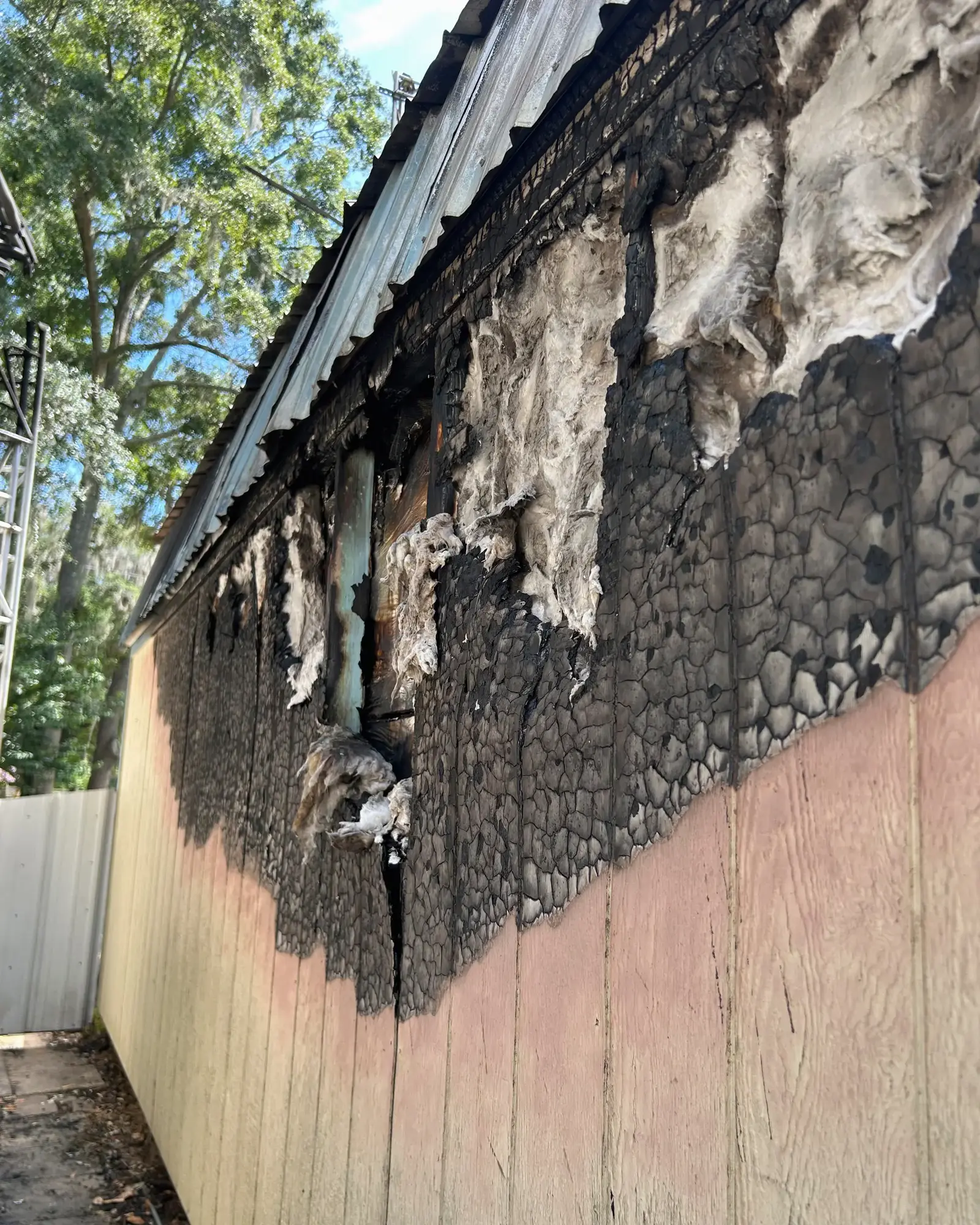
As the fire moved quickly under the uppermost layer of steel on a roof comprised of layers of old shingles and wood, flames shot out from under the eaves and licked along the edge of the Airform. The heat pouring out of the small home, once it was ablaze, was intense. Portions of the dome’s Airform and coating were scorched and peeled.
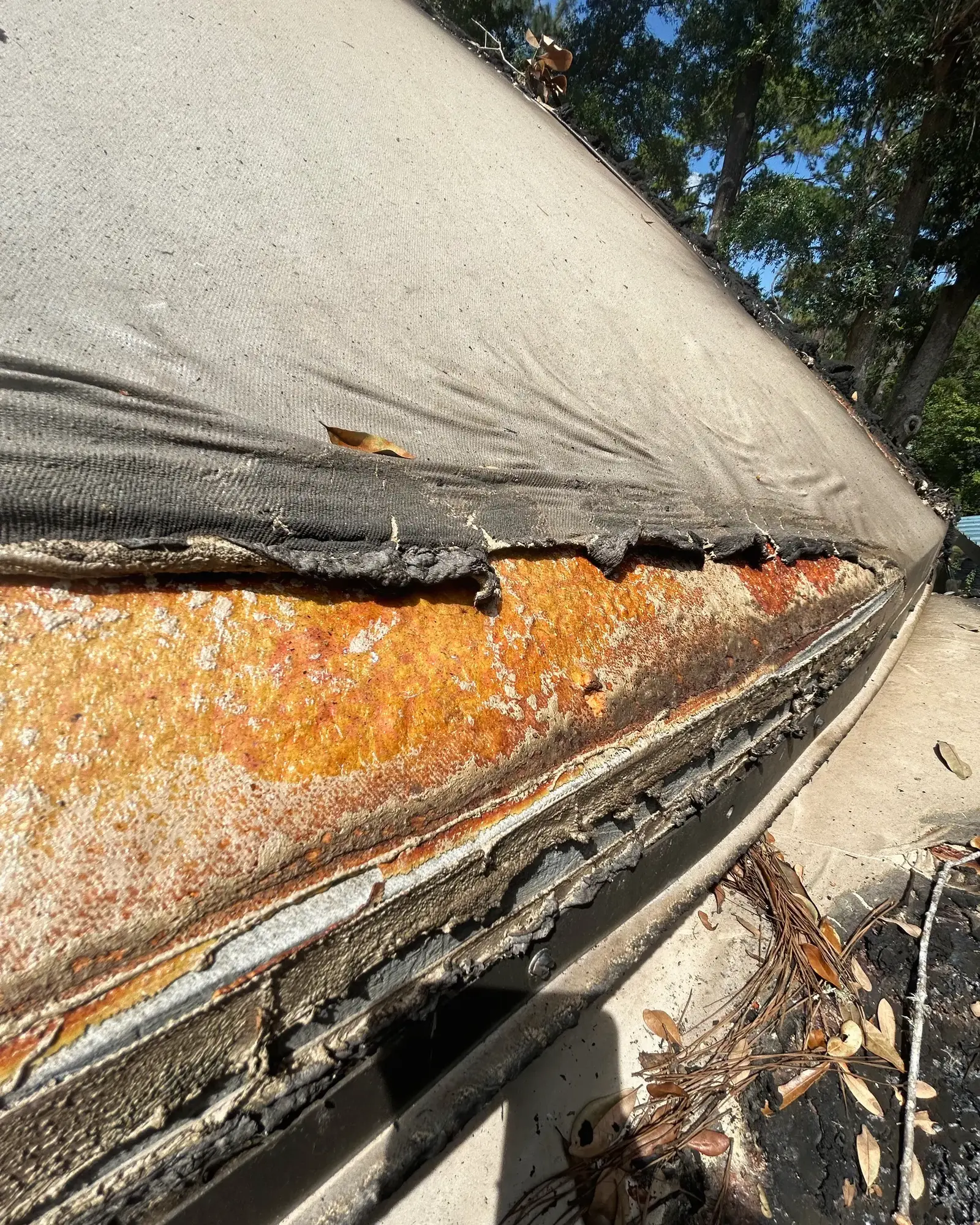
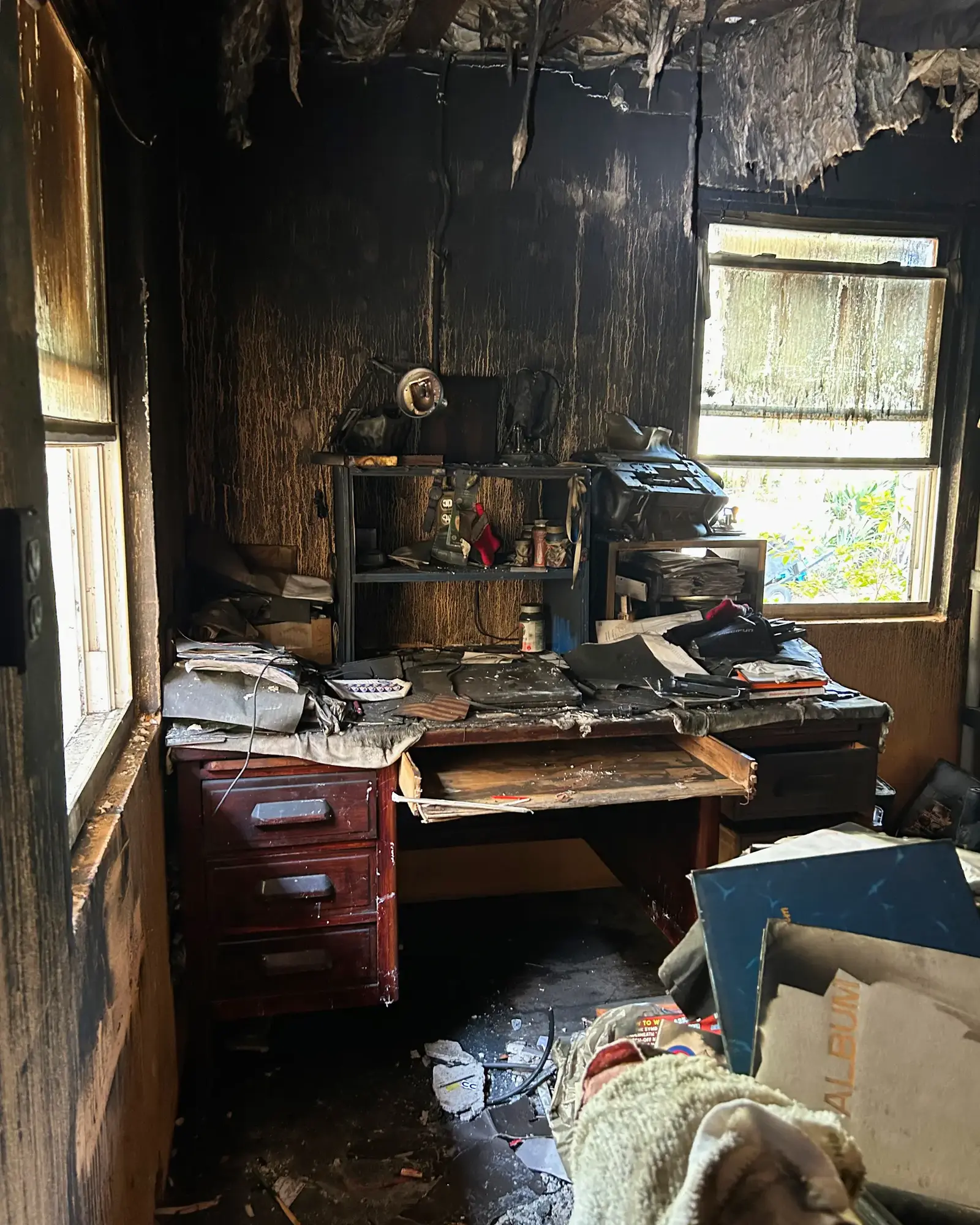
[Left] Flames reached the edge of the Airform and scorched the surface without compromising the concrete shell. [Right] This room was part of the original conventional home that burned during the house fire.
Investment in the Dome Pays Off
James said the fire blew directly onto the edge of the dome adjacent to the roofline of the former house for over an hour without mitigation from the fire department. The heat was intense enough to discolor and warp the exposed edge of the Airform, and a charred crust developed on the foam. Thankfully, polyurethane foam is an excellent fire barrier, and very little of it was destroyed. Of course, everything critical to the integrity of the dome remained fully intact.
The family had a second conventional structure adjacent to the house that did not fare as well. It was also lost to the fire, but the dome performed as James expected.
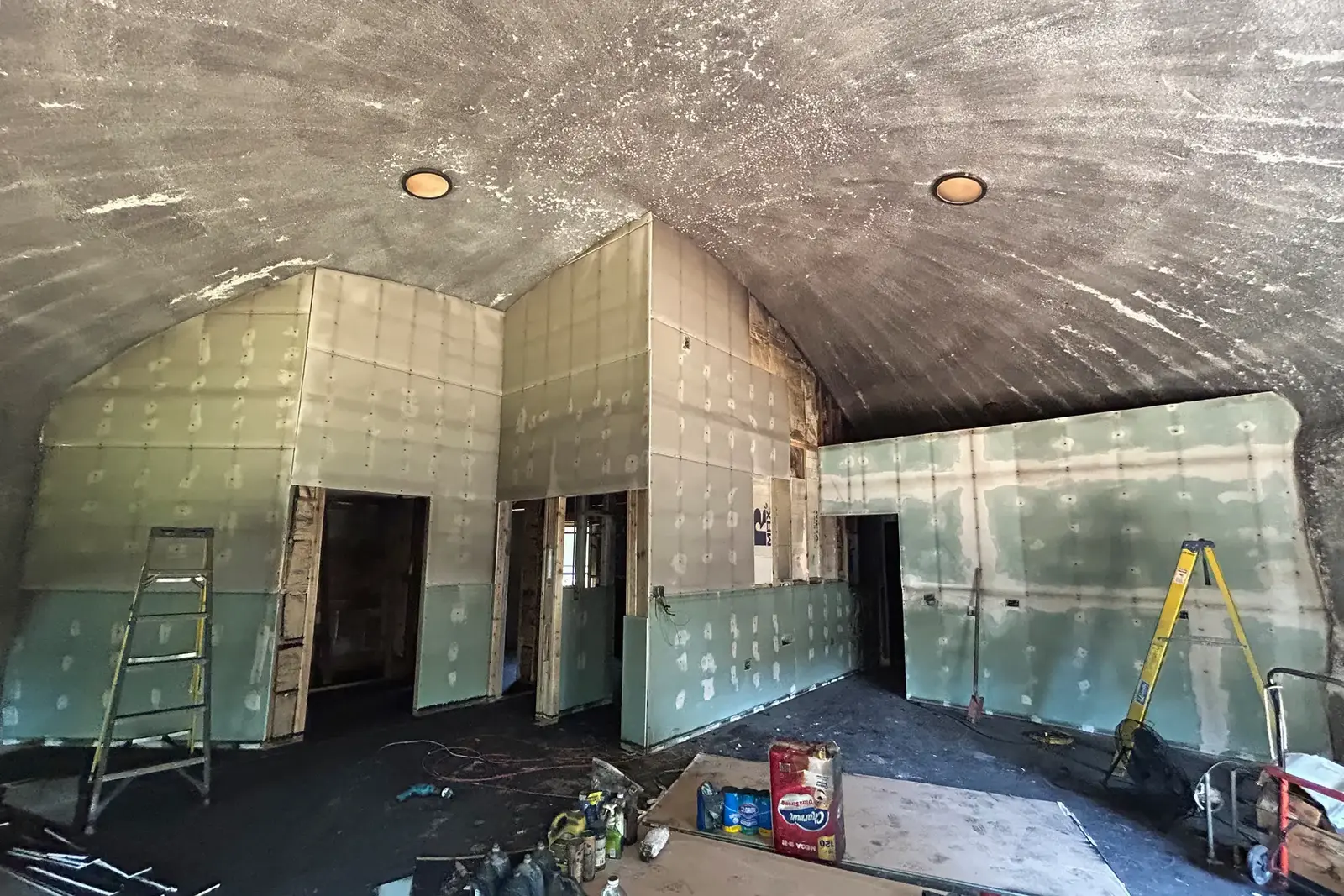
[Left] Inside the Monolithic Dome, the concrete shell remained intact despite nearby fire exposure. [Right] The house fire spread to another conventional structure next to the home which was also a total loss.
Inside the Dome After the Fire
While the dome remained intact, smoke entered the interior. The original roof of the conventional structure held layers of old shingles and rafters that produced thick black soot as it burned. When a door was opened during firefighting, the smoke rushed in and coated the ceiling and walls.
Even so, the dome’s interior structure did not crack, fail, or deform. Cleanup will take time, but the dome shell itself is unharmed.
Standing inside the dome after the fire, looking up at the concrete shell, the difference between the two buildings becomes unmistakable. One structure is lost. The other is ready to be cleaned, repaired, and lived in again.
James told us he had been just days away from completing much of the interior work. It was heartbreaking to see how close he had come. Yet he never once doubted the dome’s performance. In fact, seeing it survive strengthened his commitment to rebuild the original house as a dome.
Walking the Property
After we finished documenting the damage, James walked us down to the lake behind his home. He and his family warmly gave us a tour of their beautiful piece of paradise. It was easy to see why they would want to build a Monolithic Dome there. James told us he wanted to spend his money on a home that would last long after he was gone.
He showed us his spot where he teaches archery, gathers with friends from church, and spends quiet mornings sitting by the water. It was a reminder that his life here is far bigger than the fire. He was full of gratitude, no one had been hurt during the firre and his dome protected what could be protected. He and his family will rebuild what was lost. Plans are well underway for a second Monolithic Dome. Stay tuned!
Fire Damage
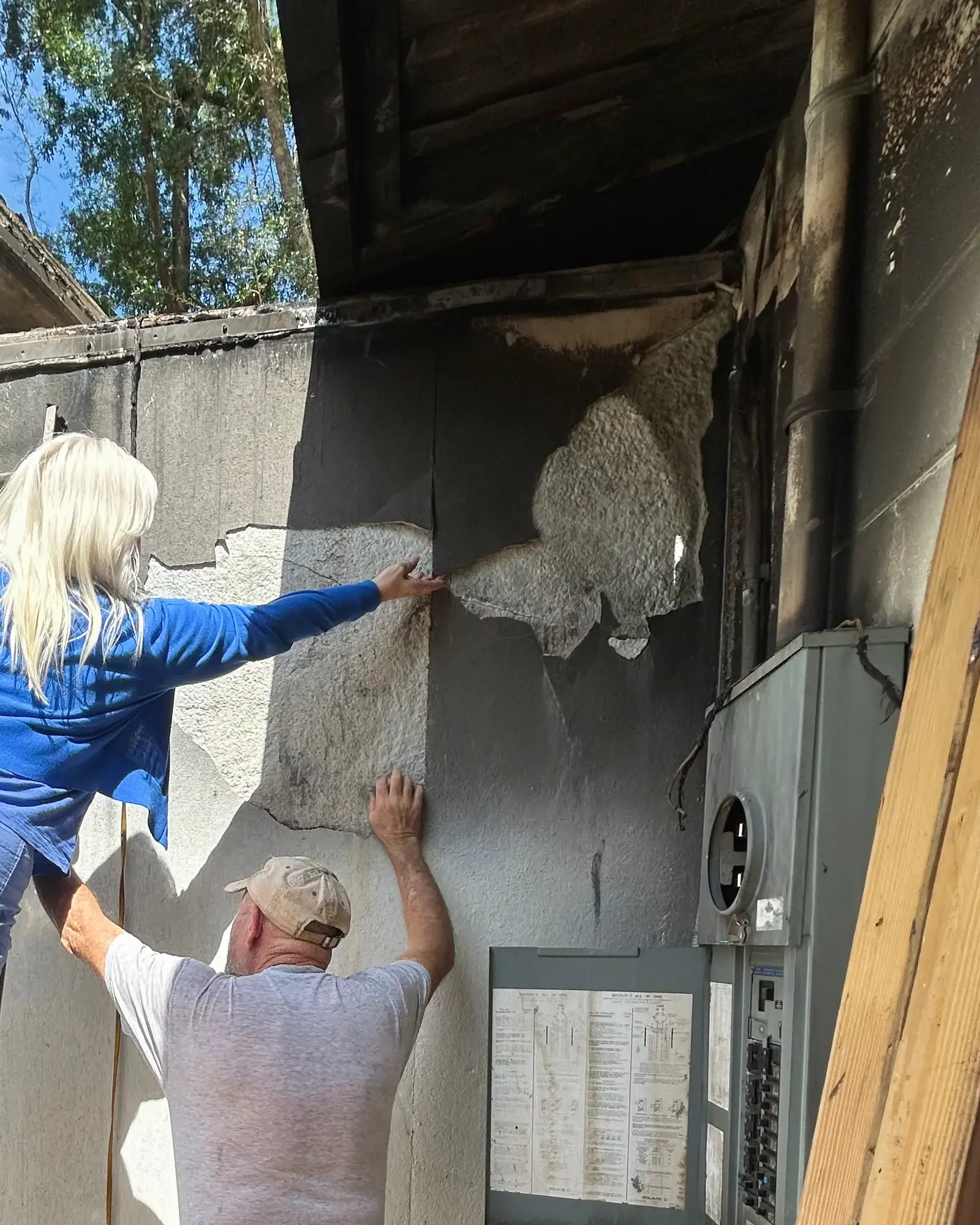
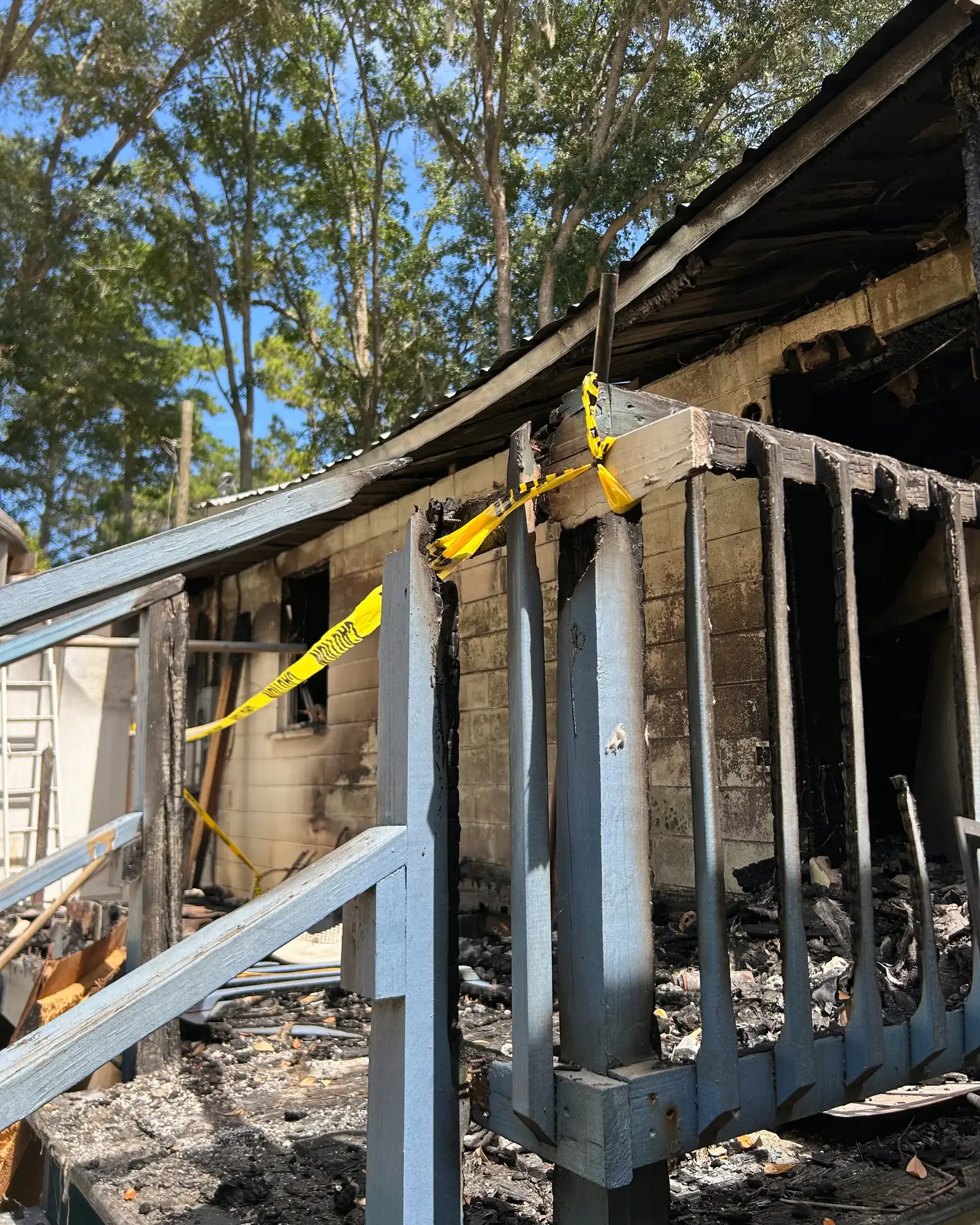
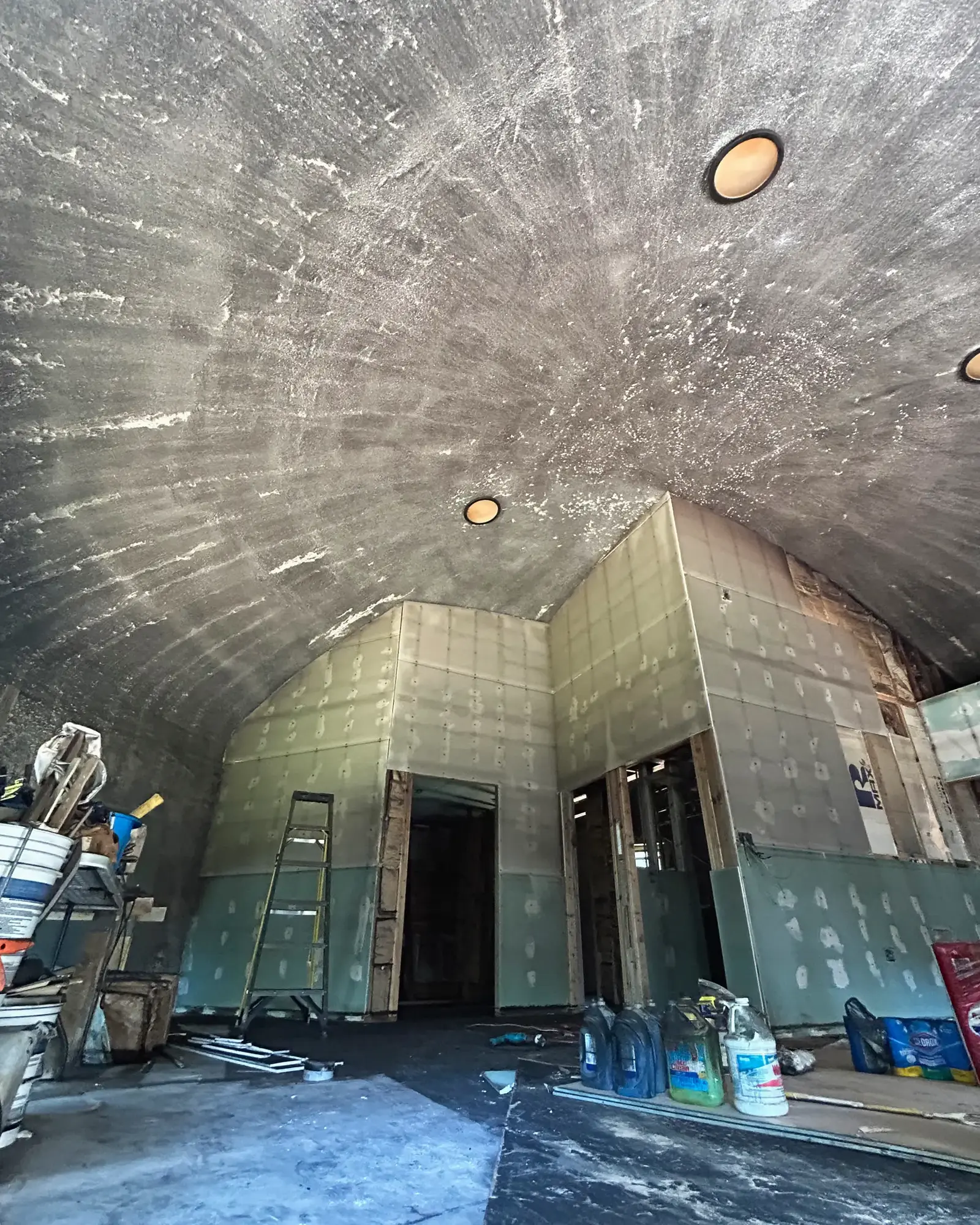
[Left] Rebecca South and homeowner James Crisp examine fire effects on the exterior surface of the sprayed-in-place tunnel connecting the dome to the cinderblock house. [Center] Fire damage to the porch railing between the home and another conventional structure. [Right] The curved concrete ceiling shows smoke discoloration and will require cleanup, but remains structurally sound.
Property & Surroundings
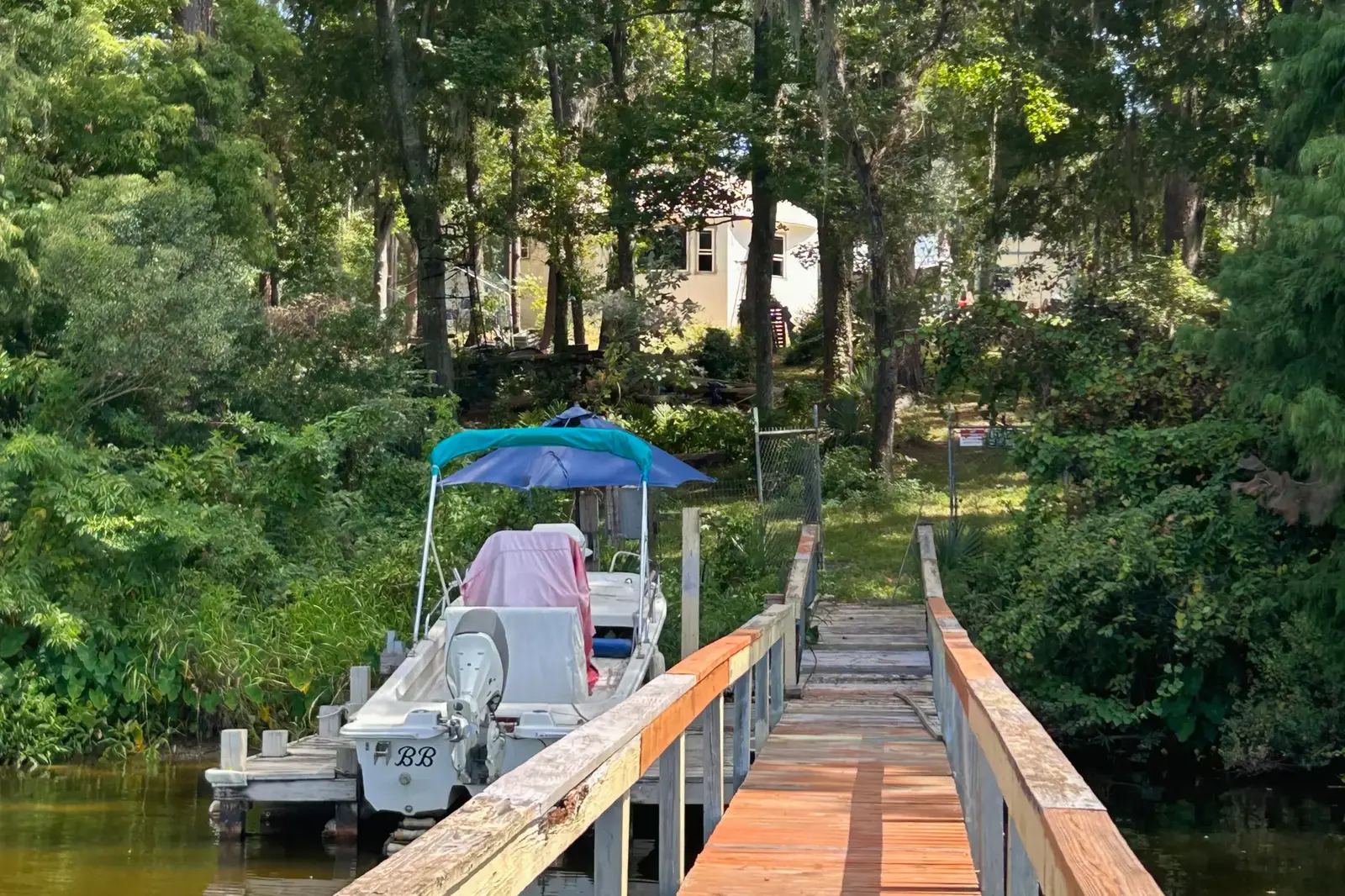
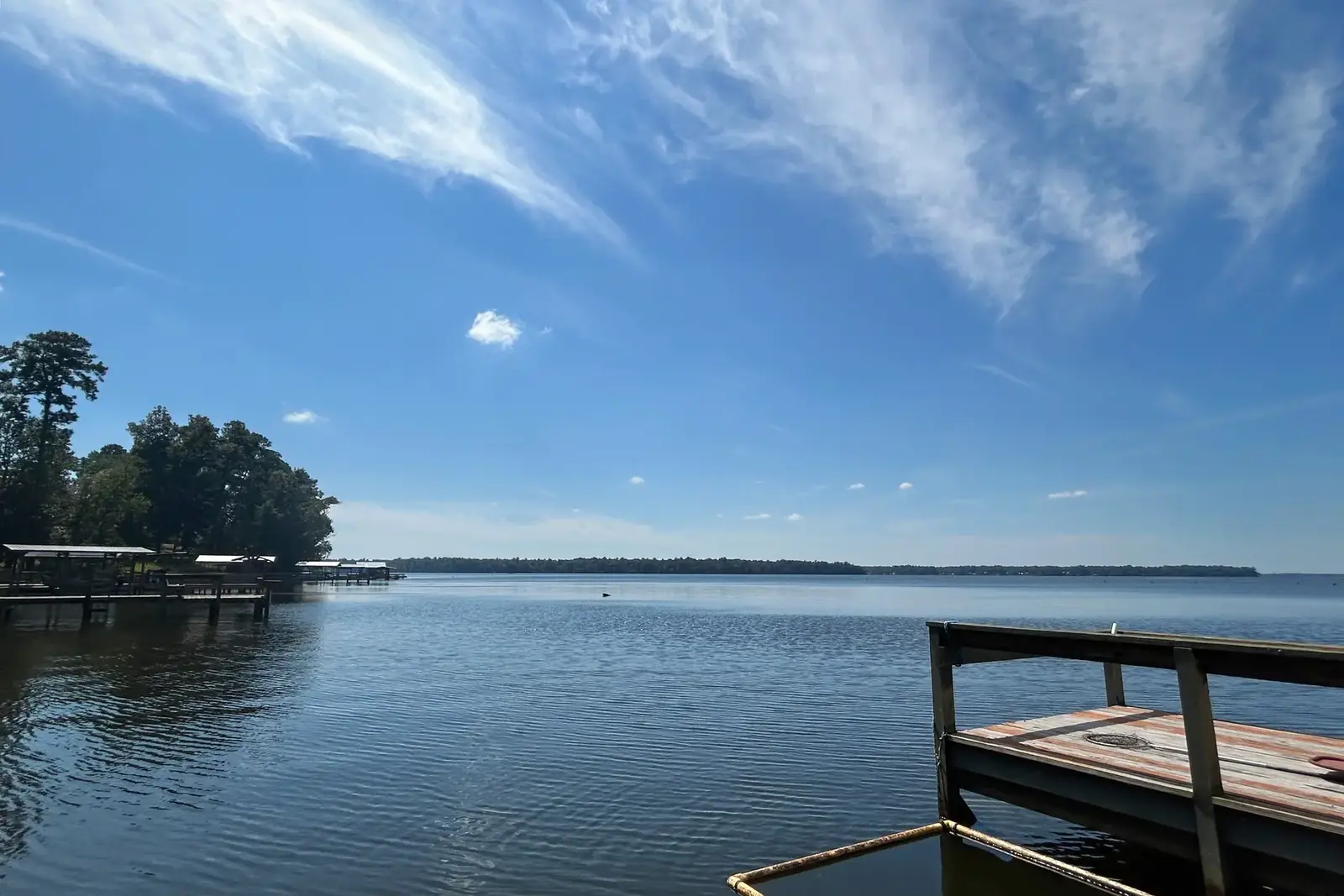
[Left] A wooden dock and boat below the Crisp Residence. [Right] The lake behind the dome provides untold hours of recreation for James and his family.
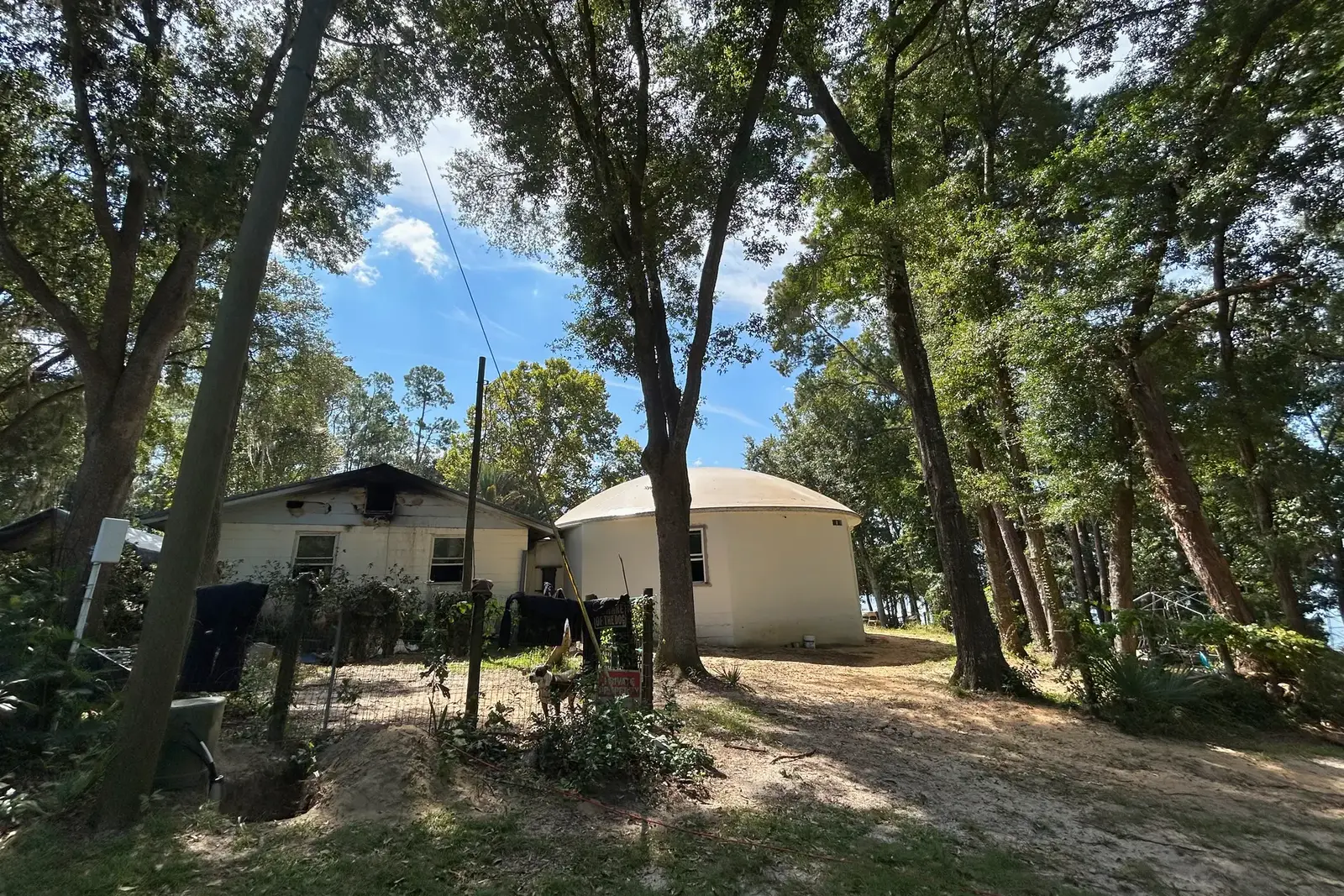
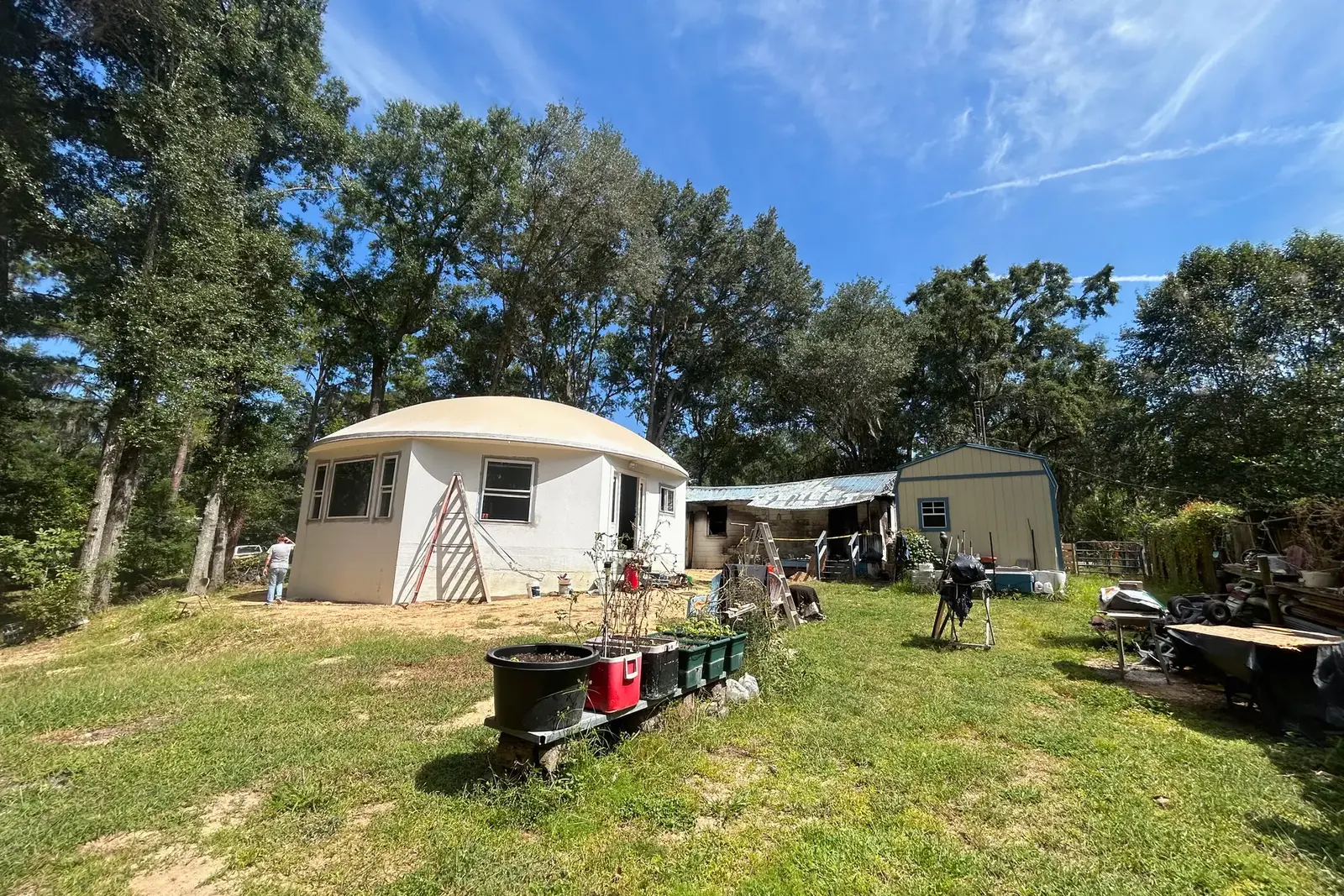
[Left] The fire couldn’t consume the cinderblock walls of the small home attached to the dome, but it raged inside and shot out from the roof line, the flames licking the dome for hours. [Right] The Monolithic Dome on James Crisp’s property with equipment and materials staged outside during cleanup.
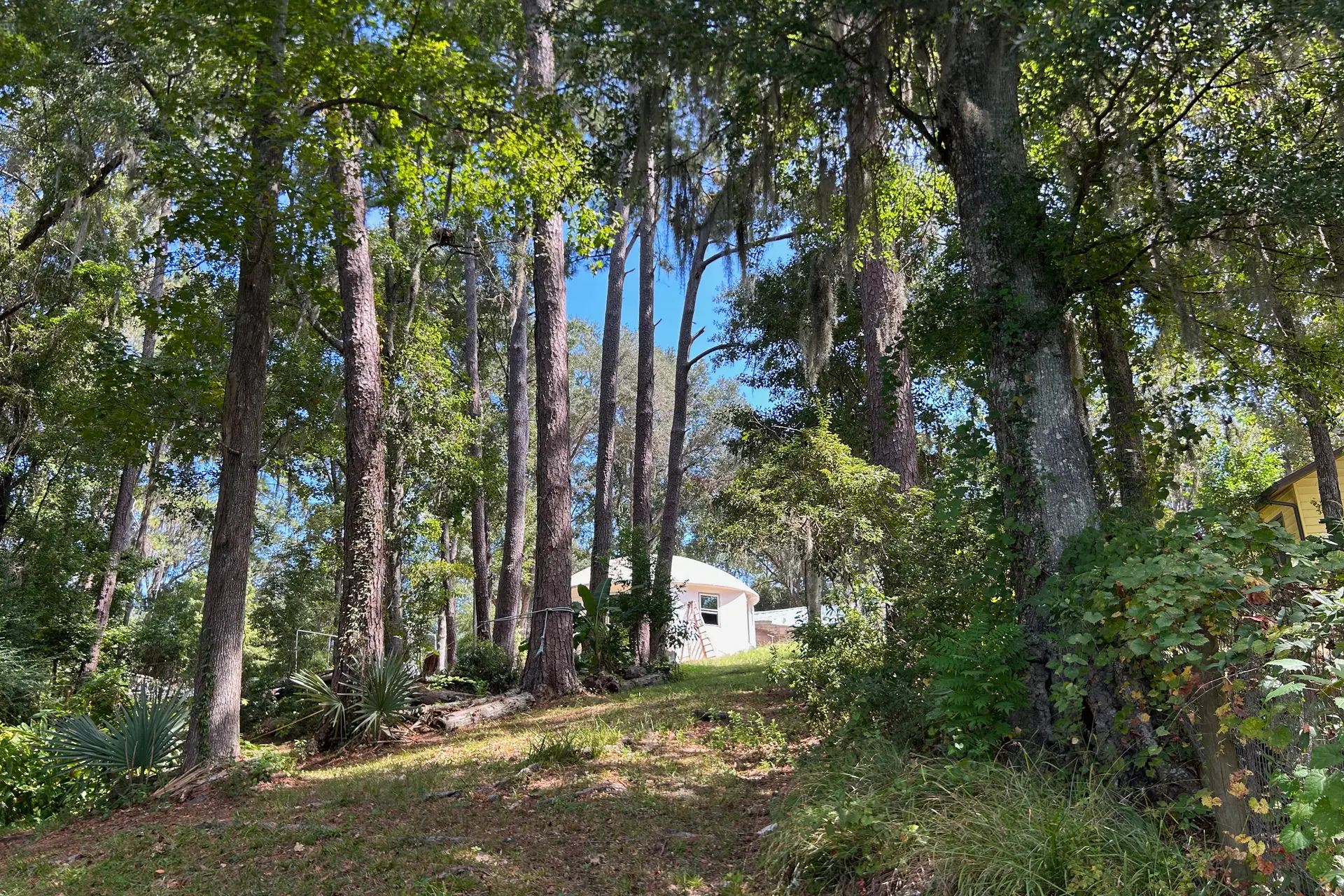
From the edge of the property, the Monolithic Dome can be seen standing quietly among the trees.