Beyond Domes: Monolithic’s Role in Modern Composting
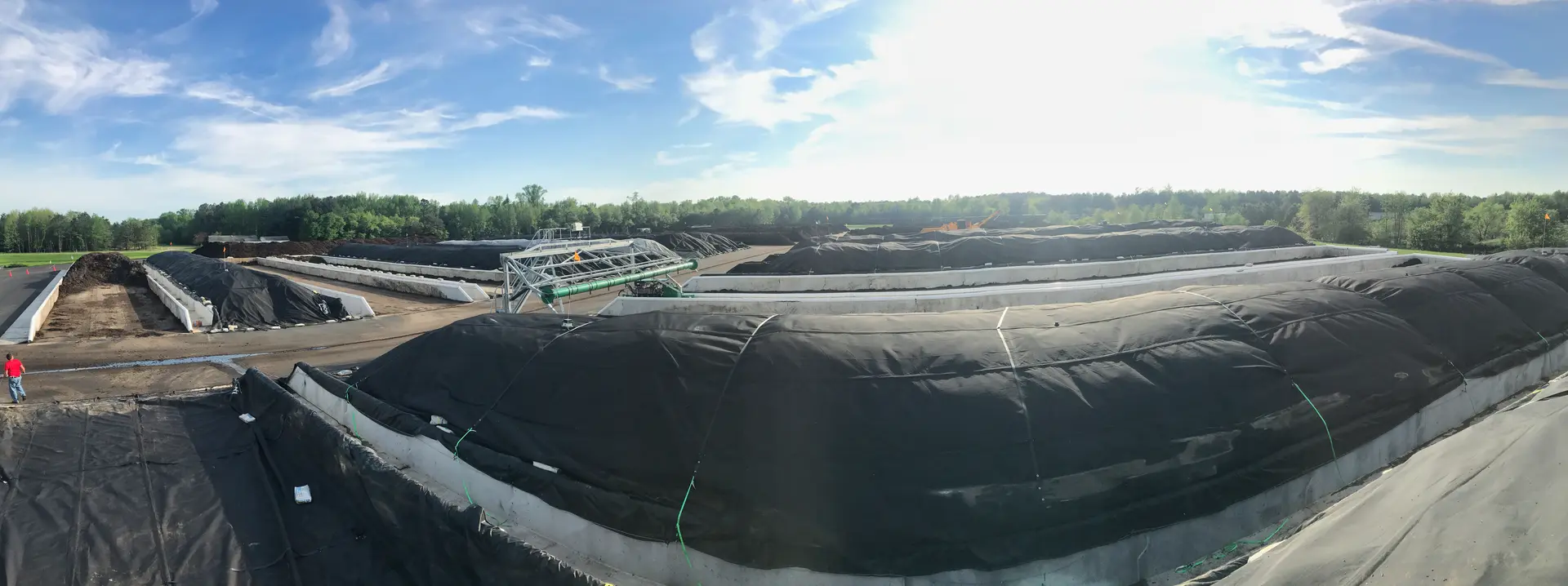
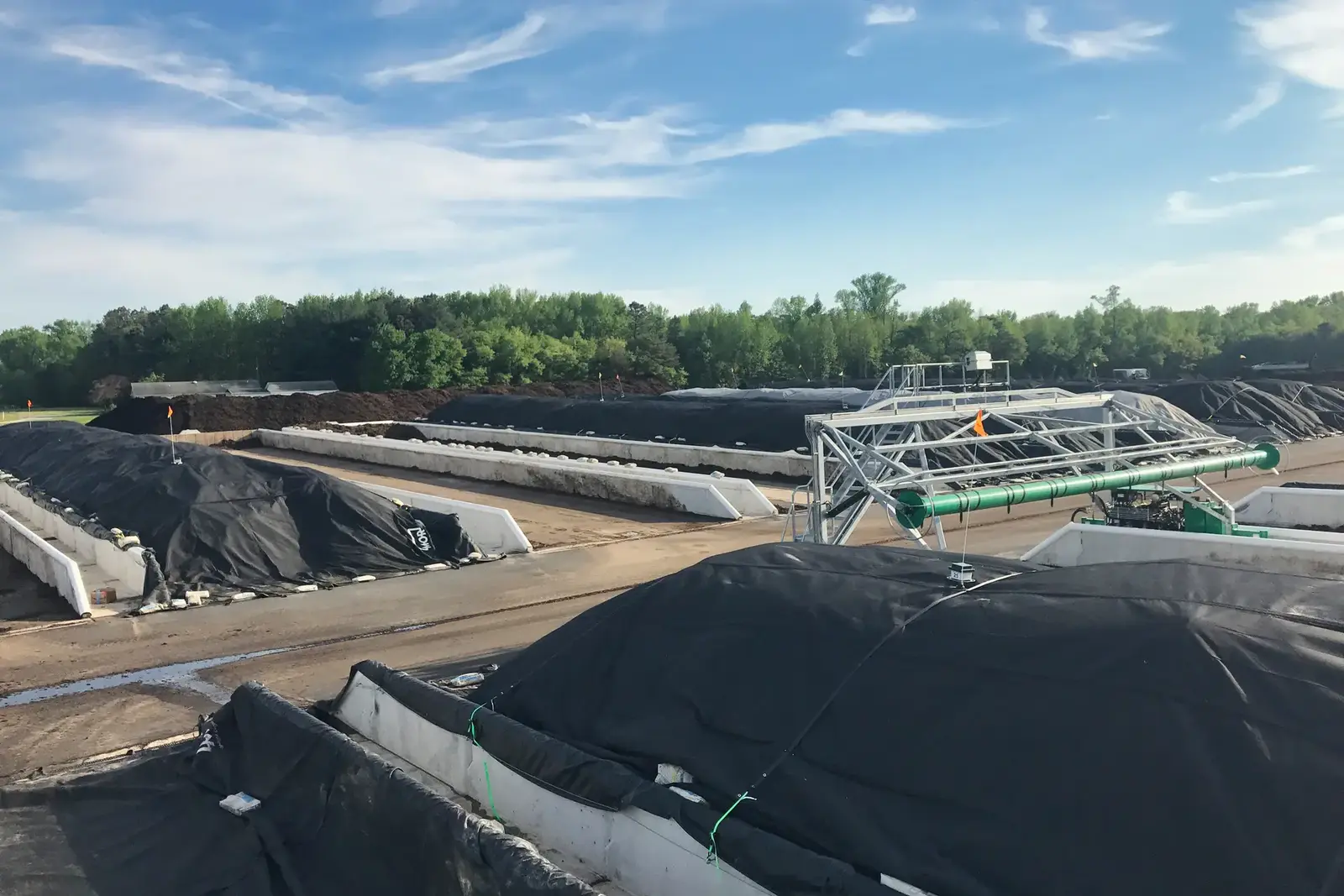
Wide view of compost piles under cover. This composting process only takes about three weeks.
Monolithic manufactures a variety of fabric forms and architectural products. One example is compost covers used for industrial-sized composting systems. We have worked with owners to refine the design, and we build covers that will handle repeated use without breaking down or losing performance.
Aerated compost systems utilize compost covers to control off-gassing and keep operations odor-free at scale, while allowing the process to function as intended. We have been manufacturing these covers for about 15 years, and we know what it takes to build them to last.
How It Works
Aerated compost systems move material through a continuous cycle. Air is pushed up through the pile to speed decomposition, generating heat and off-gassing. Without control, that turns into odor.
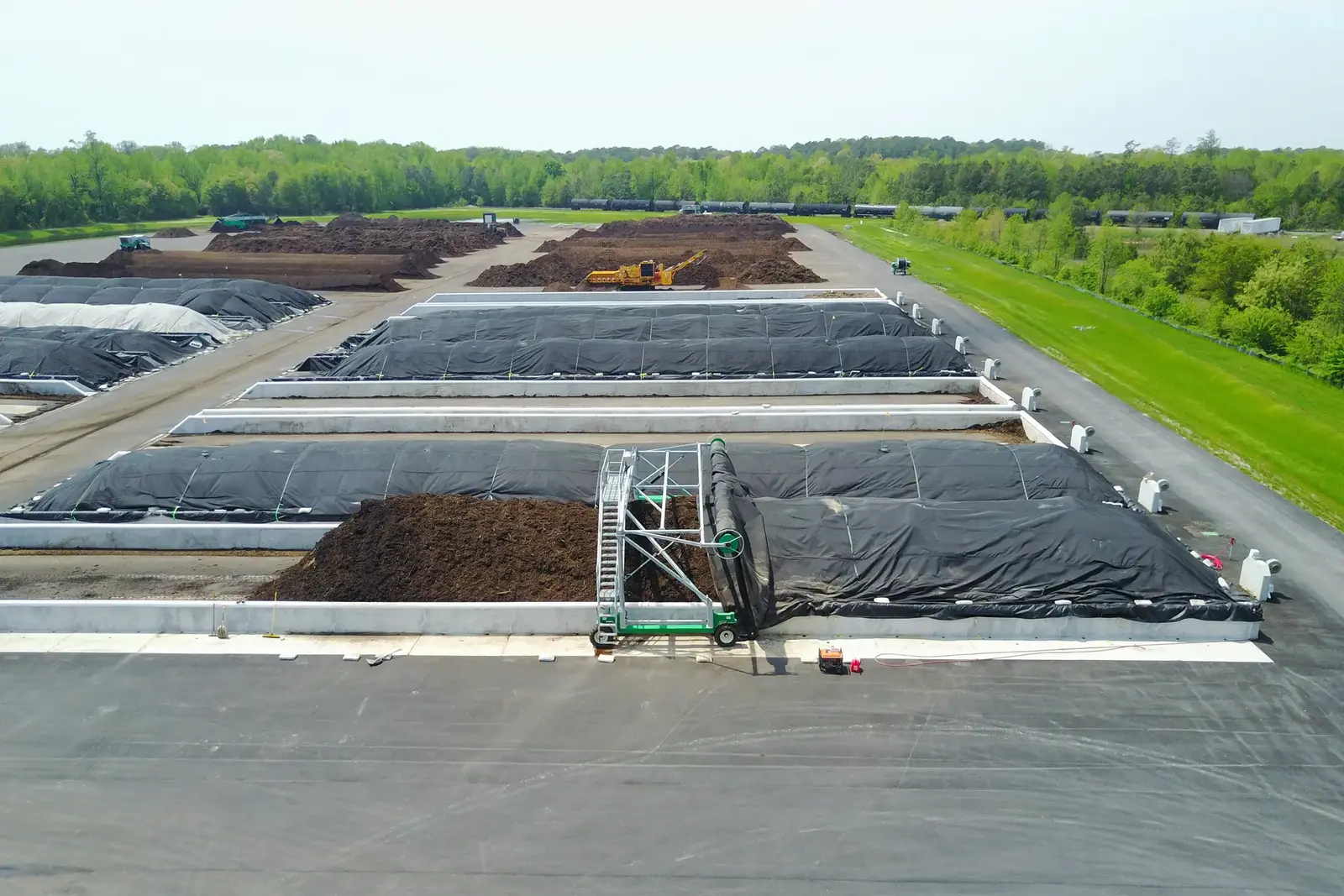
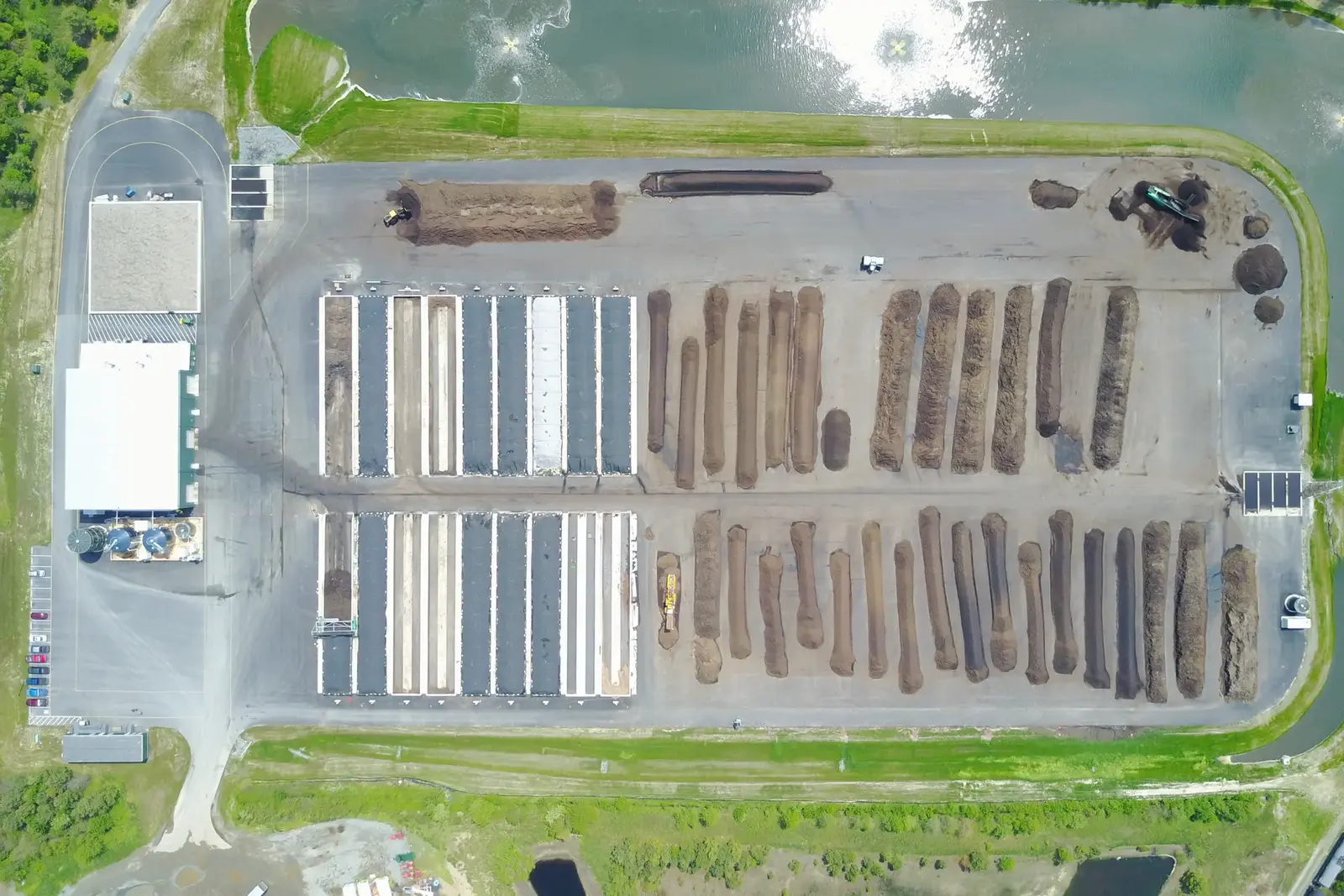
[Left] The first bunker is being filled. The cover follows the pile as it grows, accelerating decomposition while keeping odors under control. [Right] On the left are piles under cover undergoing composting. Once complete, the material is laid out on the right for final processing.
This composting process speeds up decomposition of organic material by forcing air up through a covered pile of organic matter. Decomposition generates heat and off-gassing. Without specialized covers, the odors and pollution from off-gassing would be intolerable. Our compost covers trap volatile compounds and help keep odors under control.
At large composting facilities, you will see rows of bunkers working through the cycle at different stages. Some piles are being built, others are already covered and being processed, while finished material is being moved out. It is a continuous operation, and odor control is a major factor in keeping it manageable.
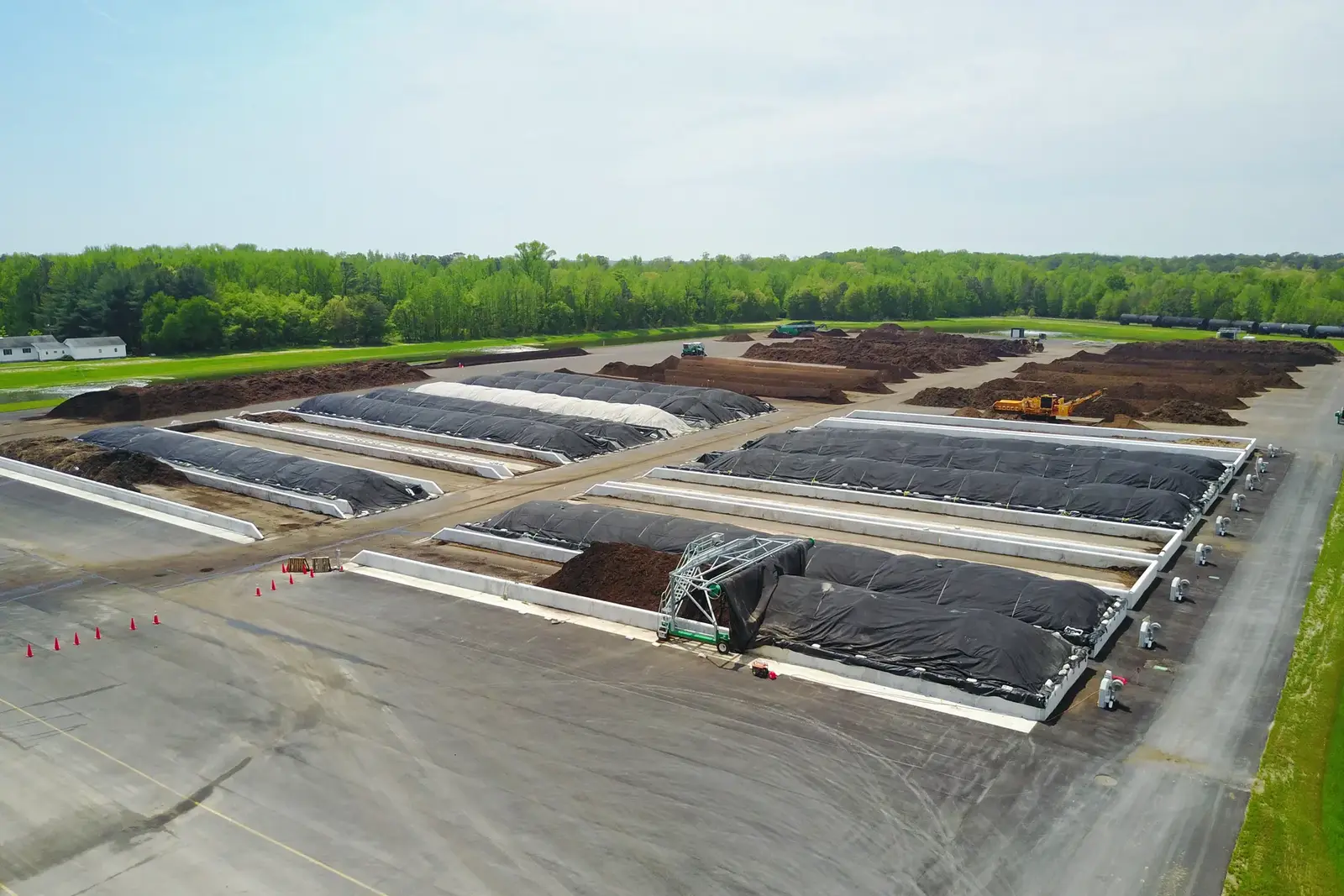
Aerial view of a composting facility utilizing compost covers manufactured by Monolithic.
The covers are installed using placement machines, so they are never dragged or stressed. That helps protect the material and extend the product’s life.
Odor Free Operation
Once covered, the pile can breathe while odors stay contained. Air continues to move through the pile, but it does not escape into the surrounding area. This is what keeps operations odor-free at scale.
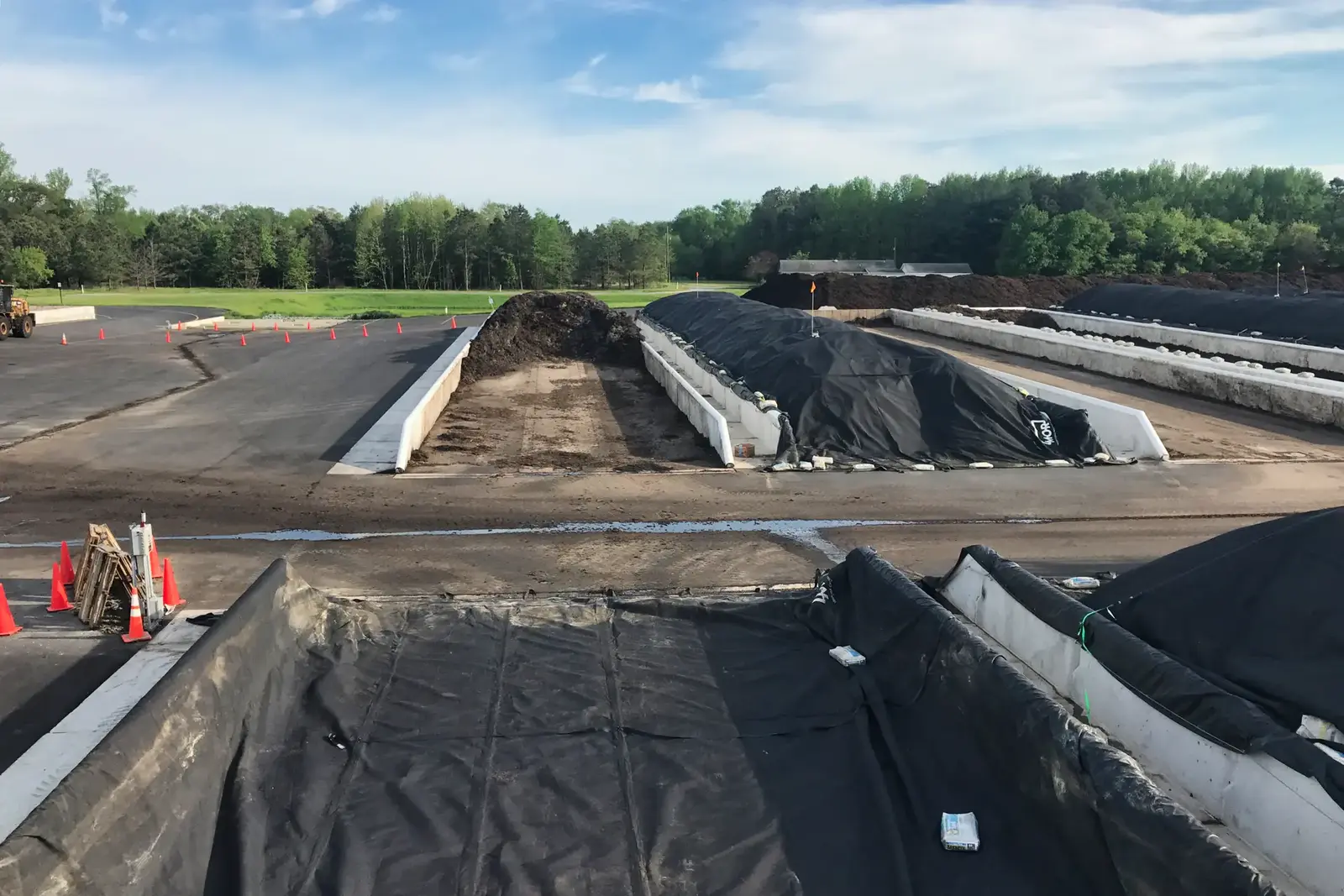
[Left] If you look closely, you can see the air flow channels in the tarp lining the pile’s floor. [Right] Cover straps that run across the pile are sewn into the cover with sleeves, allowing operators to roll the covers onto the pile with the straps already in place.
The material itself is highly technical and layered. There is a durable cloth on the top and bottom, with a PTFE membrane in the middle. That membrane is laser-perforated with micro-holes to allow oxygen and moisture through while restricting methane and other volatile compounds that create odor.
The goal is simple. Let the pile breathe while keeping odors contained.
Built to Hold Up
Material, seams, and installation all matter. These covers are built to handle repeated use without breaking down or losing performance.
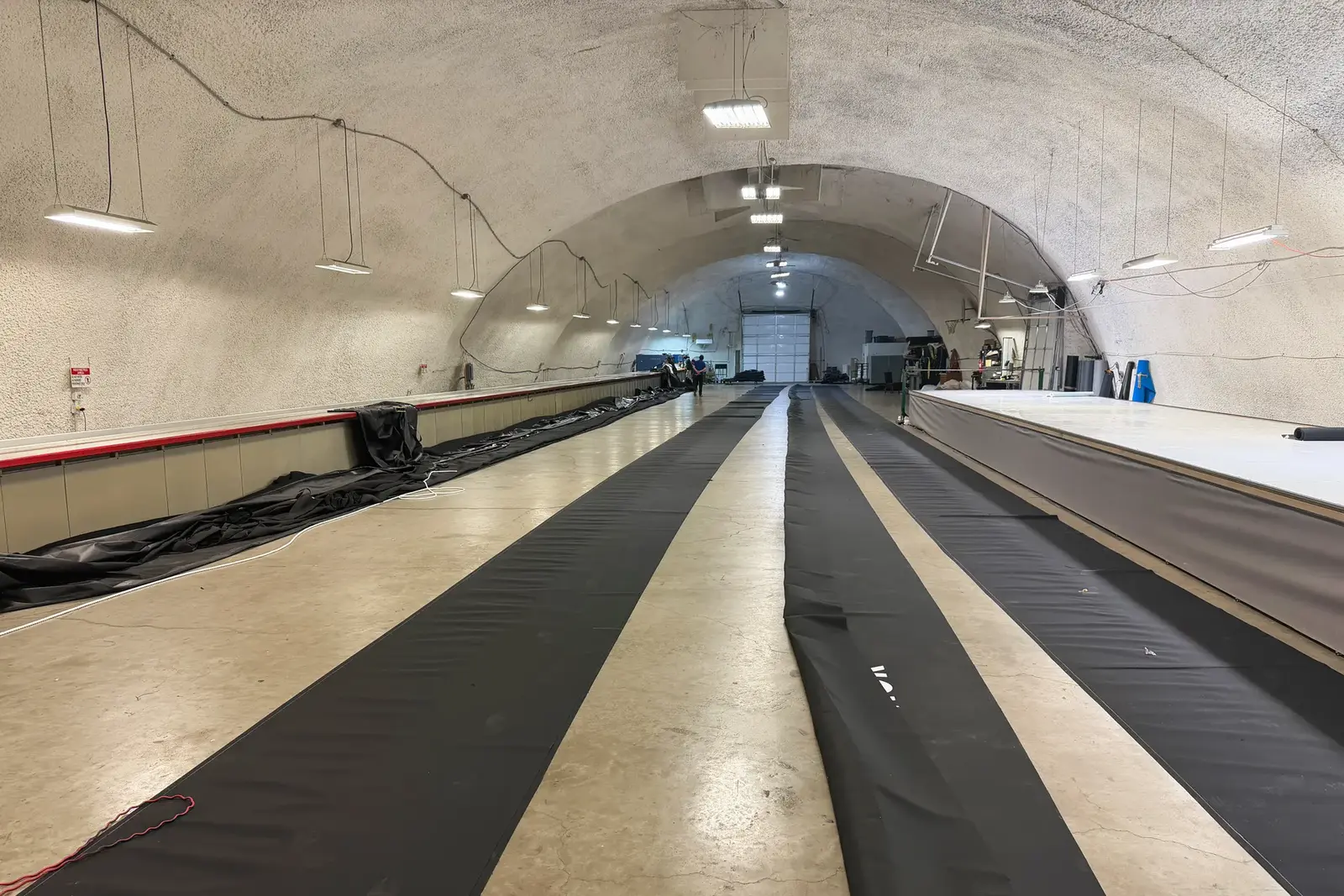
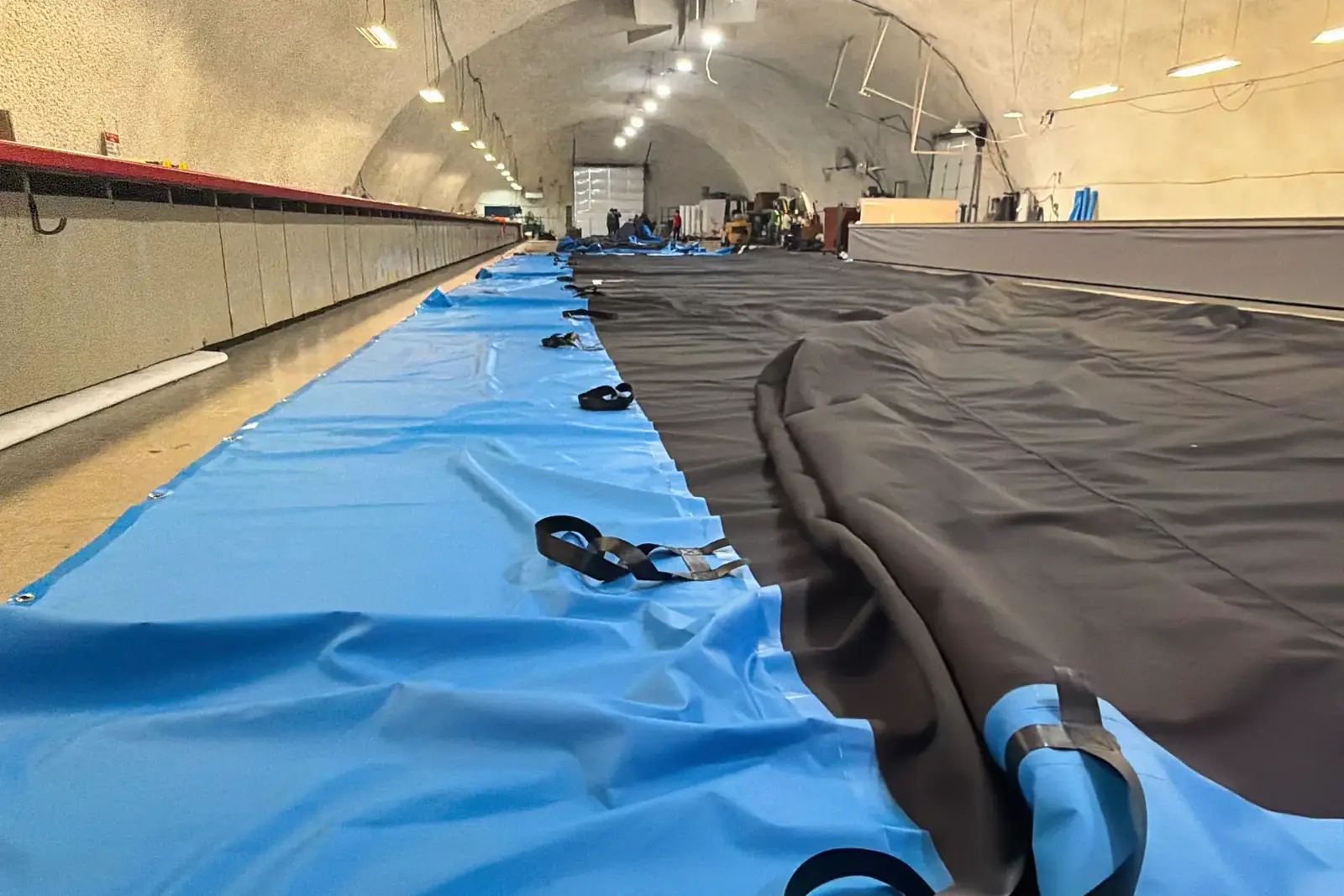
[Left] Panels are ready for sewing. The machine is mounted on a self-driving platform, so it can move across the cover rather than having workers pull the material through. [Right] Monolithic welds the highly technical semi-permeable fabric for the compost piles to heavy-duty impermeable PVC skirts.
It is not an inexpensive material, and it is not meant to be. When someone invests in compost covers, they need something that will last and continue controlling odor over time. Our covers outlast the competition by about five to one. A lot of that comes down to how they are built. We use a double-felled seam, folding the fabric on both sides before sewing, which creates a stronger connection over time.
Around the perimeter, we install vinyl skirts using the same equipment we use for Airforms. To keep everything secure, the wind straps are sewn directly into the cover so they are already in place when it is unrolled.
For projects that require higher VOC containment, we apply MonoSeal to the back side. MonoSeal is a product we developed that helps prevent air from escaping through seams or stitching and improves odor control in more demanding environments.
Most people know us for domes, but our manufacturing facility can handle the design and fabrication of just about any fabric form.
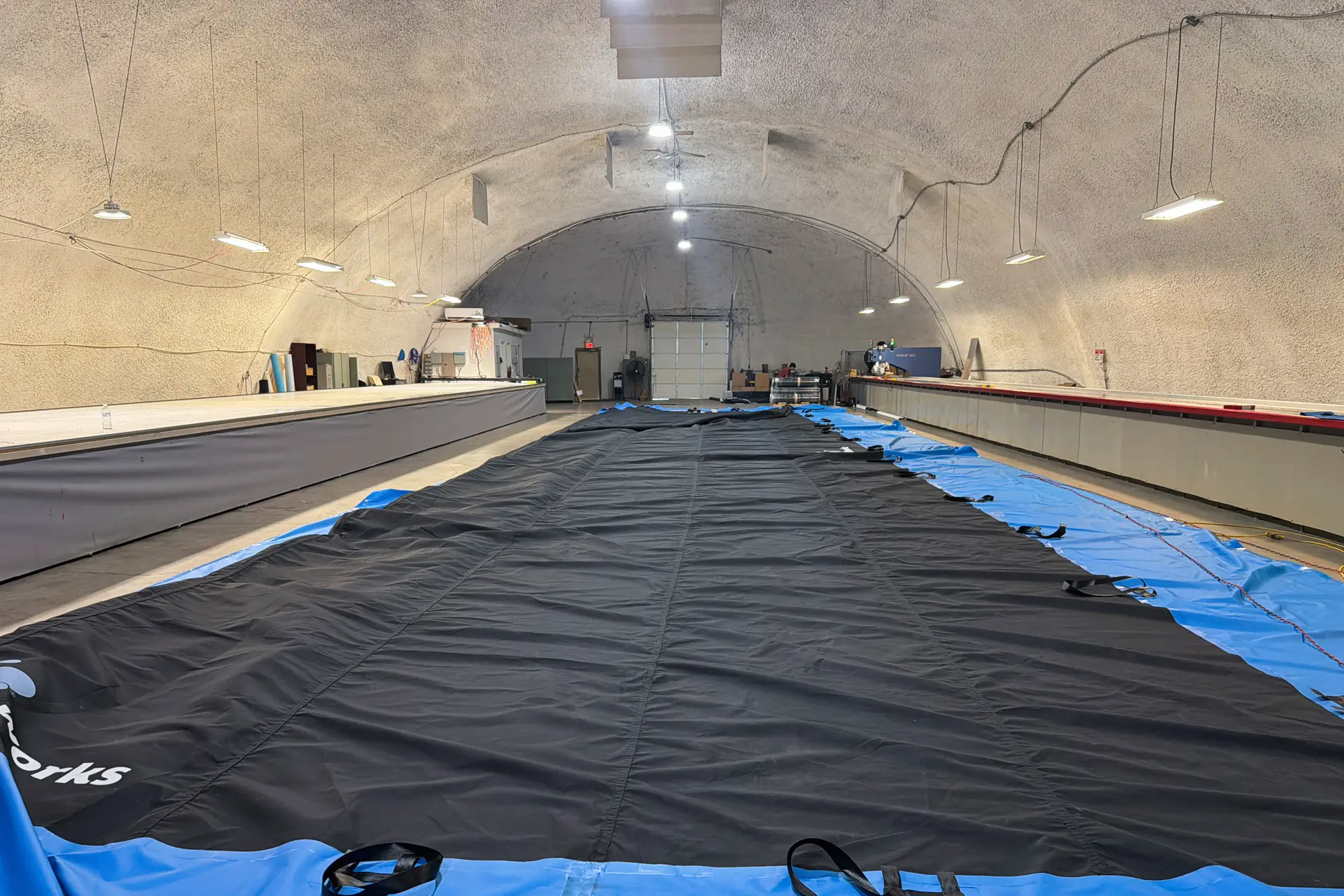
Inside Monolithic’s Airform and fabric structures manufacturing facilities, a compost cover is laid out for inspection.