Legacy Content: Residential Planning and Design Stories from Monolithic.org
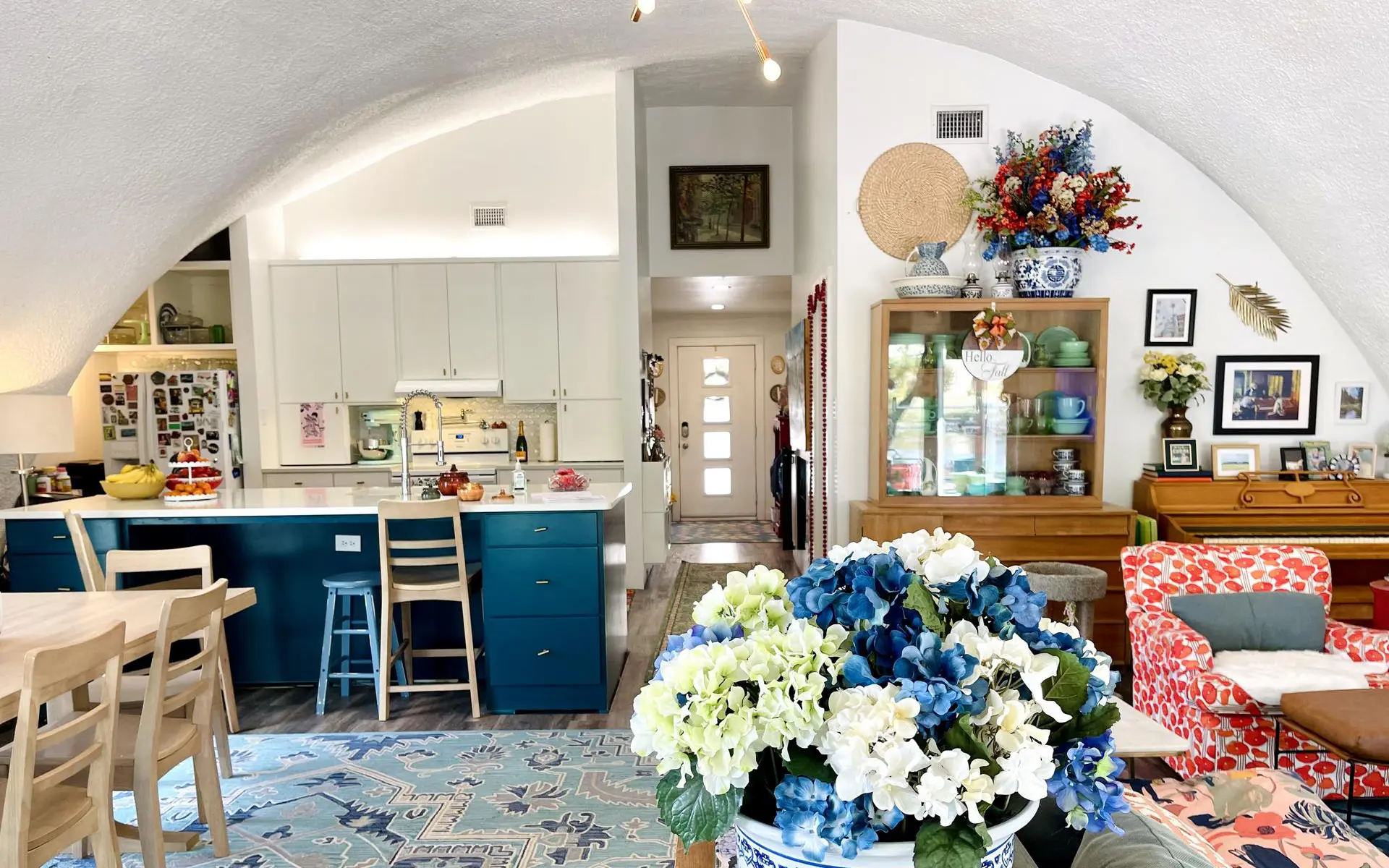
Every type of design style is possible inside a dome—traditional, transitional, minimal, eclectic and everything in-between.
This is a list of links to Monolithic Dome Home planning and design articles from our legacy website, Monolithic.org. We are in the process of updating and migrating the content from that website to this one. As we progress, you will see links disappear from this list. This is a lengthy process, so we have provided these links in the meantime, as many of these articles contain helpful information for those planning and designing their Monolithic Dome home.
Links to Residential Planning and Design Legacy Articles
An Attractive, New Augment— When Mike South built a new, small dome behind his home, he designed and built a tilted-out augment over the front entrance and the windows in back. The front augment protects the door and provides shelter for folks entering the dome, while the back augment protects the windows.
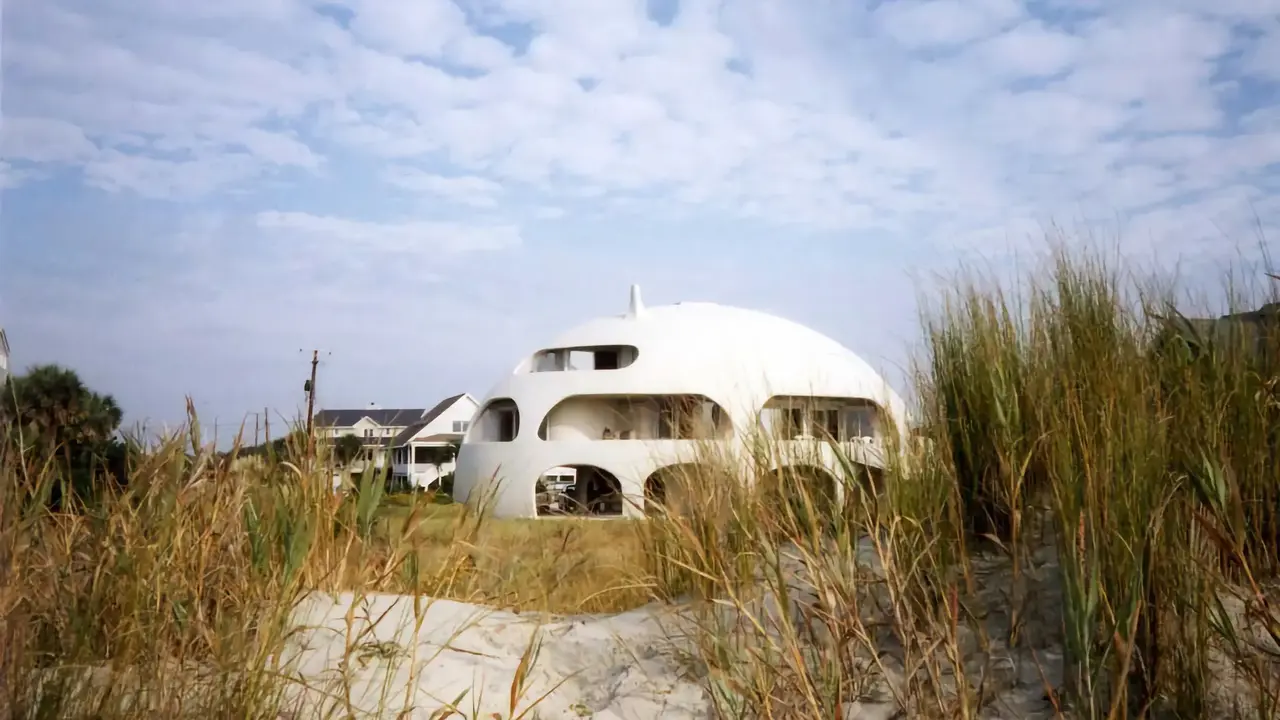
Eye of the Storm on Sullivans Island, SC, is much more than a pretty house; it demonstrates the practical aspects of a Monolithic Dome on beachfront property.
Wind, Water, Corrosion and Monolithic Domes—Building a beachfront home offers a few extra challenges such as wind, water, erosion, flying debris and corrosion. A Monolithic Dome home successfully meets each of these challenges.
Design Advantages of the Monolithic Dome—David B. South discusses the benefits of Monolithic Domes.
More about Monolithic Dome Home Benefits—Monolithic Dome homes range from cozy-cute to palatial and include everything in between. So you can plan for what you need or all you want.
In-floor Heat Warms Domes “Radiantly”—The radiant heat in the floor can be so cozy and nice. It is also generally inexpensive. Heating a Monolithic Dome with in-floor radiant heat seems to take a lot less energy than any other way.
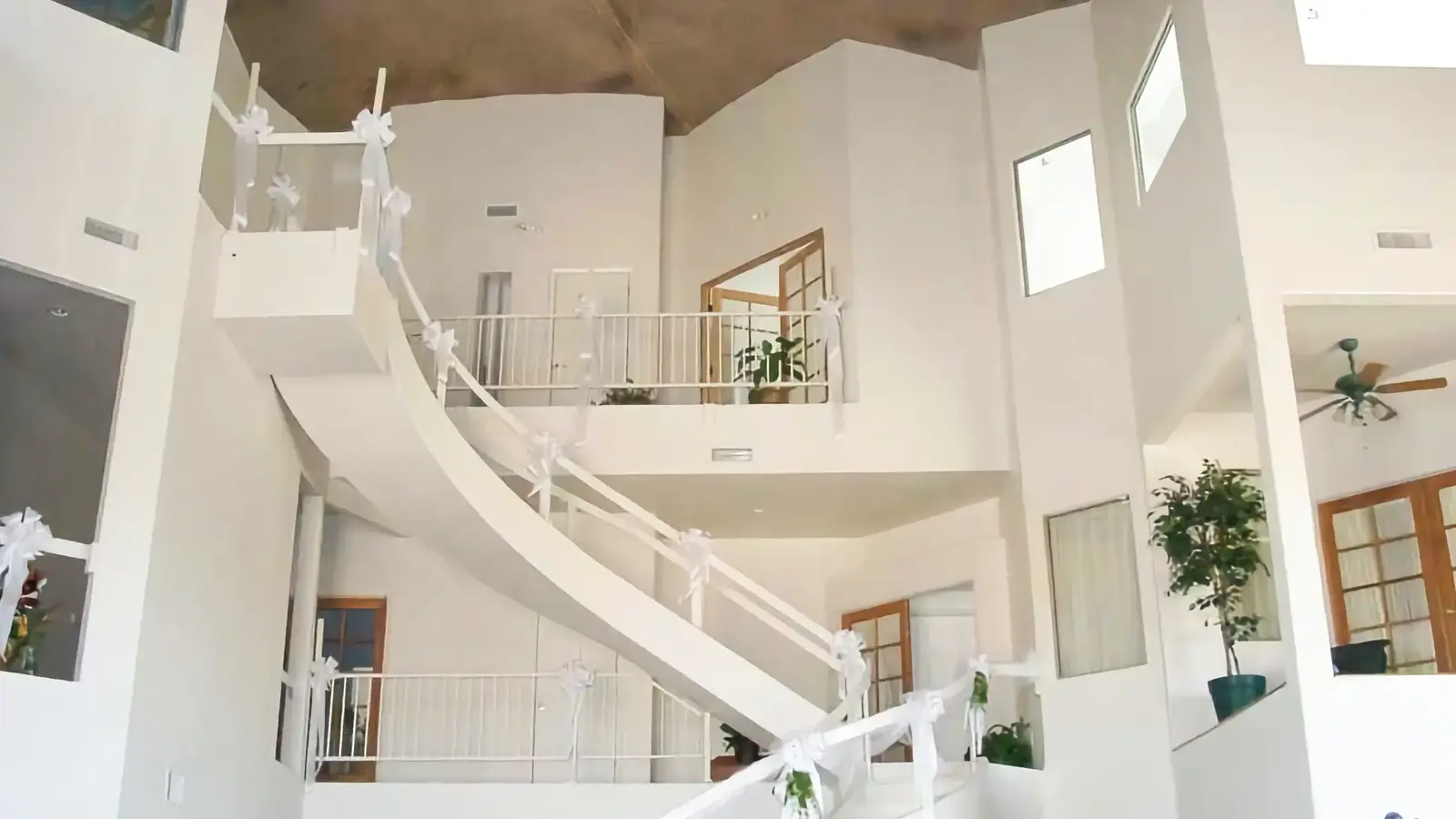
Yumadome, in Yuma, Arizona, is a multigenerational home with eight separate living suites on three floors.
Up and Down in the Round—David B. South discusses multiple floor dome considerations.
Exterior Window Treatments: A Primer—This article pertains to both inset and augmented windows and has some practical carry-over for larger openings, such as entryways.
How to Cover a Monolithic Dome with Tile or Rock—People worldwide have been tiling their domes for centuries. Many stunning, multicolored, tiled domes are found in Mexico and Spain. Tiling a Monolithic Dome is not only a practical protection solution but a very attractive one.
How To Get That Absolutely Necessary Building Permit—Practical advice from David B. South.
Tips for building in remote locations—Remote locations equal off-grid living. Off-grid living is not hard; it is fun, but it needs to be properly planned, or sorrow will follow.
Underground, Safe, Fallout Shelter/Home—In 1986, John Ayers of Presidio County, Texas, became concerned about nuclear fallout from a dropped bomb. He wanted to be safe and asked me to build an underground house for him, which we did in the late summer of that year.
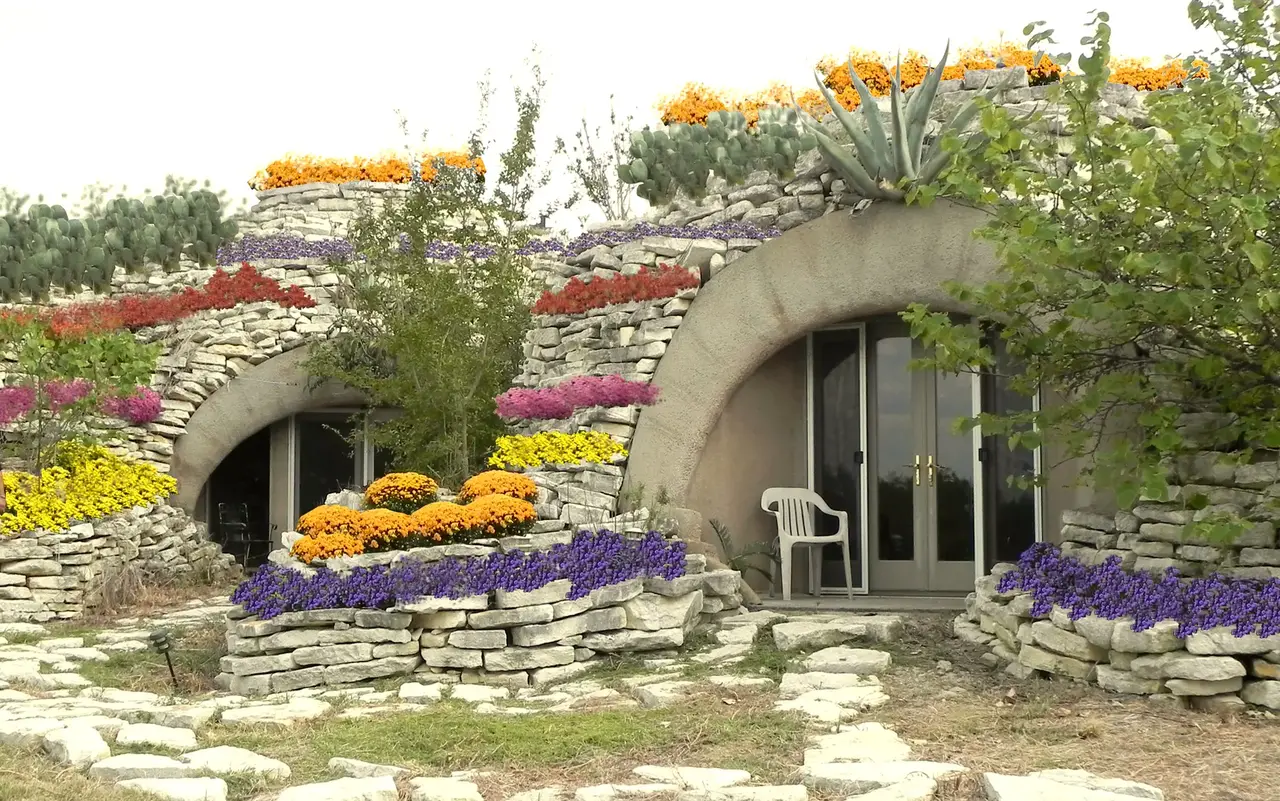
Robot Ranch—Al Schwartz’s 4,144 square-foot earth-sheltered Monolithic Dome dream home is built into the side of a hill and was featured on “Amazing Spaces.”
Monolithic Man Cave featured on Amazing Spaces—To answer the question of how a Monolithic Dome home can be built to almost completely disappear into the landscape, “Amazing Spaces” walks the viewers through the Robot Ranch’s construction process.
A Green Roof—Check out nature’s unique way of coating a dome!
Building Beautiful Luxury Domes—TIME magazine stated that curvilinear architecture is one of the top one hundred advancements for this century. Technology has finally arrived, allowing us to approach the speed of the imagination.
The Oberon—The Oberon, named for one of the moons of Uranus, is an 804-square-foot home. The flexibility of this size dome has resulted in several floor plan layouts created by our design department.
An old-fashioned approach to dome layout—After brainstorming their floorplan, the Ecker’s built a cardboard 3-D model to study how light and room area might appear in their finished Monolithic dome.
In-home Fire Safety–If you catch a fire in its first two or three minutes and you have the proper equipment, you usually can put it out. But finding a bucket, running to the kitchen to fill it and then running to the fire is usually ineffective.
Curved Dome Walls are Easy and Fun to Decorate—Monolithic Dome walls are not only good for our environment, safe from natural disasters and cost effective, they’re easy and fun to decorate. Yes, curved walls are finally coming into their own.
How much does a Monolithic Dome home cost?—[Note: This article is preserved for historical purposes only. The prices listed were from 2013 and are no longer valid.]
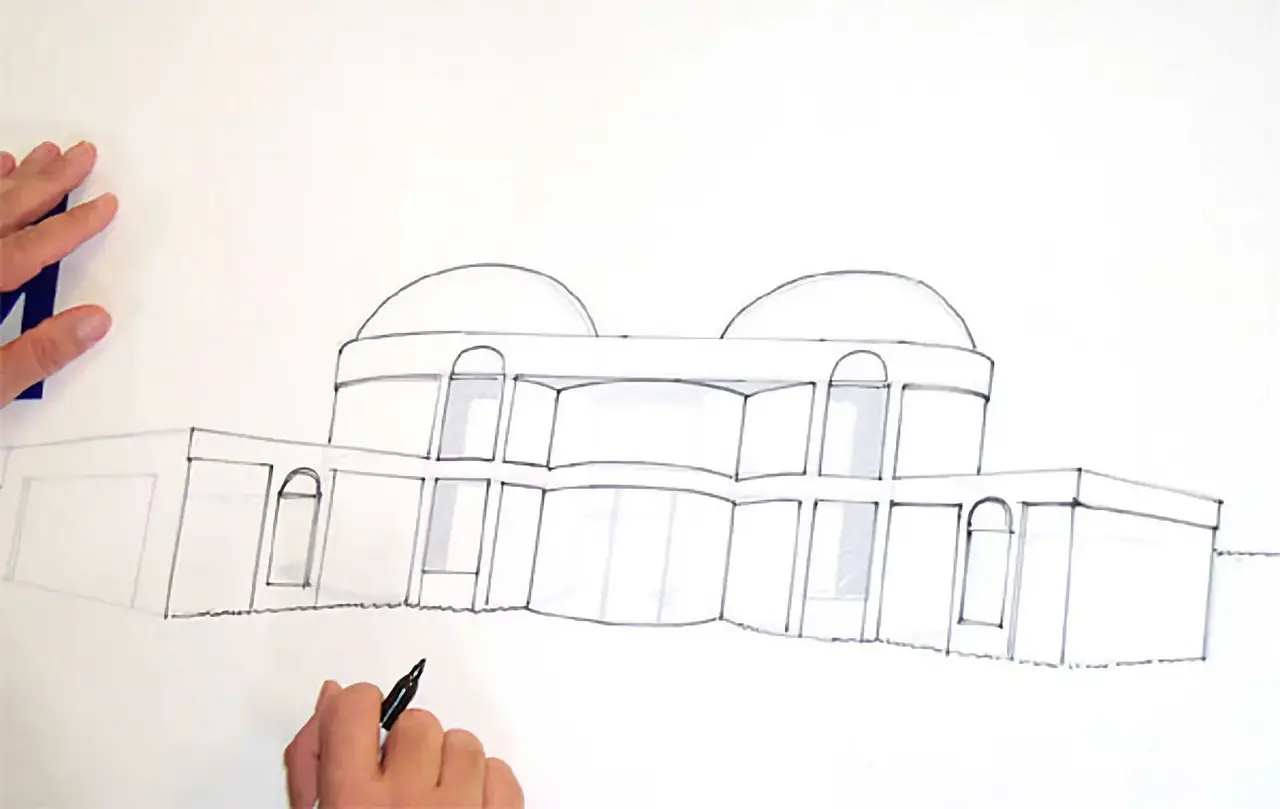
Every home in its beginning stage is bare. Exterior elements provide interest and variety. Banding used to connect the two domes adds horizontal lines and gives the dome a linear feel.
Exterior Design 101—When deciding to build a home, most people focus on the interior floor plan, while the exterior often becomes an afterthought. Yet, the home’s exterior governs that all-important first impression your home creates.
The Future of Dome Housing evaluated in The Fiscal Times—Author, Linda Federico-O’Murchu, wrote an article entitled, “Are Dome Homes the Future of Housing?” that was featured on CNBC, Business Insider and The Fiscal Times recently.
The True Cost of a Dome Home—The initial cost of a Monolithic Dome is usually the same as a custom-built, conventional home of equal interior finish. However, the long-term, day-to-day costs of a Monolithic Dome will always be lower. And the true cost of owning a dome home is substantially less.
Epoxy Floors—The benefits of epoxy floors extend beyond cleanliness. A properly installed decorative epoxy floor will turn a garage floor from an embarrassment of stains into a showcase.
Just Chillin’—Chris Zweifel, a favorite engineer of Monolithic Domes, had a brainstorm this past winter that makes the other dome fans amongst us think, “Now why didn’t I think of that?!”
Thinking Outside the Circle—Chuck Peters decides to build a Monolithic Dome home after losing his previous house to a fire.
Finding the Finish Line—When I ran track, the coach’s advice was to keep running past the finish line. If you slow your pace too early, you won’t finish properly. The same advice applies when building a house—keep working hard till all the work is finished, and then celebrate a job well done.
Stemwalls: What Works Best—David B. South outlines stemwall options and things to consider.
Practical Universal Design Ideas for the Dome Home Builder—How long are you planning to stay in your dream-dome? Probably decades and well into your elder years. With this in mind and a need for some practical, low- or no-cost universal design elements to handle physical needs, we offer these practical ideas that we incorporated into our dome.
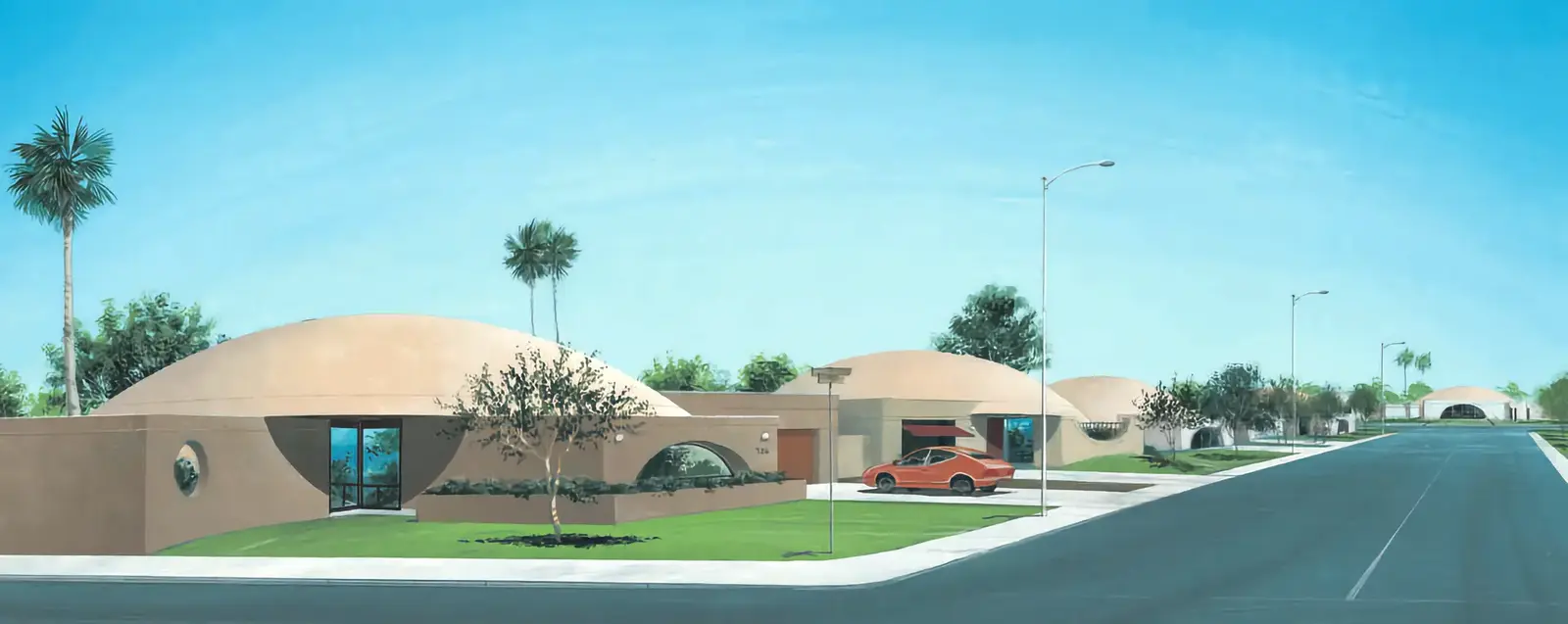
Architect Rick Crandall created this rendering of Dometown, USA, an aspirational idea of a future in which every house is safe from natural disasters and minimizes energy use.
Dometown, USA—It’s not here yet but Dometown, USA is coming! So, what will an all-Monolithic Dome community be like?
Dome Homes Featured on Green Living Blog
Your New House, An Investment or Money Pit?—A home comes in two parts; the first part is the investment. With the investment comes its value as a family domicile, a place of refuge (if it is strong enough to be a refuge), and a place for the family to gather, work, struggle and grow together.
No Nails, No Lumber: The Bubble Houses of Wallace Neff—A new book about a dome pioneer! No Nails, No Lumber: The Bubble Houses of Wallace Neff is a delightful new book authored by Jeffrey Head that presents the air-formed concrete homes designed by Architect Wallace Neff (1895-1982).